
双氢睾酮可导致雌性小鼠动脉僵硬度增加。
Dihydrotestosterone induces arterial stiffening in female mice.
机构信息
Department of Pharmacology and Tulane Brain Institute, Tulane School of Medicine, New Orleans, LA, USA.
Department of Pharmacology, Tulane School of Medicine, New Orleans, LA, USA.
出版信息
Biol Sex Differ. 2024 Jan 23;15(1):9. doi: 10.1186/s13293-024-00586-3.
BACKGROUND
Androgens are important sex hormones in both men and women and are supplemented when endogenous levels are low, for gender transitioning, or to increase libido. Androgens also circulate at higher levels in women with polycystic ovarian syndrome, a condition that increases the risk for cardiovascular diseases including hypertension and arterial stiffness. Since our previous work shows an important role for the G protein-coupled estrogen receptor (GPER) in arterial stiffness, we hypothesized that other hormones including androgens may impact arterial stiffness in female mice via downregulation of GPER.
METHODS
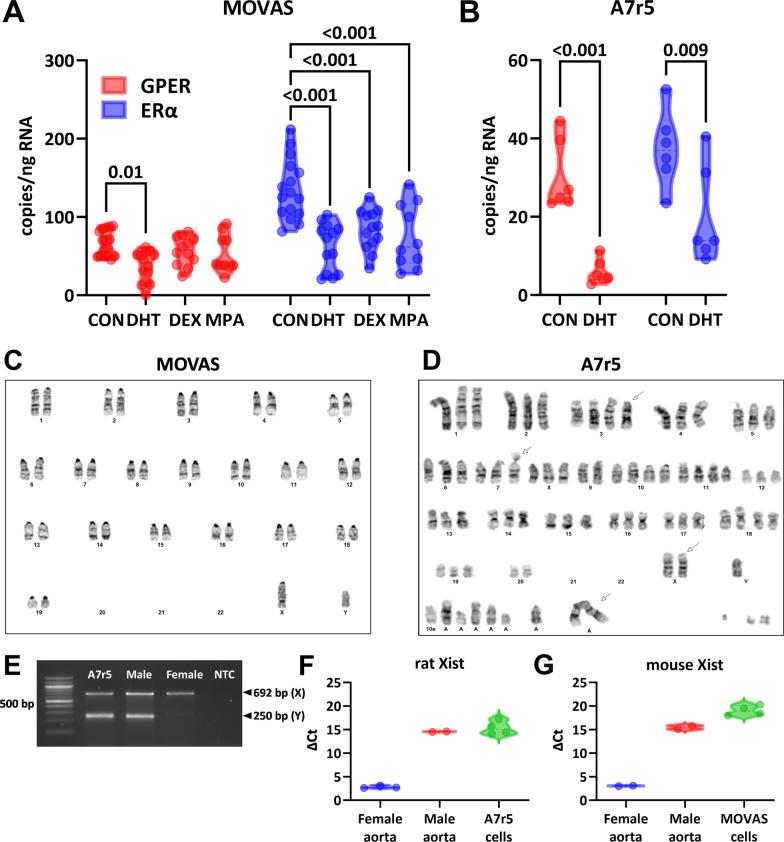
The impact of the non-aromatizable androgen dihydrotestosterone (DHT), the glucocorticoid dexamethasone, and the progestin medroxyprogesterone acetate (all 100 nM for 24 h) on GPER and ERα expression was assessed in cultured vascular smooth muscle cells using droplet digital PCR (ddPCR). To assess the in vivo impact of the DHT-induced downregulation of GPER, female ovary-intact C57Bl/6 mice at 15-16 weeks of age were treated with silastic capsules containing DHT for 4 weeks, one with a dosage expected to mimic human male DHT levels and another to double the expected human concentration (n = 8-9/group).
RESULTS
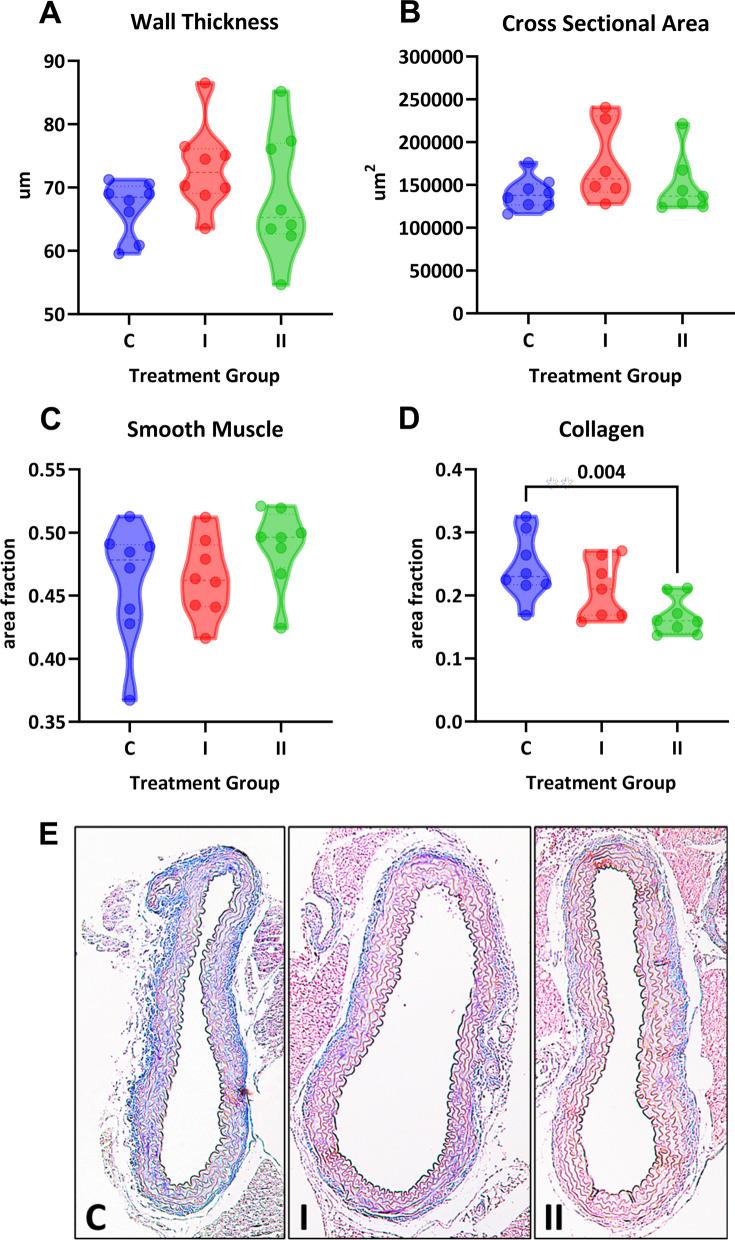
In cultured vascular smooth muscle cells, GPER mRNA was decreased by DHT (P = 0.001) but was not impacted by dexamethasone or medroxyprogesterone. In contrast, ERα expression in cultured cells was significantly suppressed by all three hormones (P < 0.0001). In control mice or mice treated with a single or double dose of DHT, a dose-dependent increase in body weight was observed (control 22 ± 2 g, single dose 24 ± 2 g, double dose 26 ± 2 g; P = 0.0002). Intracarotid stiffness measured via pulse wave velocity showed a more than two-fold increase in both DHT-treated groups (control 1.9 ± 0.3 m/s, single dose 4.3 ± 0.8 m/s, double dose 4.8 ± 1.0 m/s). This increase in arterial stiffness occurred independent of changes in blood pressure (P = 0.59). Histological analysis of aortic sections using Masson's trichrome showed a significant decrease in collagen between the control group (24 ± 5%) and the double dose group (17 ± 3%, P = 0.007), despite no changes in aortic wall thickness or smooth muscle content. Lastly, ddPCR showed that in vivo DHT treatment decreased aortic expression of both GPER (control 20 ± 5, single dose 10.5 ± 5.6, double dose 10 ± 4 copies/ng; P = 0.001) and ERα (control 54 ± 2, single dose 24 ± 13, and double dose 23 ± 12 copies/ng; P = 0.003).
CONCLUSIONS
These findings indicate that androgen promotes arterial stiffening and cardiovascular damage in female mice and is associated with decreased estrogen receptor expression. These data are important for transgender men, women using testosterone for fitness or reduced libido, as well as patients with polycystic ovarian syndrome.
背景
雄激素是男性和女性体内重要的性激素,当内源性水平较低、进行性别转换或增加性欲时,会补充雄激素。患有多囊卵巢综合征的女性体内雄激素水平也会升高,这种疾病会增加高血压和动脉僵硬等心血管疾病的风险。由于我们之前的工作表明 G 蛋白偶联雌激素受体(GPER)在动脉僵硬中起着重要作用,因此我们假设其他激素,包括雄激素,可能通过下调 GPER 来影响雌性小鼠的动脉僵硬。
方法
使用液滴数字 PCR(ddPCR)检测非芳香化雄激素二氢睾酮(DHT)、糖皮质激素地塞米松和孕激素醋酸甲羟孕酮(均为 100 nM,作用 24 小时)对培养的血管平滑肌细胞中 GPER 和 ERα 表达的影响。为了评估 DHT 诱导的 GPER 下调对体内的影响,15-16 周龄的卵巢完整 C57Bl/6 雌性小鼠用含有 DHT 的硅酮胶囊处理 4 周,一种剂量预计模拟人类男性 DHT 水平,另一种剂量预计模拟人类浓度的两倍(每组 n=8-9)。
结果
在培养的血管平滑肌细胞中,DHT 降低了 GPER mRNA(P=0.001),但对地塞米松或醋酸甲羟孕酮没有影响。相比之下,三种激素均显著抑制了 ERα 的表达(P<0.0001)。在对照小鼠或接受单剂量或双剂量 DHT 治疗的小鼠中,观察到体重呈剂量依赖性增加(对照 22±2g,单剂量 24±2g,双剂量 26±2g;P=0.0002)。通过脉搏波速度测量的颅内僵硬度显示,两种 DHT 处理组均增加了两倍以上(对照 1.9±0.3m/s,单剂量 4.3±0.8m/s,双剂量 4.8±1.0m/s)。这种动脉僵硬的增加与血压变化无关(P=0.59)。用 Masson 三色法对主动脉切片进行组织学分析显示,对照组(24±5%)和双剂量组(17±3%,P=0.007)之间的胶原蛋白显著减少,尽管主动脉壁厚度或平滑肌含量没有变化。最后,ddPCR 显示,体内 DHT 治疗降低了主动脉中 GPER(对照组 20±5,单剂量 10.5±5.6,双剂量 10±4 拷贝/ng;P=0.001)和 ERα(对照组 54±2,单剂量 24±13,双剂量 23±12 拷贝/ng;P=0.003)的表达。
结论
这些发现表明雄激素促进雌性小鼠的动脉僵硬和心血管损伤,并与雌激素受体表达降低有关。这些数据对于跨性别男性、使用睾酮健身或性欲降低的女性以及患有多囊卵巢综合征的患者很重要。
 Zotero 插件