
人类供体肝脏长达7天的长期常温机器灌注期间的持续肾脏替代治疗
Continuous Renal Replacement Therapy During Long-term Normothermic Machine Perfusion of Human Donor Livers for up to 7 D.
作者信息
Lascaris Bianca, Hoffmann Roland F, Nijsten Maarten W N, Porte Robert J, de Meijer Vincent E
机构信息
Department of Surgery, Section of Hepatobiliary Surgery and Liver Transplantation, University of Groningen, University Medical Center Groningen, Groningen, The Netherlands.
UMCG Comprehensive Transplant Center, Groningen, The Netherlands.
出版信息
Transplant Direct. 2024 Jan 24;10(2):e1568. doi: 10.1097/TXD.0000000000001568. eCollection 2024 Feb.
BACKGROUND
Normothermic machine perfusion (NMP) is used to preserve and test donor livers before transplantation. During NMP, the liver is metabolically active and produces waste products, which are released into the perfusate. In this study, we describe our simplified and inexpensive setup that integrates continuous renal replacement therapy (CRRT) with NMP for up to 7 d. We also investigated if the ultrafiltrate could be used for monitoring perfusate concentrations of small molecules such as glucose and lactate.
METHODS
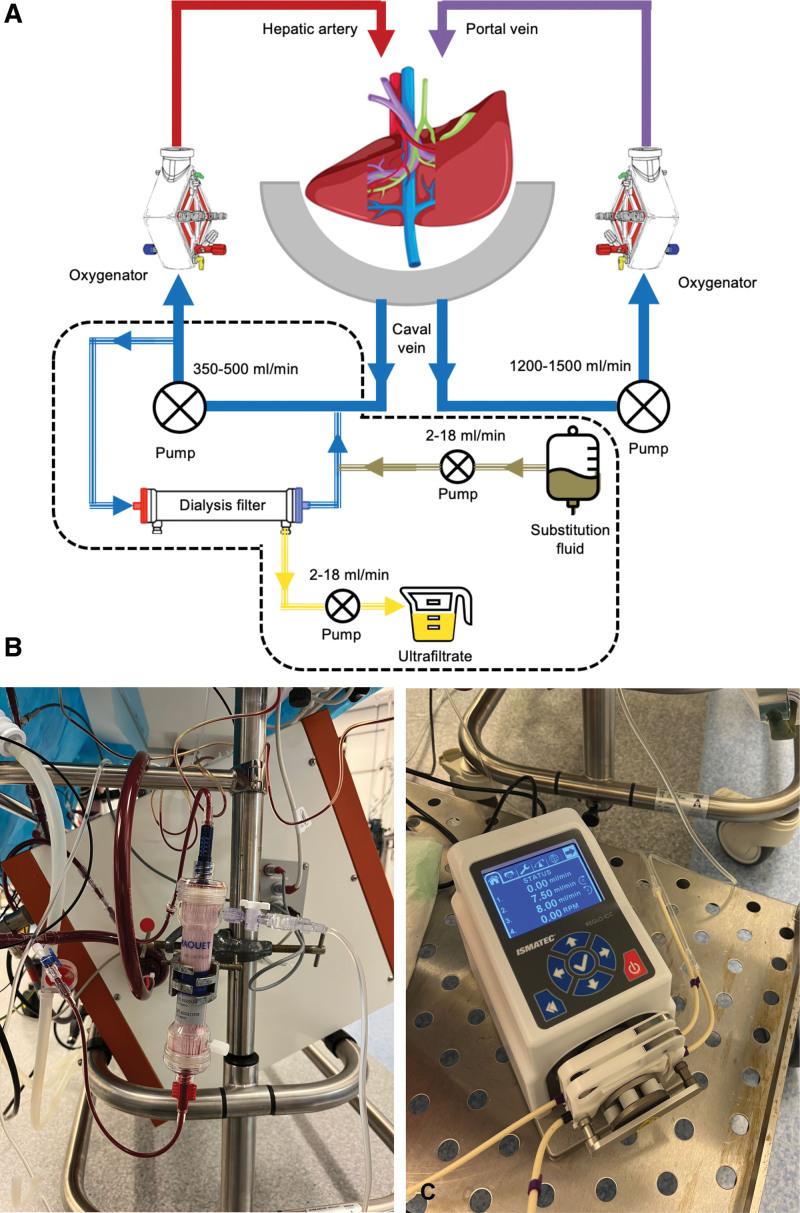
Perfusate composition (urea, osmolarity, sodium, potassium, chloride, calcium, magnesium, phosphate, glucose, and lactate) was analyzed from 56 human NMP procedures without CRRT. Next, in 6 discarded human donor livers, CRRT was performed during NMP by integrating a small dialysis filter (0.2 m) into the circuit to achieve continuous ultrafiltration combined with continuous fluid substitution for up to 7 d.
RESULTS
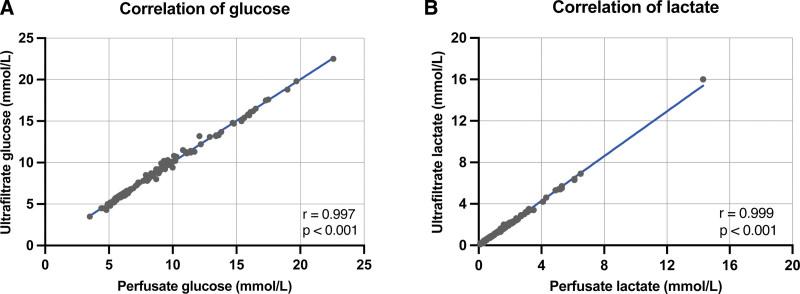
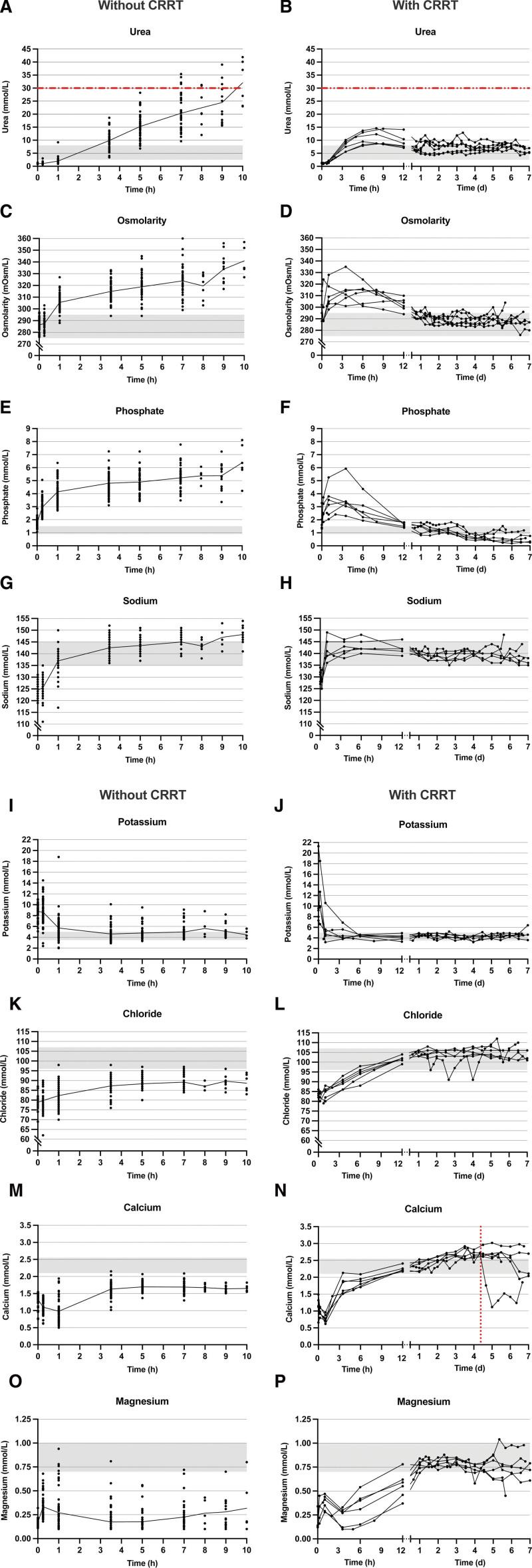
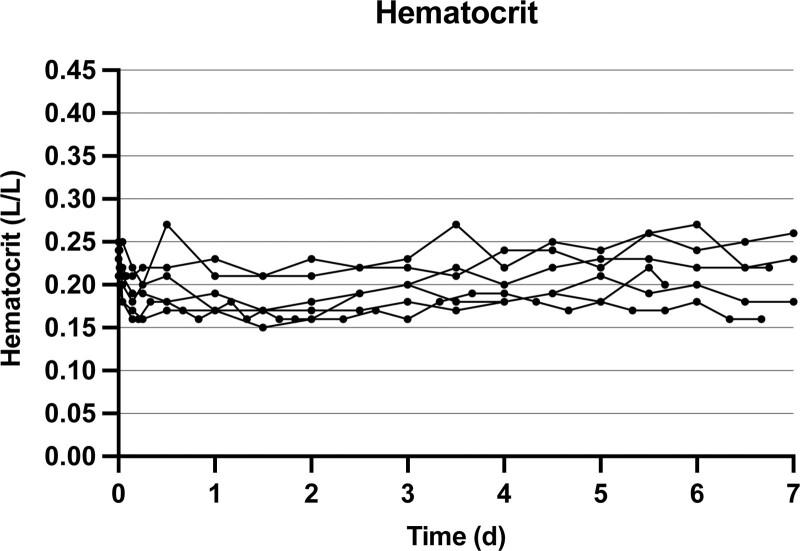
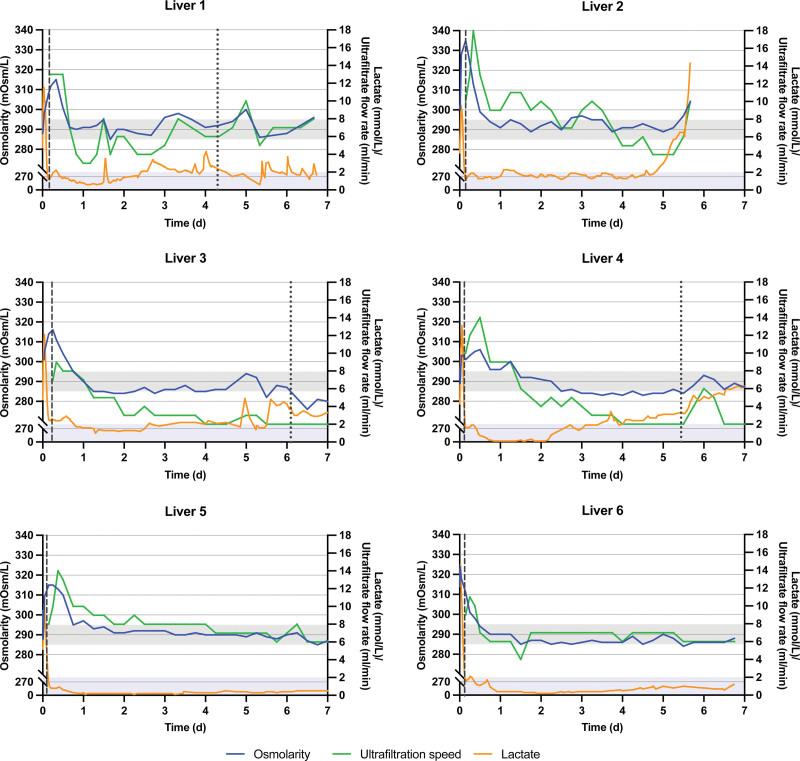
Within a few hours of NMP without CRRT, a linear increase in osmolarity and concentrations of urea and phosphate to supraphysiological levels was observed. After integration of CRRT into the NMP circuit, the composition of the perfusate was corrected to physiological values within 12 h, and this homeostasis was maintained during NMP for up to 7 d. Glucose and lactate levels, as measured in the CRRT ultrafiltrate, were strongly correlated with perfusate levels ( = 0.997, < 0.001 and = 0.999, < 0.001, respectively).
CONCLUSIONS
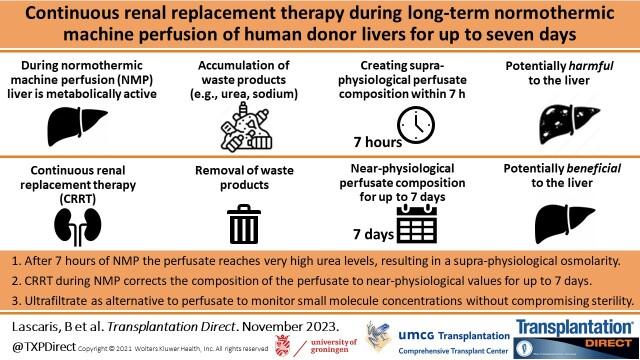
The integration of CRRT into the NMP system corrected the composition of the perfusate to near-physiological values, which could be maintained for up to 7 d. The ultrafiltrate can serve as an alternative to the perfusate to monitor concentrations of small molecules without potentially compromising sterility.
背景
常温机器灌注(NMP)用于在移植前保存和检测供体肝脏。在NMP过程中,肝脏具有代谢活性并产生代谢废物,这些废物会释放到灌注液中。在本研究中,我们描述了一种简化且成本低廉的装置,该装置将持续肾脏替代疗法(CRRT)与NMP整合长达7天。我们还研究了超滤液是否可用于监测小分子如葡萄糖和乳酸的灌注液浓度。
方法
对56例未进行CRRT的人体NMP操作的灌注液成分(尿素、渗透压、钠、钾、氯、钙、镁、磷酸盐、葡萄糖和乳酸)进行了分析。接下来,在6个废弃的人体供体肝脏中,通过将一个小型透析滤器(0.2 m)整合到回路中,在NMP期间进行CRRT,以实现持续超滤并结合持续液体置换长达7天。
结果
在未进行CRRT的NMP的数小时内,观察到渗透压以及尿素和磷酸盐浓度呈线性增加至超生理水平。将CRRT整合到NMP回路后,灌注液成分在12小时内校正至生理值,并且这种内环境稳态在NMP期间维持长达7天。在CRRT超滤液中测得的葡萄糖和乳酸水平与灌注液水平密切相关(分别为r = 0.997,P < 0.001和r = 0.999,P < 0.001)。
结论
将CRRT整合到NMP系统中可将灌注液成分校正至接近生理值,并可维持长达7天。超滤液可作为灌注液的替代物来监测小分子浓度,而不会潜在地损害无菌性。
 Zotero 插件