
mRNA 癌症疫苗的最新进展。
Recent progress in mRNA cancer vaccines.
机构信息
State Key Laboratory of Oncology in South China, Guangdong Provincial Clinical Research Center for Cancer, Sun Yat-sen University Cancer Center, Guangzhou, China.
出版信息
Hum Vaccin Immunother. 2024 Dec 31;20(1):2307187. doi: 10.1080/21645515.2024.2307187. Epub 2024 Jan 28.
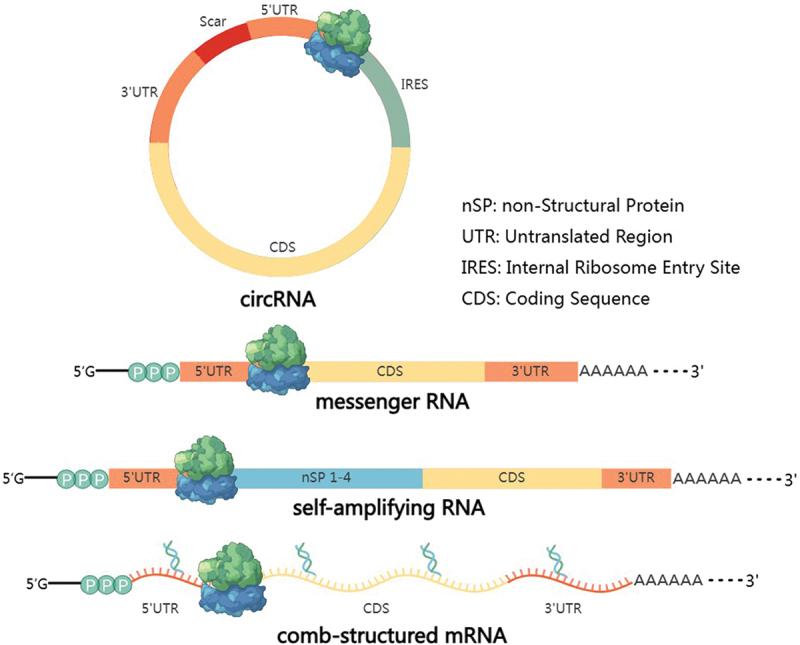
The research and development of messenger RNA (mRNA) cancer vaccines have gradually overcome numerous challenges through the application of personalized cancer antigens, structural optimization of mRNA, and the development of alternative RNA-based vectors and efficient targeted delivery vectors. Clinical trials are currently underway for various cancer vaccines that encode tumor-associated antigens (TAAs), tumor-specific antigens (TSAs), or immunomodulators. In this paper, we summarize the optimization of mRNA and the emergence of RNA-based expression vectors in cancer vaccines. We begin by reviewing the advancement and utilization of state-of-the-art targeted lipid nanoparticles (LNPs), followed by presenting the primary classifications and clinical applications of mRNA cancer vaccines. Collectively, mRNA vaccines are emerging as a central focus in cancer immunotherapy, offering the potential to address multiple challenges in cancer treatment, either as standalone therapies or in combination with current cancer treatments.
信使 RNA(mRNA)癌症疫苗的研究和开发已经逐渐通过应用个性化癌症抗原、mRNA 的结构优化以及替代 RNA 载体和高效靶向递药载体的发展克服了众多挑战。目前正在进行各种编码肿瘤相关抗原(TAA)、肿瘤特异性抗原(TSA)或免疫调节剂的癌症疫苗的临床试验。在本文中,我们总结了癌症疫苗中 mRNA 的优化和基于 RNA 的表达载体的出现。我们首先回顾了先进的靶向脂质纳米颗粒(LNP)的进展和应用,然后介绍了 mRNA 癌症疫苗的主要分类和临床应用。总之,mRNA 疫苗作为癌症免疫疗法的一个核心关注点正在出现,有可能解决癌症治疗中的多个挑战,无论是作为单一疗法还是与当前的癌症治疗联合使用。
 Zotero 插件