
以替代蛋白质来源部分或完全替代鱼粉的饲料喂养时,对幼年白鲈()进行肝脏转录组分析。
Hepatic transcriptome analyses of juvenile white bass () when fed diets where fish meal is partially or totally replaced by alternative protein sources.
作者信息
Fuller S Adam, Abernathy Jason W, Sankappa Nithin Muliya, Beck Benjamin H, Rawles Steven D, Green Bartholomew W, Rosentrater Kurt A, McEntire Matthew E, Huskey George, Webster Carl D
机构信息
USDA-ARS Harry K. Dupree Stuttgart National Aquaculture Research Center (HKDSNARC), Stuttgart, AR, United States.
USDA-ARS Aquatic Animal Health Research Unit (AAHRU), Auburn, AL, United States.
出版信息
Front Physiol. 2024 Jan 15;14:1308690. doi: 10.3389/fphys.2023.1308690. eCollection 2023.
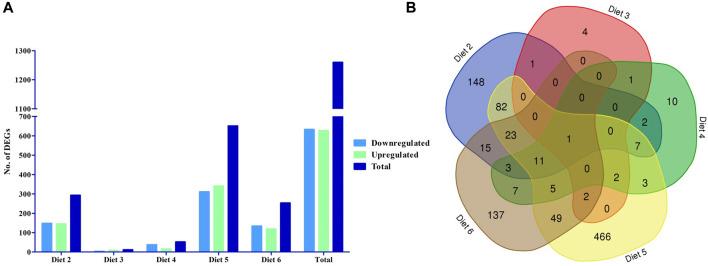
White bass () are a popular sportfish throughout the southern United States, and one parent of the commercially-successful hybrid striped bass ( ♂ ♀). Currently, white bass are cultured using diets formulated for other carnivorous fish, such as largemouth bass () or hybrid striped bass and contain a significant percentage of marine fish meal. Since there are no studies regarding the utilization of alternative proteins in this species, we evaluated the global gene expression of white bass fed diets in which fish meal was partially or totally replaced by various combinations of soybean meal, poultry by-product meal, canola meal, soy protein concentrate, wheat gluten, or a commercial protein blend (Pro-Cision™). Six isonitrogenous (40% protein), isolipidic (11%), and isocaloric (17.1 kJ/g) diets were formulated to meet the known nutrient and energy requirements of largemouth bass and hybrid striped bass using nutrient availability data for most of the dietary ingredients. One of the test diets consisted exclusively of plant protein sources. Juvenile white bass (40.2 g initial weight) were stocked into a flow-through aquaculture system (three tanks/diet; 10 fish/tank) and fed the test diets twice daily to satiation for 60 days. RNA sequencing and bioinformatic analyses revealed significant differentially expressed genes between all test diets when compared to fish meal control. A total of 1,260 differentially expressed genes were identified, with major ontology relating to cell cycle and metabolic processes as well as immune gene functions. This data will be useful as a resource for future refinements to moronid diet formulation, as marine fish meal becomes limiting and plant ingredients are increasingly added as a reliable protein source.
白鲈()是美国南部一种受欢迎的游钓鱼类,也是商业上成功的杂交条纹鲈(♂♀)的亲本之一。目前,养殖白鲈使用的是为其他肉食性鱼类(如大口黑鲈()或杂交条纹鲈)配制的饲料,这些饲料含有相当比例的海鱼粉。由于目前尚无关于该物种对替代蛋白利用情况的研究,我们评估了用大豆粕、禽副产品粉、油菜籽粕、大豆浓缩蛋白、小麦面筋或商业蛋白混合物(Pro-Cision™)的各种组合部分或完全替代鱼粉的饲料喂养的白鲈的全球基因表达情况。利用大多数饲料成分的营养可利用性数据,配制了六种等氮(40%蛋白质)、等脂(11%)和等热量(17.1千焦/克)的饲料,以满足大口黑鲈和杂交条纹鲈已知的营养和能量需求。其中一种试验饲料完全由植物蛋白源组成。将幼鱼白鲈(初始体重40.2克)放入流水式水产养殖系统(每种饲料三个水箱;每个水箱10条鱼),每天投喂两次试验饲料至饱足,持续60天。RNA测序和生物信息学分析显示,与鱼粉对照组相比,所有试验饲料之间均存在显著差异表达基因。总共鉴定出1260个差异表达基因,主要本体涉及细胞周期和代谢过程以及免疫基因功能。随着海鱼粉供应受限且植物成分作为可靠蛋白质来源的添加量日益增加,这些数据将有助于未来完善尖吻鲈科鱼类的饲料配方。

 Zotero 插件