
通过蛋白纳米粒增强吴茱萸碱诱导的乳腺癌细胞凋亡及其抗癌活性
Enhancing apoptosis-mediated anticancer activity of evodiamine through protein-based nanoparticles in breast cancer cells.
机构信息
School of Life Sciences, Central University of Gujarat, Gandhinagar, 382030, India.
Special Centre for Medicine and Special Centre for Systems Medicine, Jawaharlal Nehru University, New Delhi, 110067, India.
出版信息
Sci Rep. 2024 Jan 31;14(1):2595. doi: 10.1038/s41598-024-51970-3.
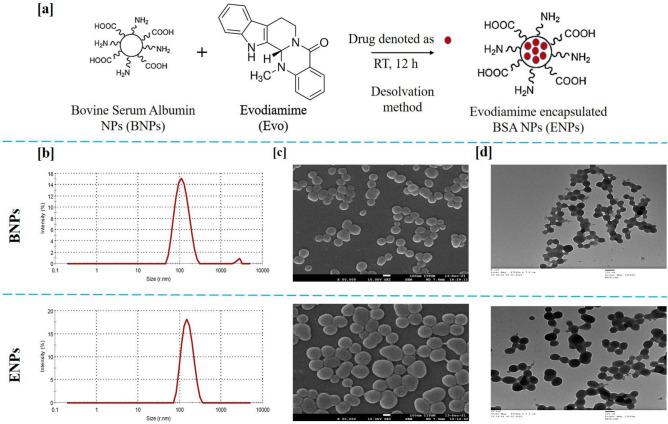
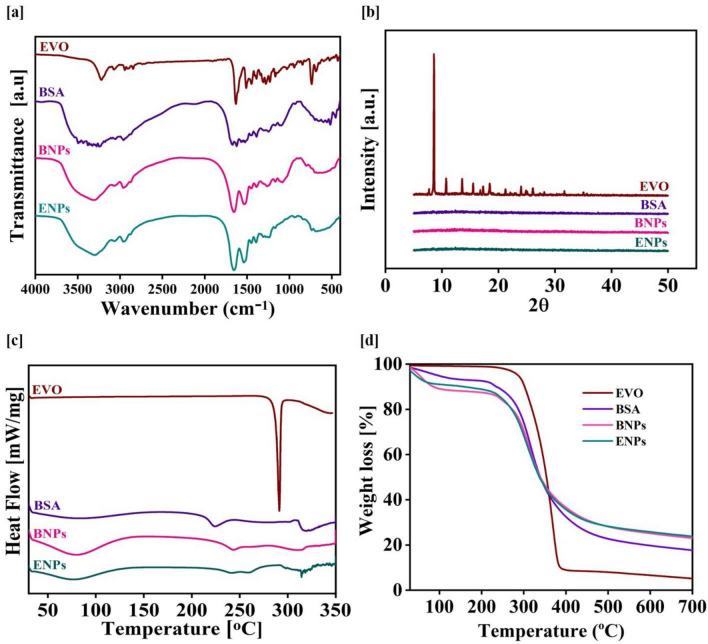
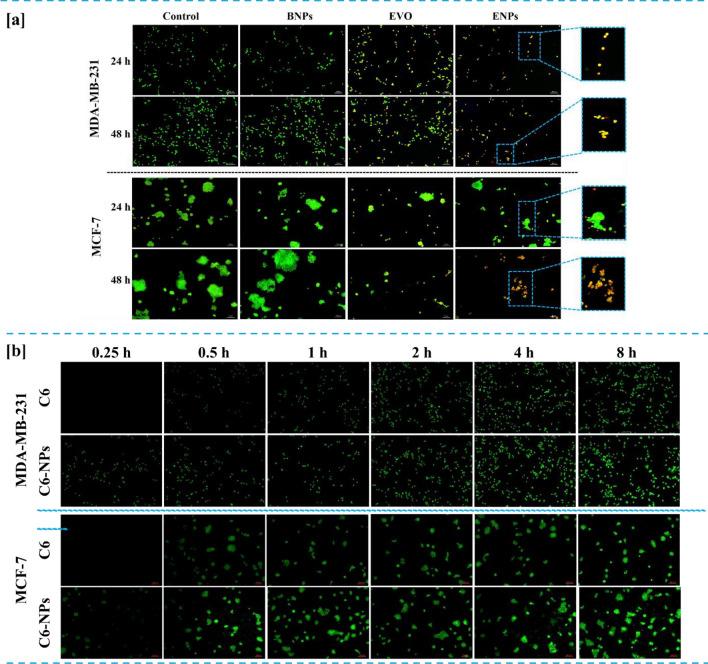
In the cutting-edge era of developing precision therapeutics, nanoparticles have emerged as a potent drug delivery system. Altering the size of poorly water-soluble drugs to nanoscale could confer change in their physical properties, including enhanced water solubility and bioavailability. Evodiamine (EVO), a natural indolequinone alkaloid extract from Evodia rutaecarpa, has shown several important pharmacological applications, anti-cancer being one of them. Protein-based nano-drug delivery systems have gained the interest of researchers due to their better biocompatibility, biodegradability, non-immunogenicity and non-toxicity. In the present study, EVO encapsulated BSA nanoparticles (ENPs) were synthesized and characterized, which were nanoscale-sized (~ 150 nm), monodispersed, spherical shaped, and showed high entrapment efficiency (~ 86%) and controlled drug release. The in-vitro anti-cancer activity of ENPs on human breast cancer cells was dose- and time-dependent. The apoptotic molecular mechanism investigated using FACS, qRT-PCR, and western blotting analysis, revealed increased expression of p53 and Bax and decreased expression of Bcl-2. Biological studies demonstrated comparatively more efficient and targeted delivery of ENPs than pure EVO. The comprehensive physiochemical characterization and in-vitro validation collectively pinpoint ENPs as a promising avenue for harnessing the therapeutic potential of the natural anti-cancer compound EVO. The findings indicate improved cytotoxicity, positioning ENPs as a propitious strategy for advancing breast cancer treatment.
在开发精准治疗的前沿时代,纳米颗粒已成为一种有效的药物传递系统。将水溶性差的药物的尺寸改变为纳米级,可以改变其物理性质,包括增强的水溶性和生物利用度。吴茱萸碱(EVO)是一种从吴茱萸中提取的天然吲哚喹啉生物碱,具有多种重要的药理作用,其中包括抗癌作用。基于蛋白质的纳米药物传递系统因其更好的生物相容性、生物降解性、非免疫原性和低毒性而引起了研究人员的兴趣。在本研究中,合成并表征了包载吴茱萸碱的牛血清白蛋白纳米颗粒(ENPs),其为纳米级(150nm)、单分散、球形,具有高包封效率(86%)和可控药物释放。ENPs 对人乳腺癌细胞的体外抗癌活性呈剂量和时间依赖性。通过流式细胞术、qRT-PCR 和 Western blot 分析研究凋亡的分子机制,发现 p53 和 Bax 的表达增加,Bcl-2 的表达减少。生物学研究表明,与纯吴茱萸碱相比,ENPs 能够更有效地靶向和传递药物。综合的物理化学特性表征和体外验证共同指出,ENPs 是利用天然抗癌化合物吴茱萸碱治疗潜力的有前途的途径。这些发现表明,ENPs 具有更高的细胞毒性,将其作为一种推进乳腺癌治疗的有利策略。




 Zotero 插件