
伴侣犬种的长寿:那些有早逝风险的犬种。
Longevity of companion dog breeds: those at risk from early death.
机构信息
Dogs Trust, London, UK.
Liverpool John Moores University, Liverpool, UK.
出版信息
Sci Rep. 2024 Feb 1;14(1):531. doi: 10.1038/s41598-023-50458-w.
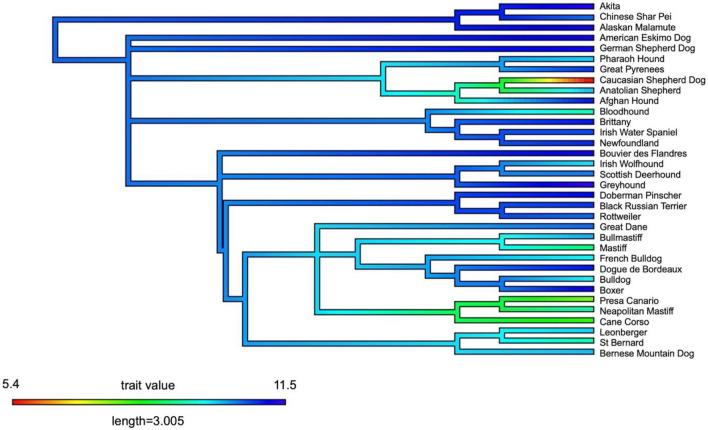
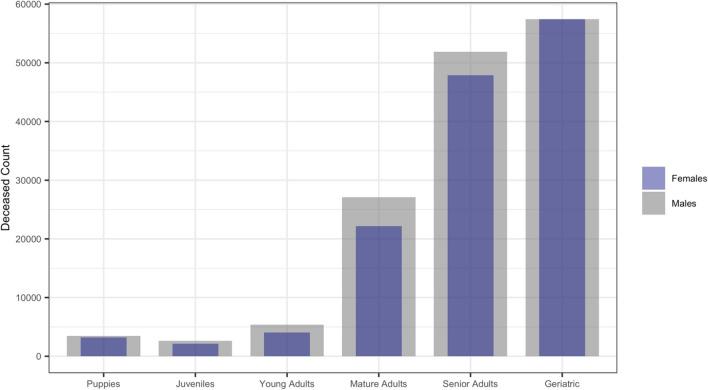
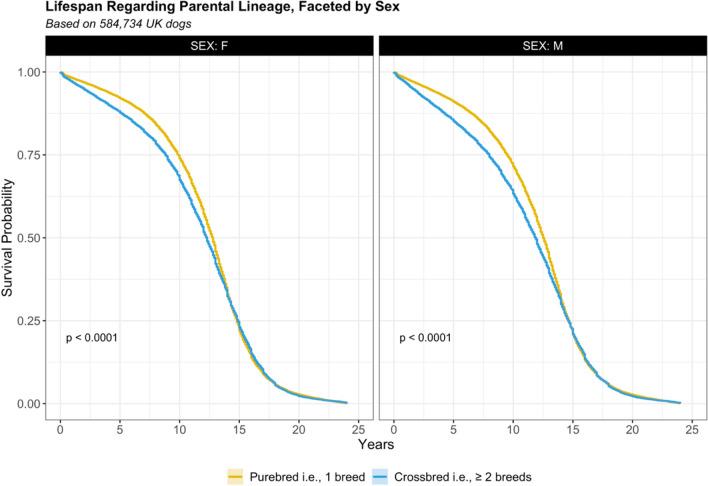
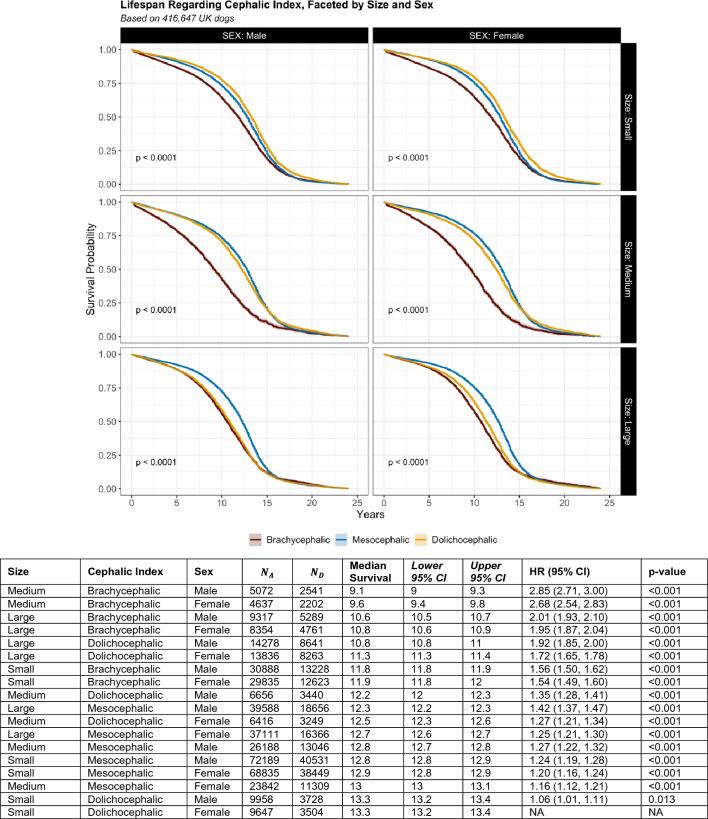
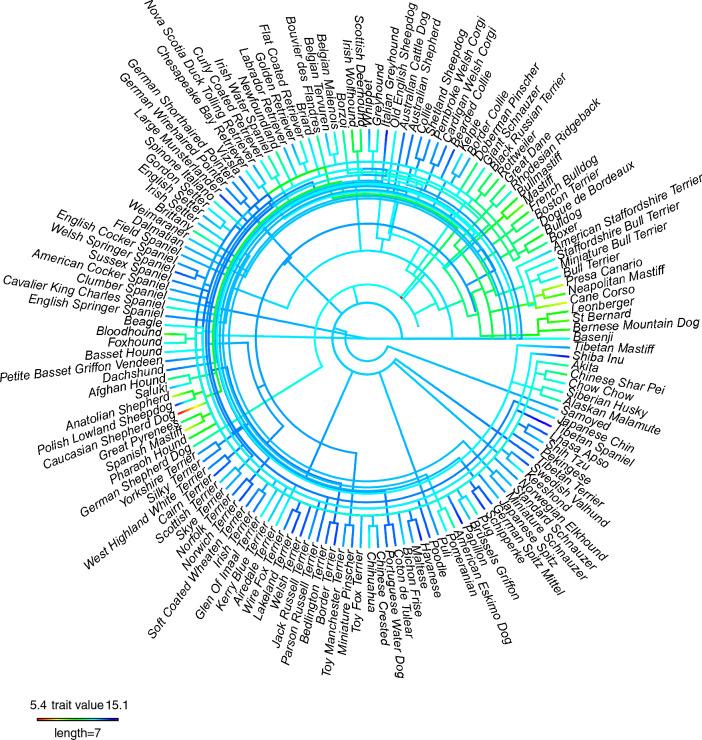
The companion dog is one of the most phenotypically diverse species. Variability between breeds extends not only to morphology and aspects of behaviour, but also to longevity. Despite this fact, little research has been devoted to assessing variation in life expectancy between breeds or evaluating the potential for phylogenetic characterisation of longevity. Using a dataset of 584,734 unique dogs located within the UK, including 284,734 deceased, we present variation in longevity estimates within the following: parental lineage (purebred = 1 breed, crossbred ≥ 2 breeds), breed (n = 155), body size (large, medium, small), sex (male, female) and cephalic index (brachycephalic, mesocephalic, dolichocephalic). Survival estimates were then partitioned amongst phylogenetic clades: providing evidence that canine evolutionary history (via domestication and associated artificial selection) is associated with breed lifespan. This information provides evidence to inform discussions regarding pedigree health, whilst helping current/prospective owners, breeders, policy makers, funding bodies and welfare organisations improve decision making regarding canine welfare.
伴侣犬是表型最多样化的物种之一。品种间的变异不仅体现在形态和行为方面,还体现在寿命上。尽管如此,几乎没有研究致力于评估品种间预期寿命的变化,也没有评估基于进化特征对寿命进行分类的潜力。本研究使用了英国的一个包含 584734 只独特犬的数据组,其中包括 284734 只已死亡的犬,我们展示了以下方面的寿命估计值的变化:亲本谱系(纯种=1 个品种,杂种≥2 个品种)、品种(n=155)、体型(大、中、小)、性别(雄性、雌性)和头颅指数(短头颅、中头颅、长头颅)。然后将生存估计值分配给系统发育分支:这证明了犬类进化史(通过驯化和相关的人工选择)与品种寿命有关。这些信息为讨论血统健康提供了依据,同时帮助当前/潜在的犬主、饲养者、政策制定者、资助机构和福利组织改善与犬只福利相关的决策。

 Zotero 插件