
2019年英国宠物犬数量、密度及人口分布的估算。
Estimation of the size, density, and demographic distribution of the UK pet dog population in 2019.
作者信息
McMillan Kirsten M, Harrison Xavier A, Wong David C, Upjohn Melissa M, Christley Robert M, Casey Rachel A
机构信息
Dogs Trust, London, UK.
University of Exeter, Exeter, UK.
出版信息
Sci Rep. 2024 Dec 30;14(1):31746. doi: 10.1038/s41598-024-82358-y.
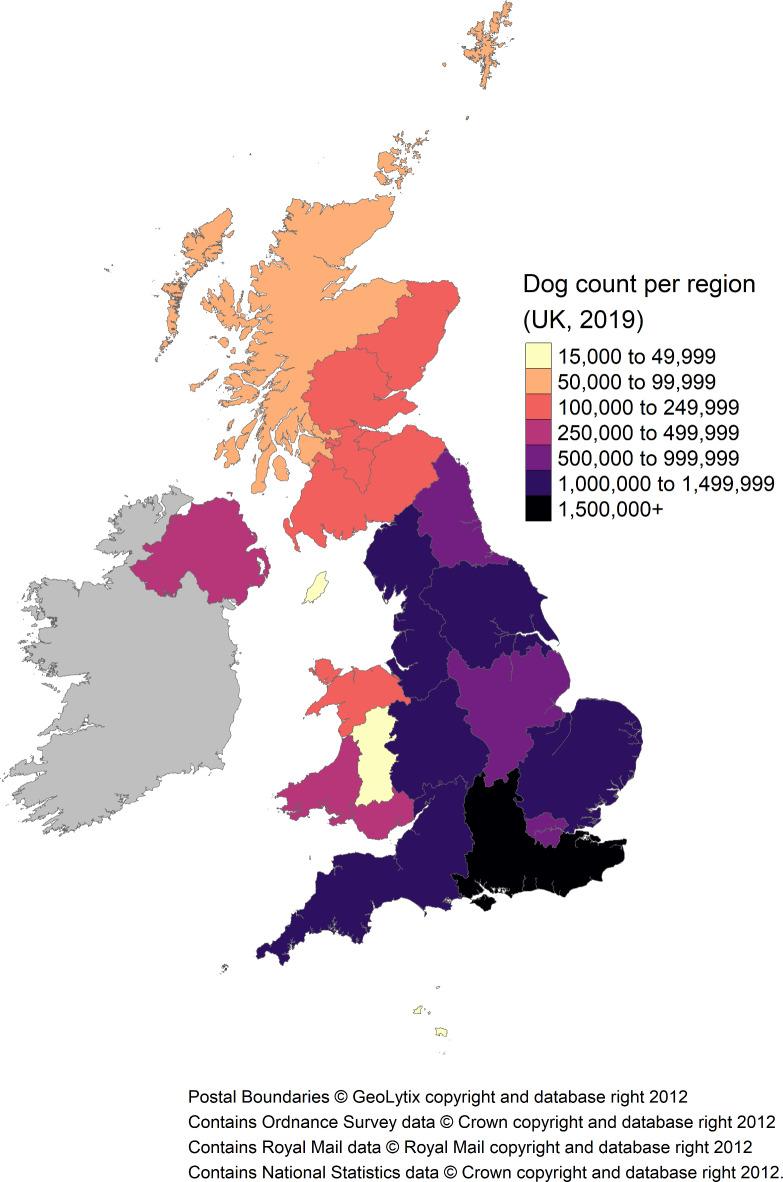
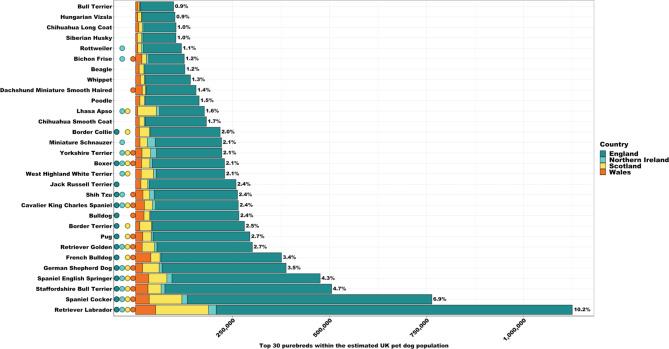
There is limited knowledge about the size of the UK dog population. This makes it difficult to reliably monitor population dynamics and management. A repeatable method of measuring the UK dog population, including owned and unowned dogs i.e., those housed long term by animal welfare charities, would help inform interventions to reduce risks to dog welfare such as poor breeding practices and the illegal import of young or pregnant dogs. However, estimating the total dog population in the UK is not straightforward. Although several estimates of dog numbers have been previously suggested, differing methodologies and limited public access to data sources makes comparison and replication difficult. In this study, we compiled a comprehensive dataset of UK pet dogs in 2019, from multiple sources, including a breed registry, veterinary corporations, pet insurance companies, animal welfare charities and an academic institution. Using a hierarchical Bayesian N-mixture model, we estimate 12.64 million (mean, 95% CI 8.54-15.16 million; median, 13.03 million, 95% CI 8.51-15.24 million) owned and unowned pet dogs within the UK in 2019. Estimates were modelled at the postcode area scale, allowing for aggregation to region or country level, as well as providing associated metrics of uncertainty. Furthermore, we provide spatial demographic estimates, regarding age, breed, cephalic index, and body size. Establishing a population baseline offers significant analytical benefits to welfare, veterinary, epidemiological, and business stakeholders alike: as it provides the spatial data required to underpin robust canine welfare strategies and campaigns. We plan to repeat the described process, in order to provide ongoing estimates: allowing for the interrogation of changes to the UK pet dog population over space and time.
关于英国犬类数量的了解有限。这使得难以可靠地监测种群动态和管理情况。一种可重复的测量英国犬类数量的方法,包括有主犬和无主犬(即长期由动物福利慈善机构收容的犬只),将有助于为减少对犬类福利的风险(如不良繁殖行为以及非法进口幼犬或怀孕母犬)的干预措施提供信息。然而,估算英国犬类的总数并非易事。尽管此前曾提出过几种犬类数量的估算,但不同的方法以及公众对数据源的获取有限,使得比较和重复研究变得困难。在本研究中,我们从多个来源(包括一个品种登记处、兽医公司、宠物保险公司、动物福利慈善机构和一个学术机构)汇编了2019年英国宠物犬的综合数据集。使用分层贝叶斯N混合模型,我们估算出2019年英国有1264万只(均值,95%置信区间854 - 1516万只;中位数,1303万只,95%置信区间851 - 1524万只)有主和无主宠物犬。估算在邮政编码区域尺度上进行建模,以便汇总到区域或国家层面,并提供相关的不确定性指标。此外,我们还提供了关于年龄、品种、头指数和体型的空间人口统计学估算。建立种群基线为福利、兽医、流行病学和商业利益相关者带来了显著的分析益处:因为它提供了支持稳健的犬类福利策略和活动所需的空间数据。我们计划重复上述过程,以便持续进行估算:从而能够探究英国宠物犬种群在空间和时间上的变化情况。





 Zotero 插件