
连接组学结构塑造精神分裂症的皮质大范围改变:一项全球 ENIGMA 研究。
Connectome architecture shapes large-scale cortical alterations in schizophrenia: a worldwide ENIGMA study.
机构信息
Department of Psychiatry, Psychotherapy and Psychosomatics, Psychiatric Hospital University of Zurich, Zurich, Switzerland.
McGill University, Montreal Neurological Institute, Montreal, QC, Canada.
出版信息
Mol Psychiatry. 2024 Jun;29(6):1869-1881. doi: 10.1038/s41380-024-02442-7. Epub 2024 Feb 9.
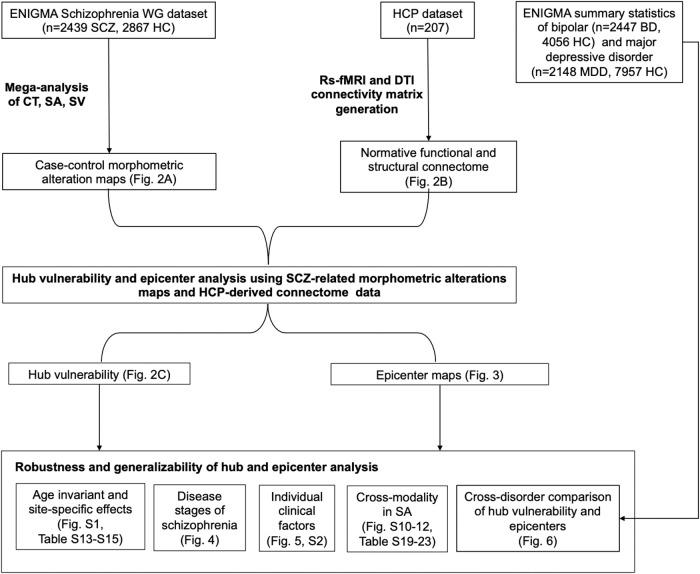
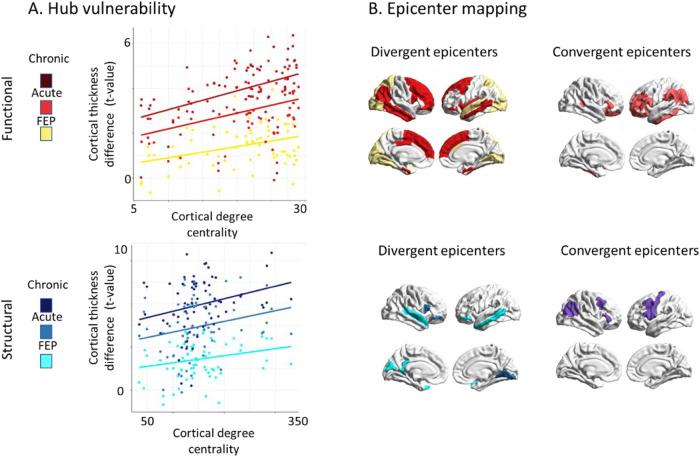
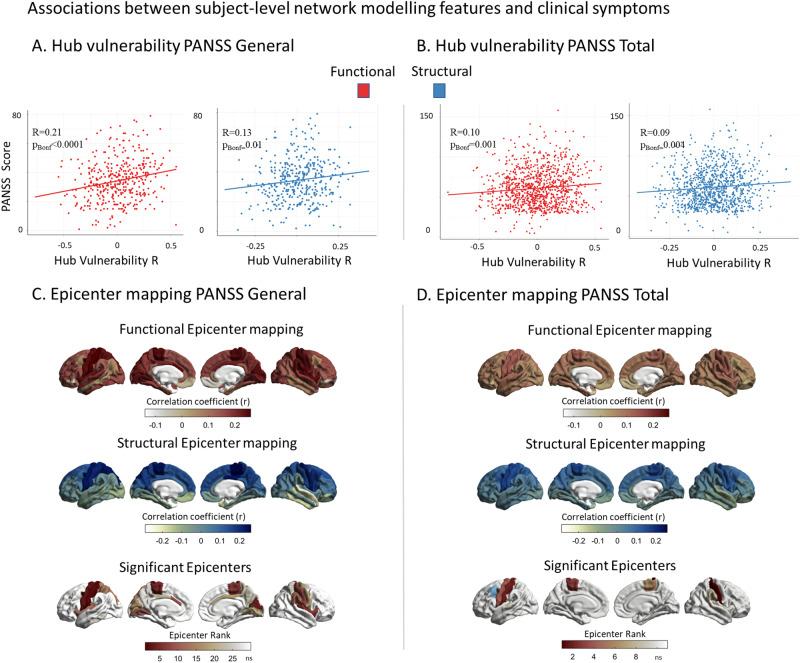
Schizophrenia is a prototypical network disorder with widespread brain-morphological alterations, yet it remains unclear whether these distributed alterations robustly reflect the underlying network layout. We tested whether large-scale structural alterations in schizophrenia relate to normative structural and functional connectome architecture, and systematically evaluated robustness and generalizability of these network-level alterations. Leveraging anatomical MRI scans from 2439 adults with schizophrenia and 2867 healthy controls from 26 ENIGMA sites and normative data from the Human Connectome Project (n = 207), we evaluated structural alterations of schizophrenia against two network susceptibility models: (i) hub vulnerability, which examines associations between regional network centrality and magnitude of disease-related alterations; (ii) epicenter mapping, which identifies regions whose typical connectivity profile most closely resembles the disease-related morphological alterations. To assess generalizability and specificity, we contextualized the influence of site, disease stages, and individual clinical factors and compared network associations of schizophrenia with that found in affective disorders. Our findings show schizophrenia-related cortical thinning is spatially associated with functional and structural hubs, suggesting that highly interconnected regions are more vulnerable to morphological alterations. Predominantly temporo-paralimbic and frontal regions emerged as epicenters with connectivity profiles linked to schizophrenia's alteration patterns. Findings were robust across sites, disease stages, and related to individual symptoms. Moreover, transdiagnostic comparisons revealed overlapping epicenters in schizophrenia and bipolar, but not major depressive disorder, suggestive of a pathophysiological continuity within the schizophrenia-bipolar-spectrum. In sum, cortical alterations over the course of schizophrenia robustly follow brain network architecture, emphasizing marked hub susceptibility and temporo-frontal epicenters at both the level of the group and the individual. Subtle variations of epicenters across disease stages suggest interacting pathological processes, while associations with patient-specific symptoms support additional inter-individual variability of hub vulnerability and epicenters in schizophrenia. Our work outlines potential pathways to better understand macroscale structural alterations, and inter- individual variability in schizophrenia.
精神分裂症是一种典型的网络障碍,其大脑形态发生广泛改变,但这些分布的改变是否能真实反映潜在的网络结构仍不清楚。我们测试了精神分裂症的大规模结构改变是否与规范的结构和功能连接组结构有关,并系统地评估了这些网络级改变的稳健性和可推广性。利用来自 26 个 ENIGMA 站点的 2439 名精神分裂症患者和 2867 名健康对照者的解剖磁共振成像扫描以及人类连接组计划(n=207)的规范数据,我们根据两个网络易感性模型评估了精神分裂症的结构改变:(i) 中枢脆弱性,即检查区域网络中心性与疾病相关改变程度之间的关系;(ii) 震中映射,即确定其典型连接模式最接近疾病相关形态改变的区域。为了评估推广性和特异性,我们将站点、疾病阶段和个体临床因素的影响纳入语境,并将精神分裂症的网络关联与情感障碍进行了比较。我们的研究结果表明,与精神分裂症相关的皮质变薄与功能和结构中枢在空间上相关,这表明高度互联的区域更容易受到形态改变的影响。主要的颞顶边缘和额区作为震中出现,其连接模式与精神分裂症的改变模式有关。这些发现跨越了站点、疾病阶段,并且与个体症状相关,具有稳健性。此外,跨诊断比较显示精神分裂症和双相障碍的重叠震中,但没有重度抑郁症,这表明在精神分裂症-双相谱范围内存在病理生理学连续性。总之,精神分裂症过程中的皮质改变稳健地遵循大脑网络结构,强调了群体和个体水平上明显的中枢易感性和颞额震中。疾病阶段的震中细微变化表明存在相互作用的病理过程,而与患者特定症状的关联支持了精神分裂症中中枢易感性和震中的个体间变异性。我们的工作概述了更好地理解大规模结构改变和精神分裂症个体间变异性的潜在途径。



 Zotero 插件