
环状 RNA 与宫颈癌:是敌是友?环状 RNA 介导的关键信号通路调控与 HPV 相关宫颈癌发生发展的全景图。
Circular RNAs and cervical cancer: friends or foes? A landscape on circRNA-mediated regulation of key signaling pathways involved in the onset and progression of HPV-related cervical neoplasms.
机构信息
Department of Medical Nanotechnology, Faculty of Advanced Technologies in Medicine, Iran University of Medical Sciences, Tehran, Iran.
Department of Biochemistry, Neyshabur Branch, Islamic Azad University, Neyshabur, Iran.
出版信息
Cell Commun Signal. 2024 Feb 10;22(1):107. doi: 10.1186/s12964-024-01494-0.
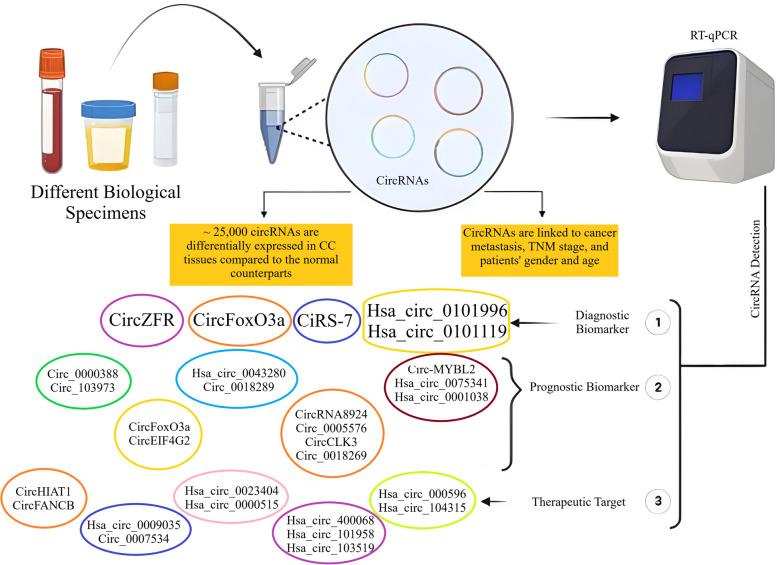
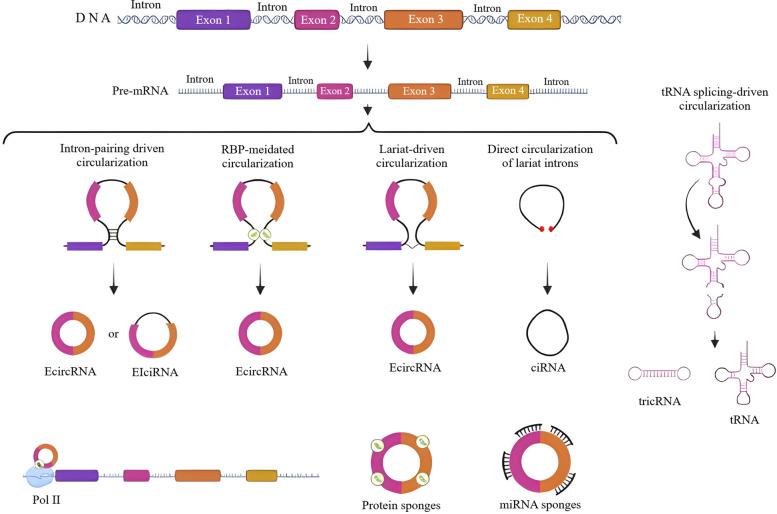
Cervical cancer (CC) is a common gynecologic malignancy, accounting for a significant proportion of women death worldwide. Human papillomavirus (HPV) infection is one of the major etiological causes leading to CC onset; however, genetic, and epigenetic factors are also responsible for disease expansion. Circular RNAs (circRNAs), which are known as a particular subset of non-coding RNA (ncRNA) superfamily, with covalently closed loop structures, have been reported to be involved in the progression of diverse diseases, especially neoplasms. In this framework, abnormally expressed circRNAs are in strong correlation with CC pathogenesis through regulating substantial signaling pathways. Also, these RNA molecules can be considered as promising biomarkers and therapeutic targets for CC diagnosis/prognosis and treatment, respectively. Herein, we first review key molecular mechanisms, including Wnt/β-catenin, MAPK, and PI3K/Akt/mTOR signaling pathways, as well as angiogenesis and metastasis, by which circRNAs interfere with CC development. Then, diagnostic, prognostic, and therapeutic potentials of these ncRNA molecules will be highlighted in depth.
宫颈癌(CC)是一种常见的妇科恶性肿瘤,占全球女性死亡的很大比例。人乳头瘤病毒(HPV)感染是导致 CC 发病的主要病因之一;然而,遗传和表观遗传因素也与疾病的发展有关。环状 RNA(circRNA)是一类具有共价闭环结构的非编码 RNA(ncRNA)超家族的特定子集,已被报道参与多种疾病的进展,特别是肿瘤。在这种情况下,异常表达的 circRNA 通过调节大量信号通路与 CC 的发病机制密切相关。此外,这些 RNA 分子可以分别作为 CC 诊断/预后和治疗的有前途的生物标志物和治疗靶点。在此,我们首先综述了 circRNA 通过干扰 CC 发展的关键分子机制,包括 Wnt/β-catenin、MAPK 和 PI3K/Akt/mTOR 信号通路以及血管生成和转移。然后,深入强调了这些 ncRNA 分子在诊断、预后和治疗方面的潜力。

 Zotero 插件