
益生菌对便秘患者的有效性:一项系统评价与荟萃分析
Effectiveness of Probiotics in Patients With Constipation: A Systematic Review and Meta-Analysis.
作者信息
Garzon Mora Neyla, Jaramillo Arturo P
机构信息
Otolaryngology, Universidad Católica de Santiago de Guayaquil, Guayaquil, ECU.
General Practice, Universidad Estatal de Guayaquil, Machala, ECU.
出版信息
Cureus. 2024 Jan 10;16(1):e52013. doi: 10.7759/cureus.52013. eCollection 2024 Jan.
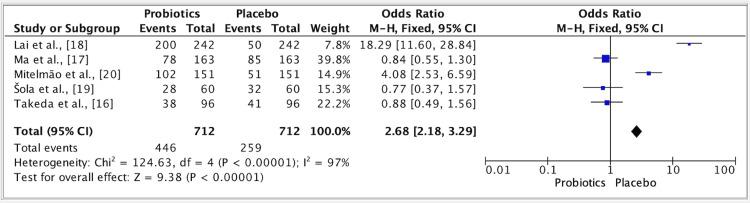
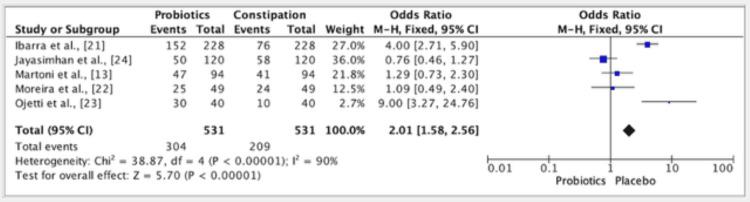
A recent meta-analysis suggests that probiotic supplementation is moderately efficacious in decreasing intestinal transit times compared with control, demonstrating probiotics' potential for treating chronic idiopathic constipation. This decrease in intestinal transit times has been proposed to be attributed to the capacity of probiotics to alter the gastrointestinal microflora, improve intestinal motility, and alter biochemical factors. Therefore, a systematic review and meta-analysis were conducted to estimate the effectiveness of probiotics in patients with constipation. The search was performed using PubMed, PMC, and Medline databases. Relevant data were extracted and assessed for quality using the Cochrane risk of bias assessment tool for randomized clinical trials (RCTs). A random effects model and the I2 statistic were used to estimate the pooled prevalence and explore heterogeneity. Subgroup analyses were conducted based on the experimental group and the placebo group. Sensitivity analysis was performed, and publication bias was explored. Our meta-analysis assessed probiotics ' efficacy in constipation management by incorporating a sample size comprising 1,243 patients drawn from 10 distinct studies. Subgroup analyses unveiled a heterogeneity of 95%, accompanied by a statistically significant analysis (p-value < 0.05) that unequivocally favored probiotics over placebo for treating constipation. These findings underscore the statistically significant effectiveness of probiotics for individuals with constipation. They support the imperative to fortify this body of evidence through robust, larger-scale RCTs to deepen our understanding of the manifold benefits probiotics confer in nurturing and sustaining optimal gut health.
最近的一项荟萃分析表明,与对照组相比,补充益生菌在缩短肠道转运时间方面具有中等疗效,这表明益生菌在治疗慢性特发性便秘方面具有潜力。肠道转运时间的缩短被认为归因于益生菌改变胃肠道微生物群、改善肠道蠕动和改变生化因素的能力。因此,进行了一项系统综述和荟萃分析,以评估益生菌对便秘患者的有效性。检索使用了PubMed、PMC和Medline数据库。提取相关数据,并使用Cochrane随机临床试验偏倚风险评估工具评估质量。采用随机效应模型和I2统计量来估计合并患病率并探索异质性。根据实验组和安慰剂组进行亚组分析。进行了敏感性分析,并探讨了发表偏倚。我们的荟萃分析纳入了来自10项不同研究的1243名患者的样本量,评估了益生菌在便秘管理中的疗效。亚组分析显示异质性为95%,同时进行的统计分析具有统计学意义(p值<0.05),明确表明在治疗便秘方面益生菌优于安慰剂。这些发现强调了益生菌对便秘患者具有统计学意义的有效性。它们支持通过开展有力的、更大规模的随机对照试验来加强这一证据体系的必要性,以便加深我们对益生菌在培育和维持最佳肠道健康方面所带来的多种益处的理解。



 Zotero 插件