
70 岁及以上人群在斯德哥尔摩地区综合护理环境中 COVID-19 死亡率的差异:2020 年 3 月至 2021 年 2 月之间的多层次分析。
Differences in Covid-19 mortality among persons 70 years and older in an integrated care setting in region Stockholm: a multi-level analysis between March 2020-February 2021.
机构信息
Aging Research Center, Karolinska Institutet, Stockholm, Sweden.
Department of Neurobiology, Care Sciences and Society, Karolinska Institutet, Aging Research Center, Tomtebodavägen 18A, plan 9, Stockholm, 171 65, Sweden.
出版信息
BMC Public Health. 2024 Feb 14;24(1):462. doi: 10.1186/s12889-024-17904-4.
BACKGROUND
In Norrtälje municipality, within Region Stockholm, there is a joint integrated care organisation providing health and social care, which may have facilitated a more coordinated response to the covid-19 pandemic compared to the otherwise decentralised Swedish system. This study compares the risk of covid-19 mortality among persons 70 years and older, in the municipalities of Stockholm, Södertälje, and Norrtälje, while considering area and individual risk factors.
METHODS
A population-based study using linked register data to examine covid-19 mortality among those 70 + years (N = 127,575) within the municipalities of interest between the periods March-August 2020 and September 2020-February 2021. The effect of individual and area level variables on covid-19 mortality among inhabitants in 68 catchment areas were examined using multi-level logistic models.
RESULTS
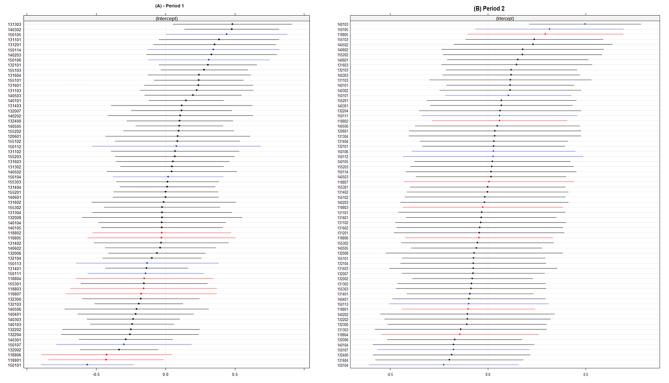
Individual factors associated with covid-19 mortality were sex, older age, primary education, country of birth and poorer health as indicated by the Charlson Co-morbidity Index. The area-level variables associated were high deprivation (OR: 1.56, CI: 1.18-2.08), population density (OR: 1.14, CI: 1.08-1.21), and usual care. Together, this explained 85.7% of the variation between catchment areas in period 1 and most variation was due to individual risk factors in period 2. Little of the residual variation was attributed to differences between catchment areas.
CONCLUSION
Integrated care in Norrtälje may have facilitated a more coordinated response during period 1, compared to municipalities with usual care. In the future, integrated care should be considered as an approach to better protect and meet the care needs of older people during emergency situations.
背景
在斯德哥尔摩地区的诺尔塔勒耶市,有一个联合的综合护理组织提供医疗和社会护理,这可能使该市对 COVID-19 大流行的反应更加协调,与否则分散的瑞典系统相比。本研究比较了斯德哥尔摩市、索德塔尔耶市和诺尔塔勒耶市 70 岁及以上人群 COVID-19 死亡率的风险,同时考虑了地区和个体危险因素。
方法
一项基于人群的研究使用链接登记数据,在感兴趣的三个城市中,于 2020 年 3 月至 8 月和 2020 年 9 月至 2021 年 2 月期间,对 70 岁以上人群(N=127575)的 COVID-19 死亡率进行了研究。使用多水平逻辑模型,对 68 个集水区居民个体和区域水平变量对 COVID-19 死亡率的影响进行了检验。
结果
个体因素与 COVID-19 死亡率相关的因素包括性别、年龄较大、接受初等教育、出生国家和较差的健康状况(Charlson 合并症指数)。与区域水平变量相关的因素包括高贫困率(OR:1.56,CI:1.18-2.08)、人口密度(OR:1.14,CI:1.08-1.21)和常规护理。这些因素共同解释了 1 期集水区之间变异的 85.7%,大部分变异是由于 2 期个体风险因素造成的。剩余的变异很少归因于集水区之间的差异。
结论
与常规护理的城市相比,诺尔塔勒耶的综合护理可能在第一阶段促进了更协调的反应。在未来,应考虑综合护理作为一种更好地保护和满足老年人在紧急情况下的护理需求的方法。

 Zotero 插件