
产钴胺素原核生物的全球生物地理学和生态影响。
Global biogeography and ecological implications of cobamide-producing prokaryotes.
机构信息
State Key Laboratory of Urban and Regional Ecology, Research Center for Eco-Environmental Sciences, Chinese Academy of Sciences, Beijing 100085, China.
University of Chinese Academy of Sciences, Beijing 100049, China.
出版信息
ISME J. 2024 Jan 8;18(1). doi: 10.1093/ismejo/wrae009.
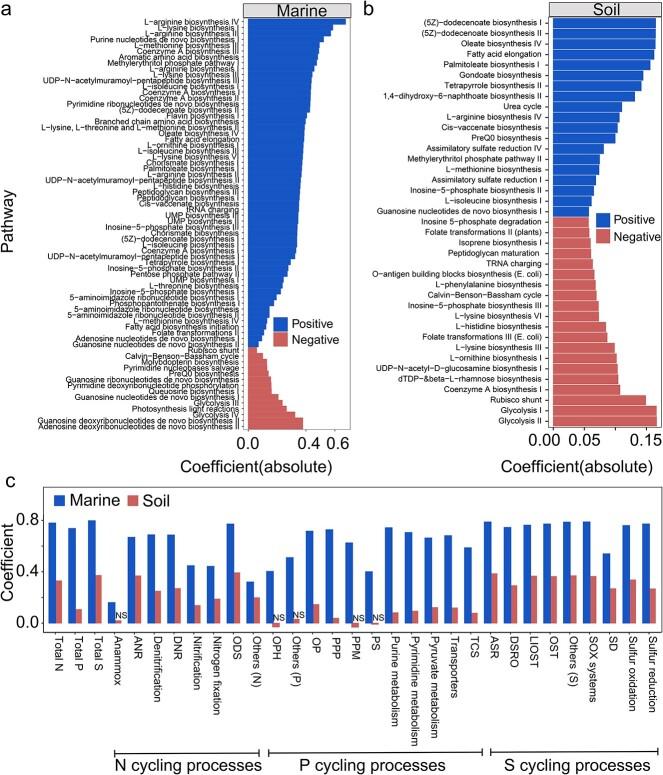
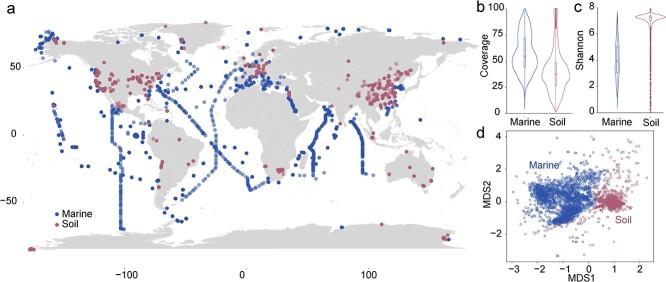
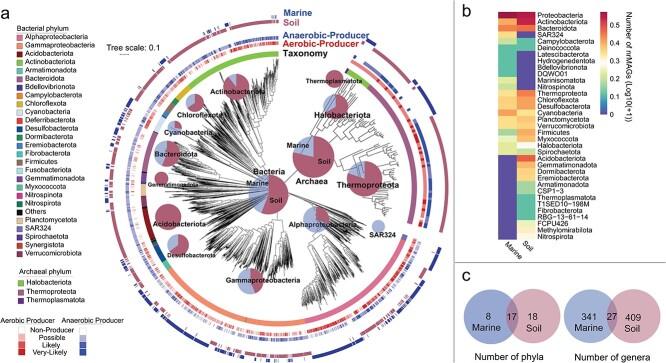
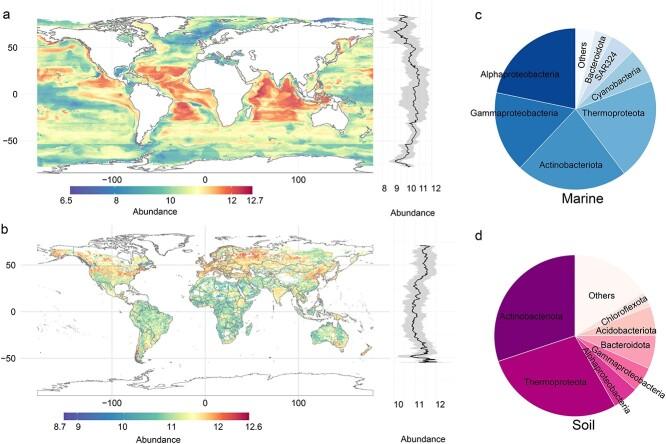
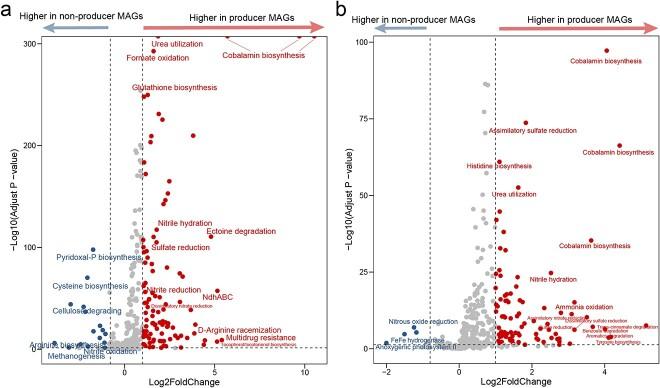
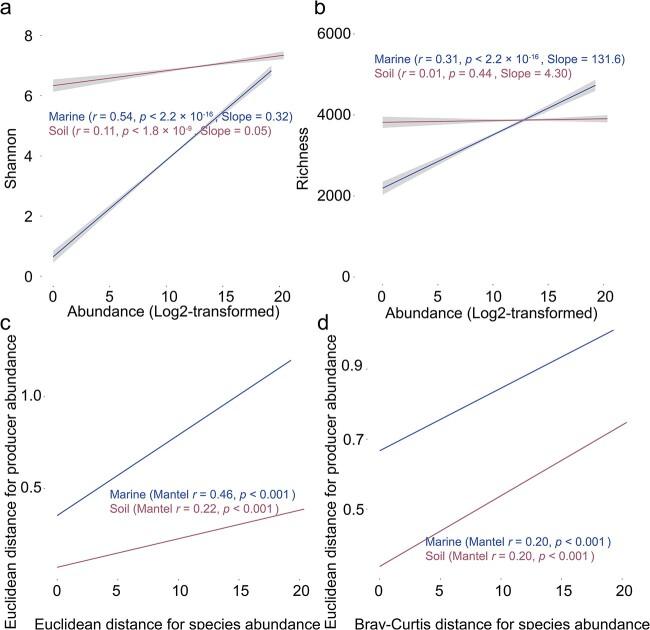
Cobamides, a class of essential coenzymes synthesized only by a subset of prokaryotes, are model nutrients in microbial interaction studies and play significant roles in global ecosystems. Yet, their spatial patterns and functional roles remain poorly understood. Herein, we present an in-depth examination of cobamide-producing microorganisms, drawn from a comprehensive analysis of 2862 marine and 2979 soil metagenomic samples. A total of 1934 nonredundant metagenome-assembled genomes (MAGs) potentially capable of producing cobamides de novo were identified. The cobamide-producing MAGs are taxonomically diverse but habitat specific. They constituted only a fraction of all the recovered MAGs, with the majority of MAGs being potential cobamide users. By mapping the distribution of cobamide producers in marine and soil environments, distinct latitudinal gradients were observed: the marine environment showed peak abundance at the equator, whereas soil environments peaked at mid-latitudes. Importantly, significant and positive links between the abundance of cobamide producers and the diversity and functions of microbial communities were observed, as well as their promotional roles in essential biogeochemical cycles. These associations were more pronounced in marine samples than in soil samples, which suggests a heightened propensity for microorganisms to engage in cobamide sharing in fluid environments relative to the more spatially restricted soil environment. These findings shed light on the global patterns and potential ecological roles of cobamide-producing microorganisms in marine and soil ecosystems, enhancing our understanding of large-scale microbial interactions.
钴胺素是一类只能由部分原核生物合成的必需辅酶,是微生物相互作用研究中的典型营养素,在全球生态系统中发挥着重要作用。然而,它们的空间分布模式和功能作用仍知之甚少。在此,我们对来自 2862 个海洋和 2979 个土壤宏基因组样本的综合分析中,对产生钴胺素的微生物进行了深入研究。总共鉴定出 1934 个非冗余的能够从头合成钴胺素的宏基因组组装基因组(MAG)。产生钴胺素的 MAG 在分类上多种多样,但具有生境特异性。它们只占所有回收 MAG 的一小部分,而大多数 MAG 是潜在的钴胺素使用者。通过对海洋和土壤环境中钴胺素生产者的分布进行映射,观察到了明显的纬度梯度:海洋环境在赤道处丰度最高,而土壤环境在中纬度处丰度最高。重要的是,观察到了钴胺素生产者的丰度与微生物群落的多样性和功能之间存在显著的正相关关系,以及它们在重要生物地球化学循环中的促进作用。这些关联在海洋样本中比在土壤样本中更为明显,这表明在流体环境中,微生物参与钴胺素共享的倾向相对于空间上更为受限的土壤环境更高。这些发现揭示了产生钴胺素的微生物在海洋和土壤生态系统中的全球分布模式和潜在生态作用,增强了我们对大规模微生物相互作用的理解。

 Zotero 插件