
代谢组学:高通量分析微生物基因组的功能特征、代谢、生物地球化学和群落尺度的功能网络。
METABOLIC: high-throughput profiling of microbial genomes for functional traits, metabolism, biogeochemistry, and community-scale functional networks.
机构信息
Department of Bacteriology, University of Wisconsin-Madison, Madison, WI, 53706, USA.
Department of Integrative Biology, University of Wisconsin-Madison, Madison, WI, 53706, USA.
出版信息
Microbiome. 2022 Feb 16;10(1):33. doi: 10.1186/s40168-021-01213-8.
BACKGROUND
Advances in microbiome science are being driven in large part due to our ability to study and infer microbial ecology from genomes reconstructed from mixed microbial communities using metagenomics and single-cell genomics. Such omics-based techniques allow us to read genomic blueprints of microorganisms, decipher their functional capacities and activities, and reconstruct their roles in biogeochemical processes. Currently available tools for analyses of genomic data can annotate and depict metabolic functions to some extent; however, no standardized approaches are currently available for the comprehensive characterization of metabolic predictions, metabolite exchanges, microbial interactions, and microbial contributions to biogeochemical cycling.
RESULTS
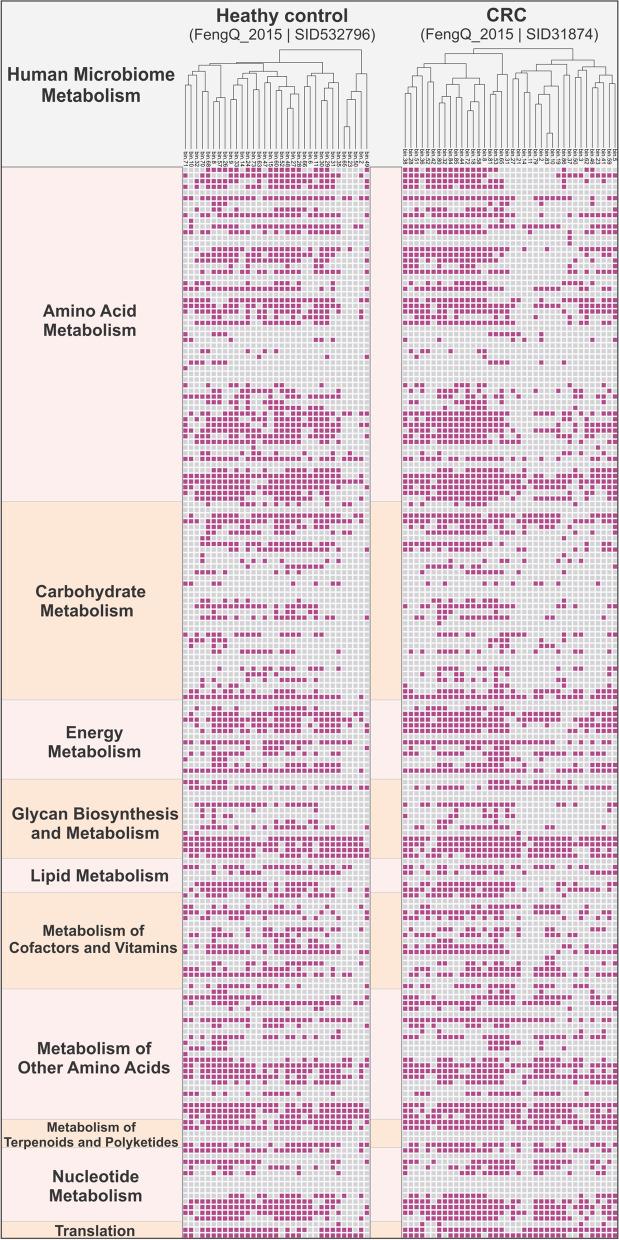
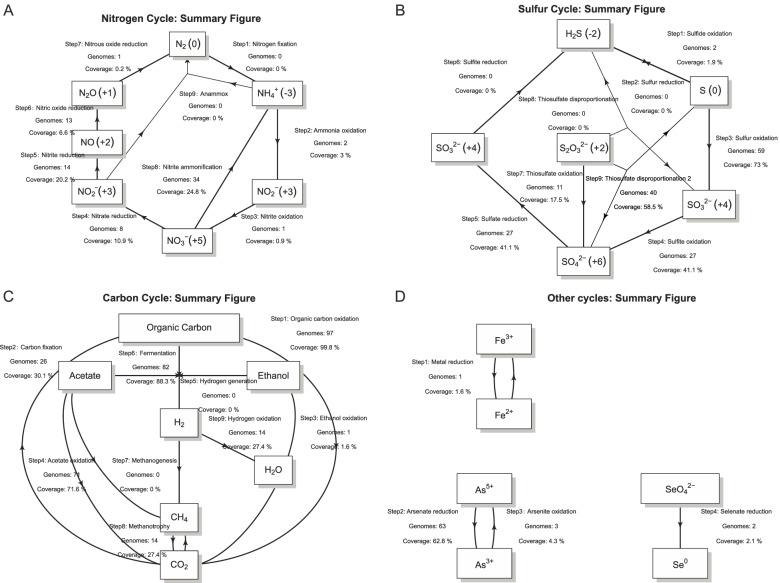
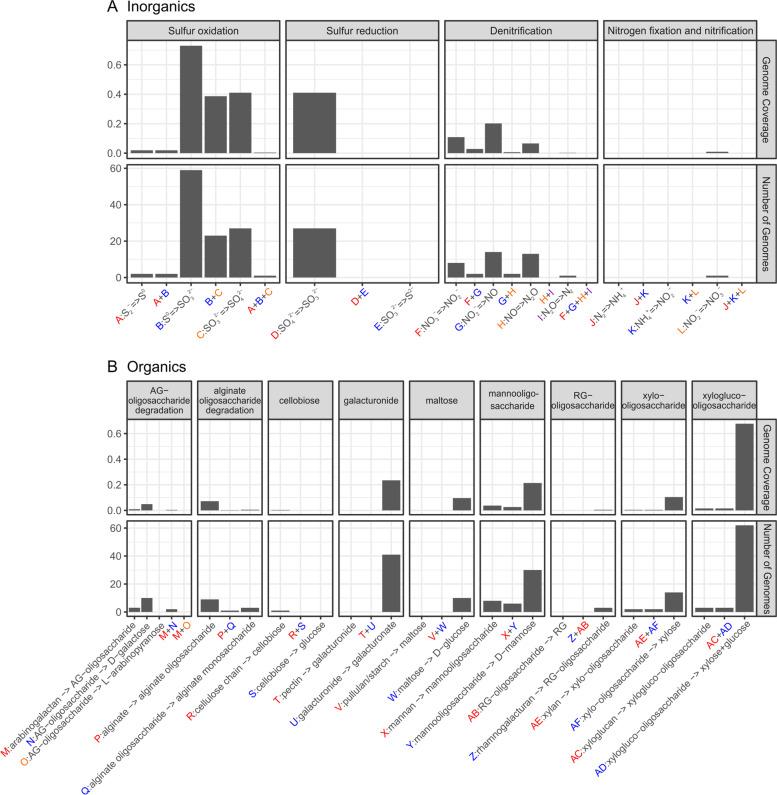
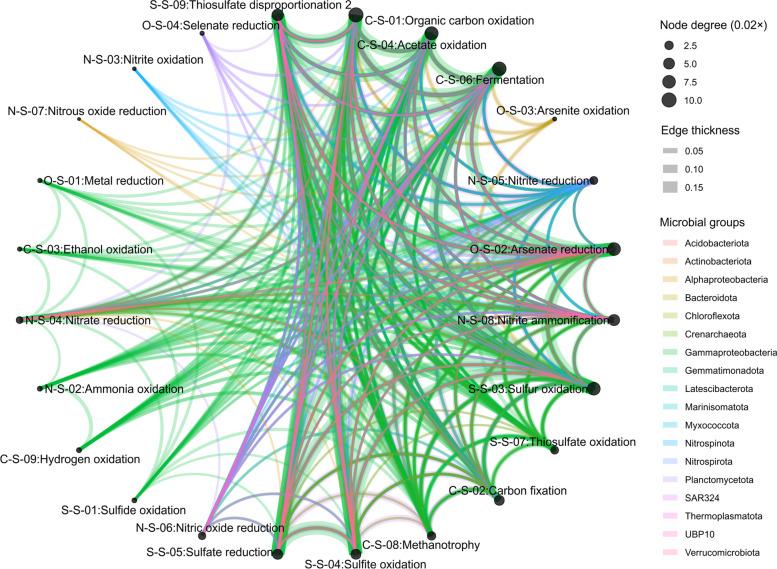
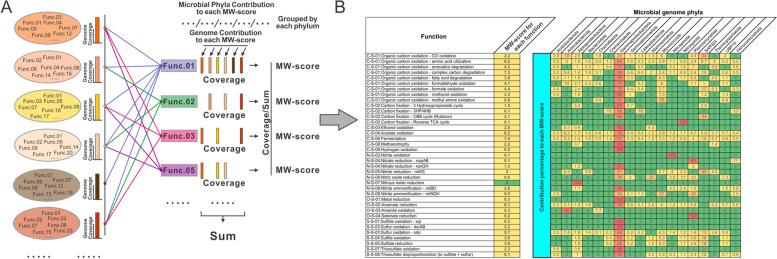
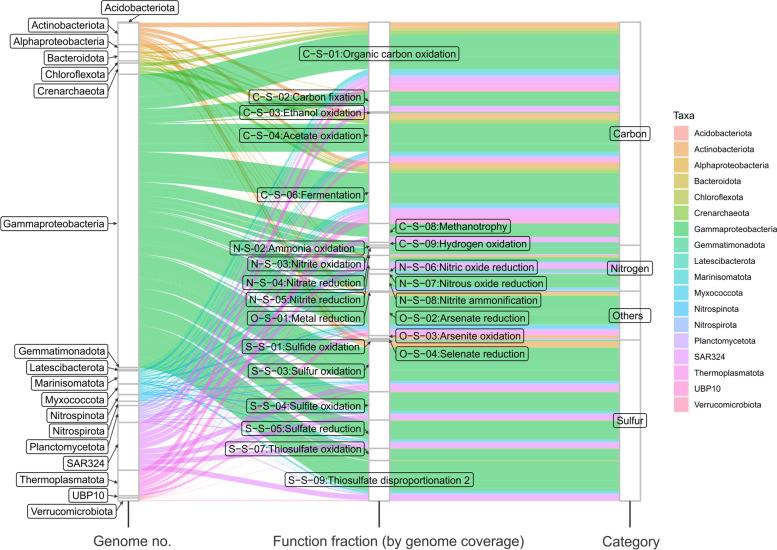
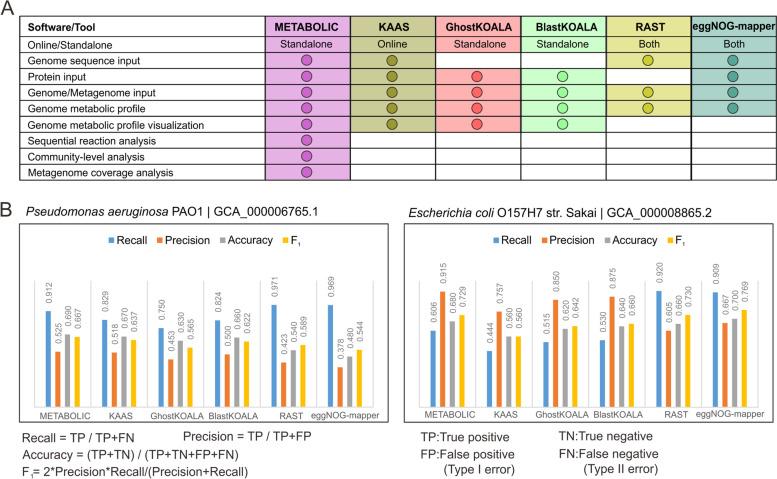
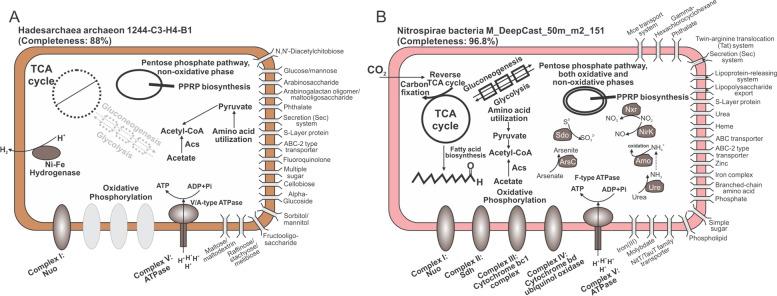
We present METABOLIC (METabolic And BiogeOchemistry anaLyses In miCrobes), a scalable software to advance microbial ecology and biogeochemistry studies using genomes at the resolution of individual organisms and/or microbial communities. The genome-scale workflow includes annotation of microbial genomes, motif validation of biochemically validated conserved protein residues, metabolic pathway analyses, and calculation of contributions to individual biogeochemical transformations and cycles. The community-scale workflow supplements genome-scale analyses with determination of genome abundance in the microbiome, potential microbial metabolic handoffs and metabolite exchange, reconstruction of functional networks, and determination of microbial contributions to biogeochemical cycles. METABOLIC can take input genomes from isolates, metagenome-assembled genomes, or single-cell genomes. Results are presented in the form of tables for metabolism and a variety of visualizations including biogeochemical cycling potential, representation of sequential metabolic transformations, community-scale microbial functional networks using a newly defined metric "MW-score" (metabolic weight score), and metabolic Sankey diagrams. METABOLIC takes ~ 3 h with 40 CPU threads to process ~ 100 genomes and corresponding metagenomic reads within which the most compute-demanding part of hmmsearch takes ~ 45 min, while it takes ~ 5 h to complete hmmsearch for ~ 3600 genomes. Tests of accuracy, robustness, and consistency suggest METABOLIC provides better performance compared to other software and online servers. To highlight the utility and versatility of METABOLIC, we demonstrate its capabilities on diverse metagenomic datasets from the marine subsurface, terrestrial subsurface, meadow soil, deep sea, freshwater lakes, wastewater, and the human gut.
CONCLUSION
METABOLIC enables the consistent and reproducible study of microbial community ecology and biogeochemistry using a foundation of genome-informed microbial metabolism, and will advance the integration of uncultivated organisms into metabolic and biogeochemical models. METABOLIC is written in Perl and R and is freely available under GPLv3 at https://github.com/AnantharamanLab/METABOLIC . Video abstract.
背景
微生物组科学的进步在很大程度上得益于我们能够通过宏基因组学和单细胞基因组学从混合微生物群落中重建的基因组来研究和推断微生物生态学。此类基于组学的技术使我们能够读取微生物的基因组蓝图,破译其功能能力和活性,并重建它们在生物地球化学过程中的作用。目前用于基因组数据分析的工具可以在某种程度上注释和描绘代谢功能;然而,目前尚无用于全面表征代谢预测、代谢物交换、微生物相互作用以及微生物对生物地球化学循环贡献的标准化方法。
结果
我们提出了 METABOLIC(用于微生物的代谢和生物地球化学分析),这是一种可扩展的软件,可通过单个生物体和/或微生物群落的基因组分辨率来推进微生物生态学和生物地球化学研究。基因组规模的工作流程包括微生物基因组注释、生物化学验证的保守蛋白残基的基序验证、代谢途径分析以及对单个生物地球化学转化和循环的贡献计算。群落规模的工作流程通过确定微生物组中的基因组丰度、潜在的微生物代谢交接和代谢物交换、功能网络的重建以及微生物对生物地球化学循环的贡献来补充基因组规模的分析。METABOLIC 可以接受来自分离物、宏基因组组装基因组或单细胞基因组的输入基因组。结果以代谢表和各种可视化形式呈现,包括生物地球化学循环潜力、连续代谢转化的表示、使用新定义的度量标准“MW 分数(metabolic weight score)”的群落规模微生物功能网络以及代谢 Sankey 图。METABOLIC 可在 40 个 CPU 线程下耗时约 3 小时处理约 100 个基因组及其相应的宏基因组读数,其中最耗时的部分是 hmmsearch,耗时约 45 分钟,而完成 3600 个基因组的 hmmsearch 则需要约 5 小时。准确性、稳健性和一致性测试表明,与其他软件和在线服务器相比,METABOLIC 提供了更好的性能。为了突出 METABOLIC 的实用性和多功能性,我们在海洋次表层、陆地次表层、草地土壤、深海、淡水湖泊、废水和人类肠道的各种宏基因组数据集上展示了其功能。
结论
METABOLIC 通过基于基因组的微生物代谢信息为微生物群落生态学和生物地球化学的一致和可重复研究奠定了基础,并将促进未培养生物纳入代谢和生物地球化学模型。METABOLIC 是用 Perl 和 R 编写的,根据 GPLv3 可在 https://github.com/AnantharamanLab/METABOLIC 上免费获得。视频摘要。


 Zotero 插件