
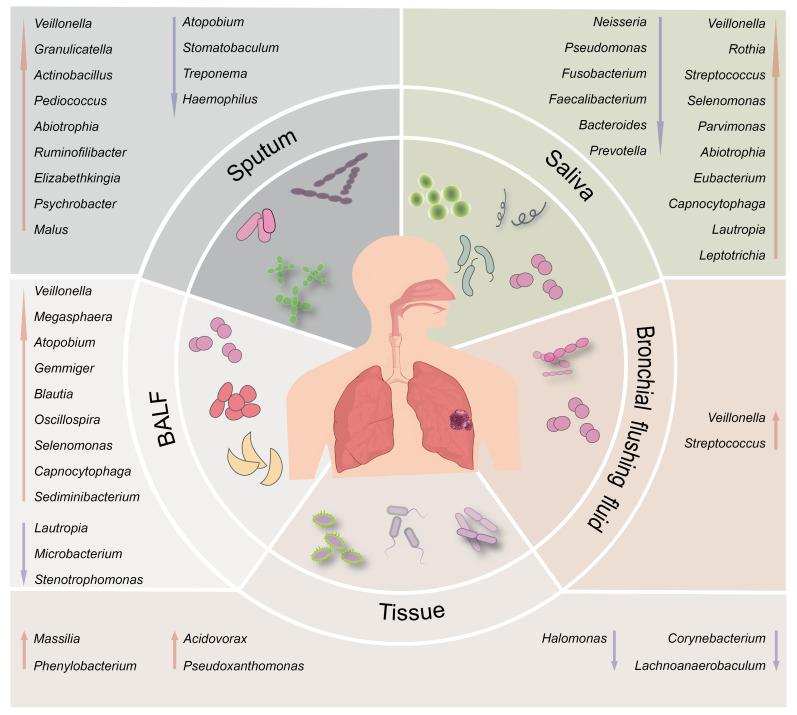
肺癌呼吸道不同部位的共生微生物群落以及受影响的潜在宿主免疫过程。
Symbiotic microbial communities in various locations of the lung cancer respiratory tract along with potential host immunological processes affected.
机构信息
Respiratory Department, The First Affiliated Hospital of Zhengzhou University, Zhengzhou, Henan, China.
Henan Key Laboratory of Precision Diagnosis of Respiratory Infectious Diseases, The Second Affiliated Hospital of Zhengzhou University, Zhengzhou, Henan, China.
出版信息
Front Cell Infect Microbiol. 2024 Feb 2;14:1296295. doi: 10.3389/fcimb.2024.1296295. eCollection 2024.
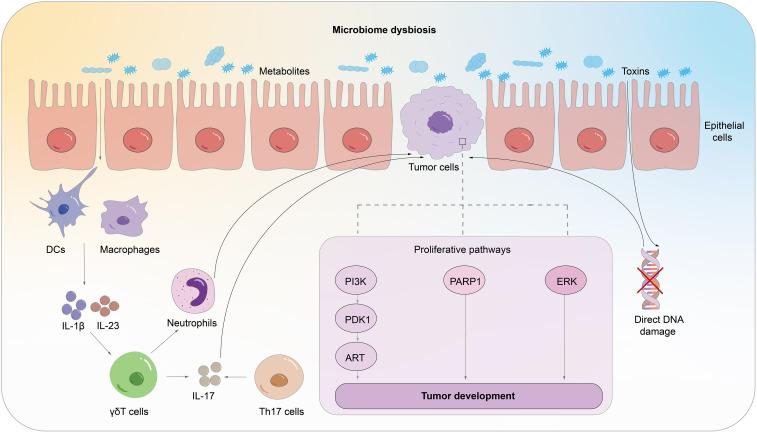
Lung cancer has the highest mortality rate among all cancers worldwide. The 5-year overall survival rate for non-small cell lung cancer (NSCLC) is estimated at around 26%, whereas for small cell lung cancer (SCLC), the survival rate is only approximately 7%. This disease places a significant financial and psychological burden on individuals worldwide. The symbiotic microbiota in the human body has been significantly associated with the occurrence, progression, and prognosis of various diseases, such as asthma, chronic obstructive pulmonary disease (COPD), and cystic fibrosis. Studies have demonstrated that respiratory symbiotic microorganisms and their metabolites play a crucial role in modulating immune function and contributing to the pathophysiology of lung cancer through their interactions with the host. In this review, we provide a comprehensive overview of the microbial characteristics associated with lung cancer, with a focus on the respiratory tract microbiota from different locations, including saliva, sputum, bronchoalveolar lavage fluid (BALF), bronchial brush samples, and tissue. We describe the respiratory tract microbiota's biodiversity characteristics by anatomical region, elucidating distinct pathological features, staging, metastasis, host chromosomal mutations, immune therapies, and the differentiated symbiotic microbiota under the influence of environmental factors. Our exploration investigates the intrinsic mechanisms linking the microbiota and its host. Furthermore, we have also provided a comprehensive review of the immune mechanisms by which microbiota are implicated in the development of lung cancer. Dysbiosis of the respiratory microbiota can promote or inhibit tumor progression through various mechanisms, including DNA damage and genomic instability, activation and regulation of the innate and adaptive immune systems, and stimulation of epithelial cells leading to the upregulation of carcinogenesis-related pathways.
肺癌是全球所有癌症中死亡率最高的癌症。非小细胞肺癌(NSCLC)的 5 年总生存率估计约为 26%,而小细胞肺癌(SCLC)的生存率仅约为 7%。这种疾病给全球个人带来了巨大的经济和心理负担。人体内共生微生物群与各种疾病的发生、发展和预后密切相关,如哮喘、慢性阻塞性肺疾病(COPD)和囊性纤维化。研究表明,呼吸共生微生物及其代谢物通过与宿主相互作用,在调节免疫功能和促进肺癌的病理生理学方面发挥着重要作用。在这篇综述中,我们全面概述了与肺癌相关的微生物特征,重点介绍了来自不同部位的呼吸道微生物群,包括唾液、痰、支气管肺泡灌洗液(BALF)、支气管刷样本和组织。我们按解剖区域描述了呼吸道微生物群的生物多样性特征,阐明了不同的病理特征、分期、转移、宿主染色体突变、免疫治疗以及在环境因素影响下的分化共生微生物群。我们探索了微生物群与其宿主之间内在联系的机制。此外,我们还全面回顾了微生物群参与肺癌发生的免疫机制。呼吸道微生物群的失调可以通过多种机制促进或抑制肿瘤的进展,包括 DNA 损伤和基因组不稳定性、先天和适应性免疫系统的激活和调节,以及刺激上皮细胞导致致癌相关途径的上调。
 Zotero 插件