
mRNA 的综合杂质分析:评估当前技术和先进分析技术。
Comprehensive Impurity Profiling of mRNA: Evaluating Current Technologies and Advanced Analytical Techniques.
机构信息
Cell Therapy Engineering and Development, Genentech, 1 DNA Way, South San Francisco, California 94080, United States.
Protein Analytical Chemistry, Genentech, 1 DNA Way, South San Francisco, California 94080, United States.
出版信息
Anal Chem. 2024 Mar 5;96(9):3886-3897. doi: 10.1021/acs.analchem.3c05539. Epub 2024 Feb 20.
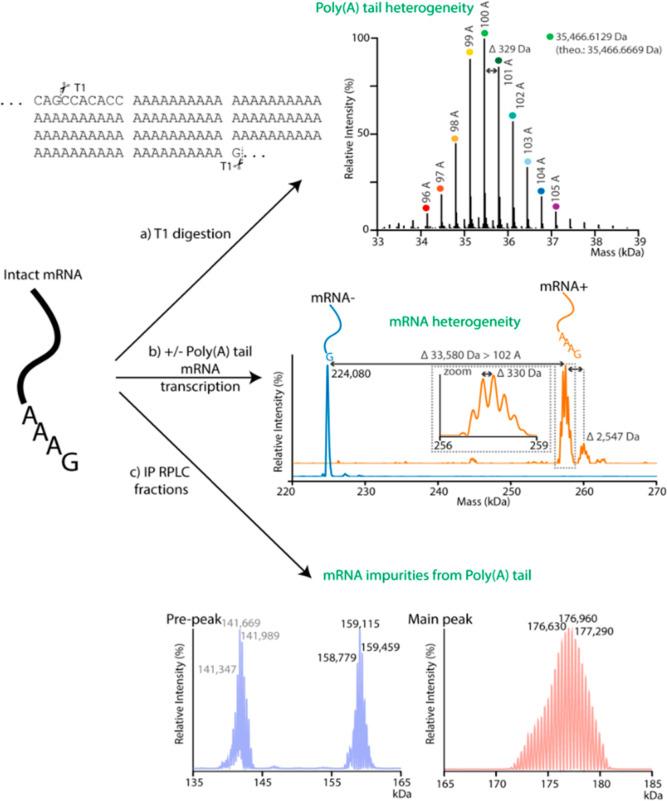
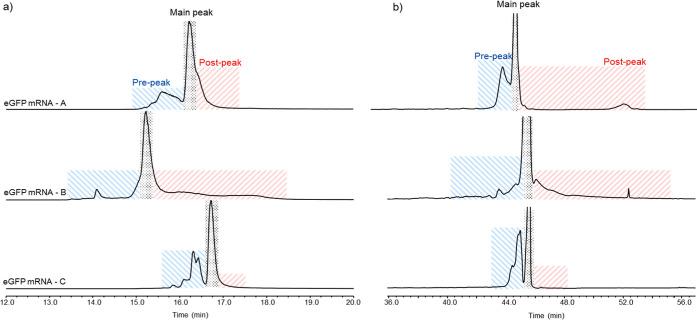
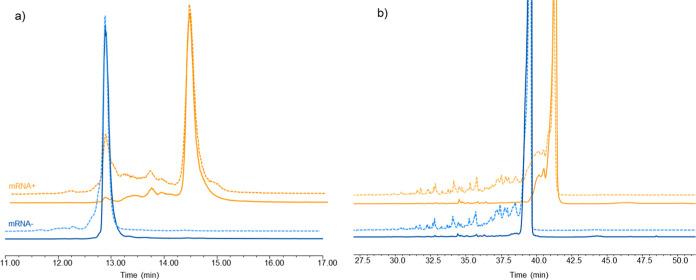
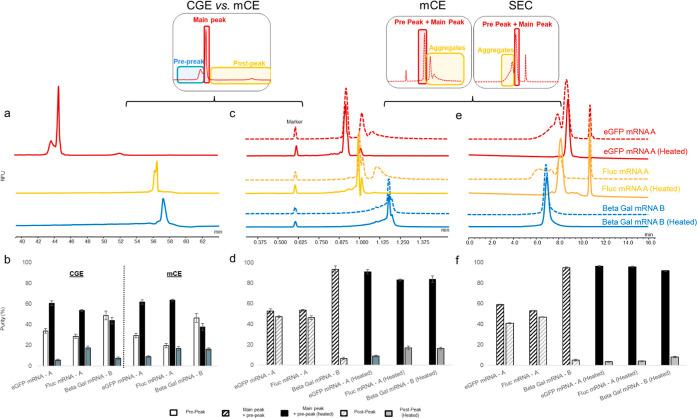
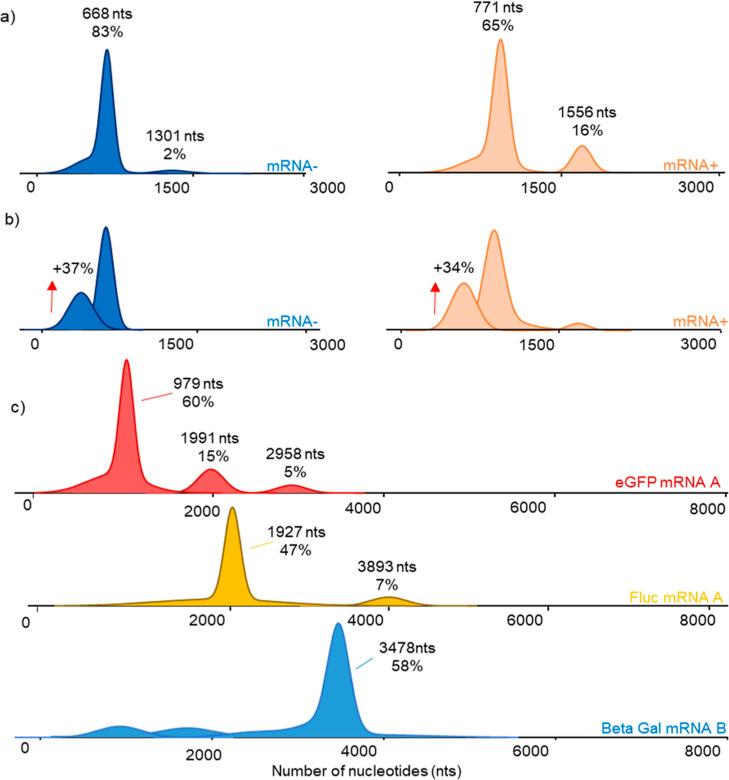
In vitro transcription (IVT) of mRNA is a versatile platform for a broad range of biotechnological applications. Its rapid, scalable, and cost-effective production makes it a compelling choice for the development of mRNA-based cancer therapies and vaccines against infectious diseases. The impurities generated during mRNA production can potentially impact the safety and efficacy of mRNA therapeutics, but their structural complexity has not been investigated in detail yet. This study pioneers a comprehensive profiling of IVT mRNA impurities, integrating current technologies with innovative analytical tools. We have developed highly reproducible, efficient, and stability-indicating ion-pair reversed-phase liquid chromatography and capillary gel electrophoresis methods to determine the purity of mRNA from different suppliers. Furthermore, we introduced the applicability of microcapillary electrophoresis for high-throughput (<1.5 min analysis time per sample) mRNA impurity profiling. Our findings revealed that impurities are mainly attributed to mRNA variants with different poly(A) tail lengths due to aborted additions or partial hydrolysis and the presence of double-stranded mRNA (dsRNA) byproducts, particularly the dsRNA 3'-loop back form. We also implemented mass photometry and native mass spectrometry for the characterization of mRNA and its related product impurities. Mass photometry enabled the determination of the number of nucleotides of different mRNAs with high accuracy as well as the detection of their size variants [i.e., aggregates and partial and/or total absence of the poly(A) tail], thus providing valuable information on mRNA identity and integrity. In addition, native mass spectrometry provided insights into mRNA intact mass, heterogeneity, and important sequence features such as poly(A) tail length and distribution. This study highlights the existing bottlenecks and opportunities for improvement in the analytical characterization of IVT mRNA, thus contributing to the refinement and streamlining of mRNA production, paving the way for continued advancements in biotechnological applications.
体外转录 (IVT) mRNA 是一种用途广泛的平台,适用于多种生物技术应用。它快速、可扩展且具有成本效益,因此是开发基于 mRNA 的癌症疗法和针对传染病的疫苗的理想选择。mRNA 生产过程中产生的杂质可能会影响 mRNA 疗法的安全性和疗效,但它们的结构复杂性尚未得到详细研究。本研究开创性地对 IVT mRNA 杂质进行了全面分析,将当前技术与创新分析工具相结合。我们开发了高度重现、高效且具有稳定性指示的离子对反相液相色谱和毛细管凝胶电泳方法,以确定来自不同供应商的 mRNA 的纯度。此外,我们引入了微毛细管电泳在高通量 (<1.5 min 每个样品的分析时间) mRNA 杂质分析中的适用性。我们的研究结果表明,杂质主要归因于由于添加中止或部分水解而具有不同 poly(A) 尾长的 mRNA 变体,以及双链 RNA (dsRNA) 副产物的存在,特别是 dsRNA 3'-环回形式。我们还实施了质光法和天然质谱法来表征 mRNA 及其相关产物杂质。质光法能够高精度地确定不同 mRNA 的核苷酸数量以及它们的大小变体(即聚集体和 poly(A) 尾的部分或完全缺失),从而提供有关 mRNA 身份和完整性的有价值信息。此外,天然质谱法提供了有关 mRNA 完整质量、异质性以及重要序列特征(如 poly(A) 尾长度和分布)的信息。本研究强调了 IVT mRNA 分析特性方面存在的瓶颈和改进机会,从而有助于完善和简化 mRNA 生产,为生物技术应用的持续进步铺平道路。

 Zotero 插件