
用于犬类免疫治疗的自然杀伤细胞的特征改进与转化
Improved characterization and translation of NK cells for canine immunotherapy.
作者信息
Razmara Aryana M, Gingrich Alicia A, Toedebusch Christine M, Rebhun Robert B, Murphy William J, Kent Michael S, Canter Robert J
机构信息
Department of Surgery, University of California Davis School of Medicine, Sacramento, CA, United States.
MD Anderson Cancer Center, University of Texas, Houston, TX, United States.
出版信息
Front Vet Sci. 2024 Feb 6;11:1336158. doi: 10.3389/fvets.2024.1336158. eCollection 2024.
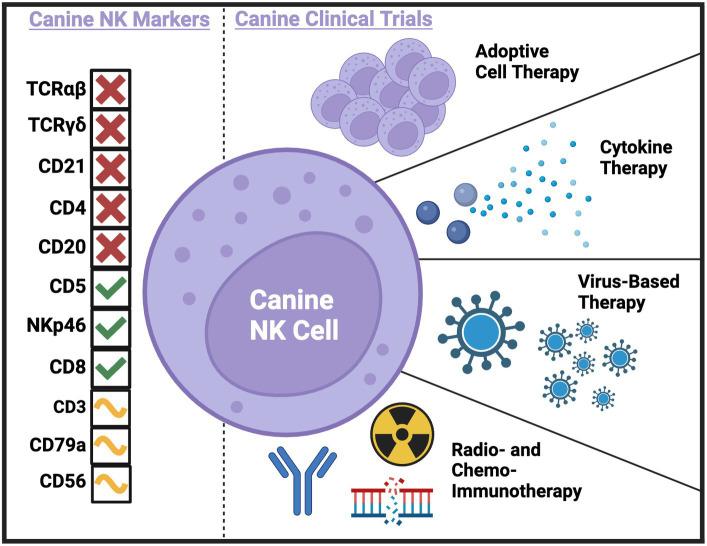
The field of cancer immunology has seen a meteoric rise in interest and application due to the discovery of immunotherapies that target immune cells, often leading to dramatic anti-tumor effects. However, successful cellular immunotherapy for solid tumors remains a challenge, and the application of immunotherapy to dogs with naturally occurring cancers has emerged as a high yield large animal model to bridge the bench-to-bedside challenges of immunotherapies, including those based on natural killer (NK) cells. Here, we review recent developments in the characterization and understanding of canine NK cells, a critical springboard for future translational NK immunotherapy research. The characterization of canine NK cells is exceptionally pertinent given the ongoing challenges in defining them and contextualizing their similarities and differences compared to human and murine NK cells compounded by the limited availability of validated canine specific reagents. Additionally, we summarize the current landscape of the clinical and translational literature employing strategies to capitalize on endogenous and exogenous NK cell immunotherapy in canine cancer patients. The insights regarding efficacy and immune correlates from these trials provide a solid foundation to design and test novel combinational therapies to enhance NK cell activity with the added benefit of motivating comparative work to translate these findings to human cancers with extensive similarities to their canine counterparts. The compilation of knowledge from basic canine NK phenotype and function to applications in first-in-dog clinical trials will support the canine cancer model and enhance translational work to improve cancer outcomes for both dogs and humans.
由于发现了针对免疫细胞的免疫疗法,癌症免疫学领域在关注度和应用方面迅速崛起,这些疗法常常能产生显著的抗肿瘤效果。然而,实体瘤的成功细胞免疫疗法仍然是一项挑战,将免疫疗法应用于患有自然发生癌症的犬类已成为一种高效的大型动物模型,以应对免疫疗法从实验室到临床应用的挑战,包括基于自然杀伤(NK)细胞的疗法。在此,我们综述了犬类NK细胞特征鉴定和理解方面的最新进展,这是未来转化性NK免疫疗法研究的关键跳板。鉴于在定义犬类NK细胞以及将它们与人类和小鼠NK细胞的异同进行背景化方面仍存在挑战,且经过验证的犬类特异性试剂供应有限,犬类NK细胞的特征鉴定格外重要。此外,我们总结了当前临床和转化文献的概况,这些文献采用策略利用内源性和外源性NK细胞免疫疗法治疗犬类癌症患者。这些试验中关于疗效和免疫相关性的见解为设计和测试新型联合疗法提供了坚实基础,以增强NK细胞活性,同时还有助于推动比较研究,将这些发现转化应用于与犬类癌症有广泛相似性的人类癌症。从犬类NK细胞的基本表型和功能到犬类首例临床试验应用的知识汇编,将支持犬类癌症模型,并加强转化研究工作,以改善犬类和人类的癌症治疗效果。
 Zotero 插件