
基于人类医学图像的有限元分析在小鼠骨关节炎模型构建中的应用
The application of human medical image-based finite element analysis in the construction of mouse osteoarthritis models.
作者信息
Dong Zicai, Yang Chunhan, Zhang Dingsong, Dong Shiwu
机构信息
Department of Biomedical Materials Science, Third Military Medical University (Army Medical University), 400038, Chongqing, PR China.
School of Stomatology, Kunming Medical University, 650000, Kunming, PR China.
出版信息
Heliyon. 2024 Feb 14;10(4):e26226. doi: 10.1016/j.heliyon.2024.e26226. eCollection 2024 Feb 29.
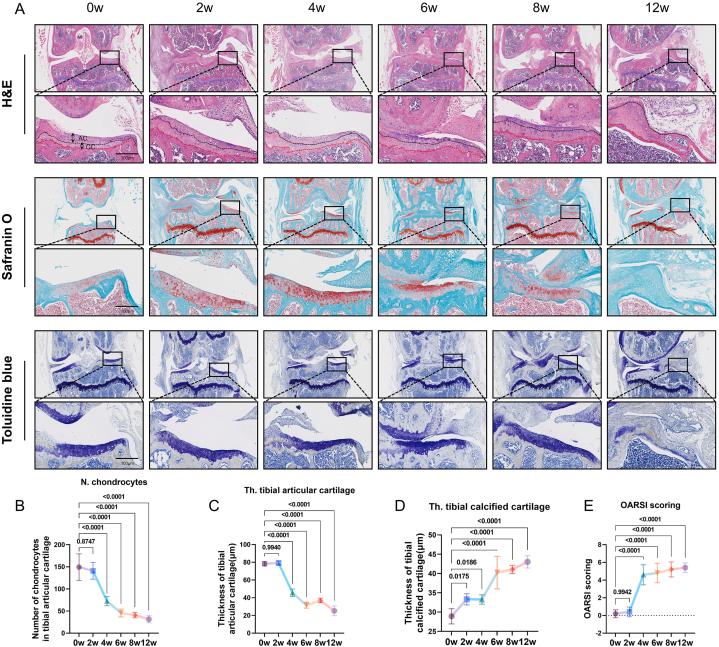
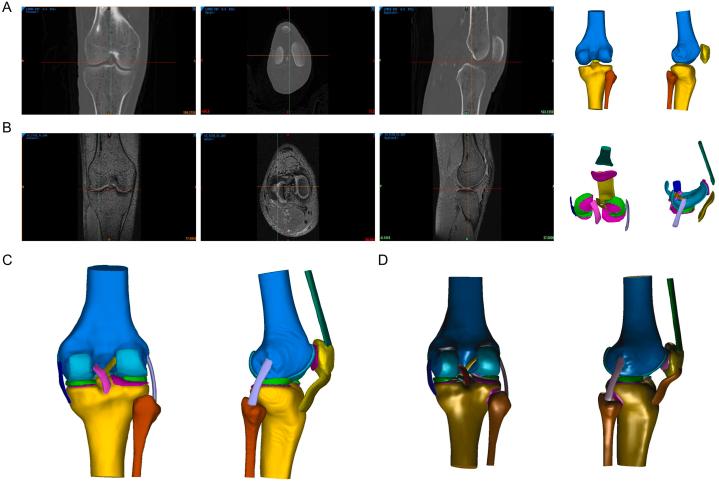
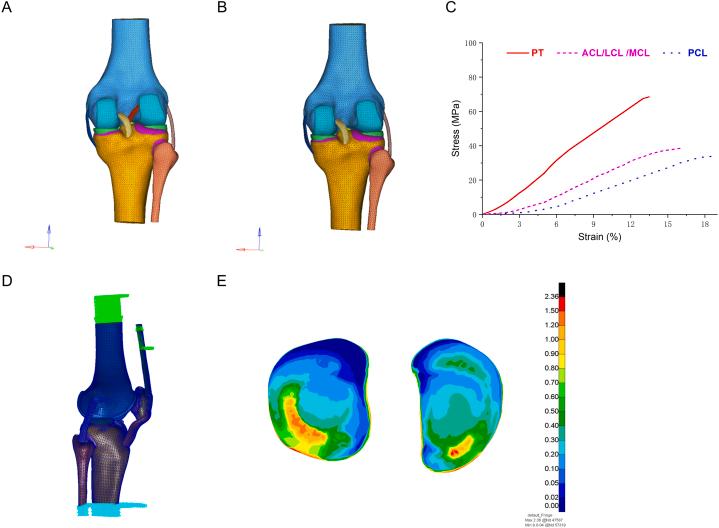
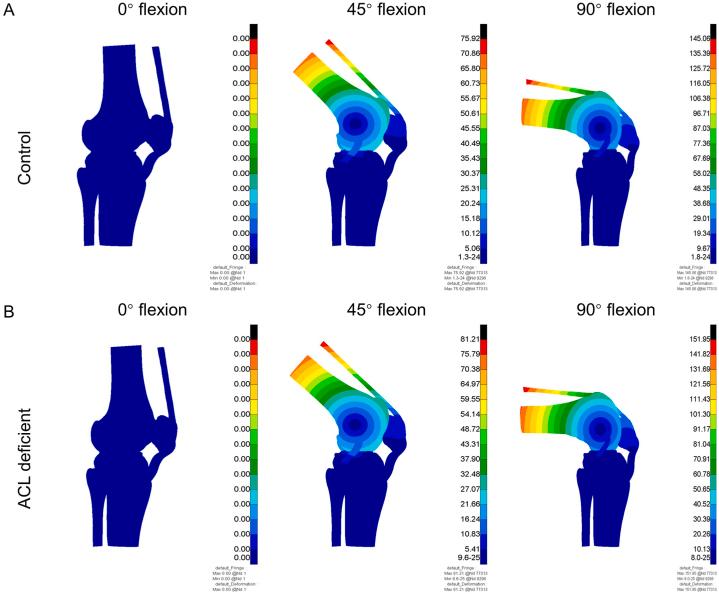
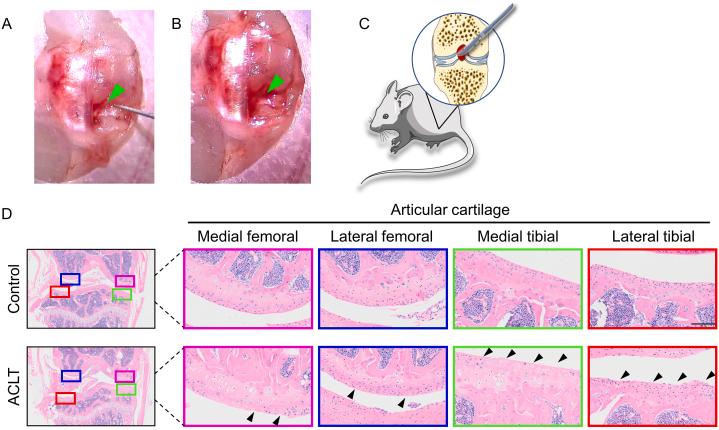
The anterior cruciate ligament plays an important role in maintaining the stability of the knee joint. Its injury is a common cause of articular cartilage degeneration and osteoarthritis (OA). The anterior cruciate ligament transection (ACLT) method is commonly employed to construct animal models for studying osteoarthritis pathogenesis. However, the precise mechanism of how anterior cruciate ligament injury leads to osteoarthritis is not fully understood. This study utilized finite element analysis (FEA) with human medical images to simulate the biomechanical characteristics of anterior cruciate ligament (ACL) injury. Osteoarthritis models were subsequently established in C57BL/6 mice using ACLT to explore the link between ACL injury and osteoarthritis development. The results of FEA showed that, after an anterior cruciate ligament injury, abnormal stress was concentrated in the medial and lateral of the femoral and tibial articular cartilage during knee flexion and extension. In order to better display the pathological changes of articular cartilage in the stress areas, the medial tibial cartilage was selected as a representative area to observe the continuous pathological changes of articular cartilage in ACLT-induced OA mice. The articular cartilage degeneration was most dramatic at four weeks post ACLT operation and then remained relatively stable. This study may have significant implications for the development of animal models of osteoarthritis and provide a reference for histopathological research on osteoarthritis.
前交叉韧带在维持膝关节稳定性方面起着重要作用。其损伤是关节软骨退变和骨关节炎(OA)的常见原因。前交叉韧带横断(ACLT)方法常用于构建研究骨关节炎发病机制的动物模型。然而,前交叉韧带损伤导致骨关节炎的确切机制尚未完全明了。本研究利用人体医学图像进行有限元分析(FEA),以模拟前交叉韧带(ACL)损伤的生物力学特征。随后通过ACLT在C57BL/6小鼠中建立骨关节炎模型,以探究ACL损伤与骨关节炎发展之间的联系。有限元分析结果显示,前交叉韧带损伤后,在膝关节屈伸过程中,异常应力集中在股骨和胫骨关节软骨的内侧和外侧。为了更好地显示应力区域关节软骨的病理变化,选择胫骨内侧软骨作为代表性区域,观察ACLT诱导的OA小鼠关节软骨的连续病理变化。关节软骨退变在ACLT手术后四周最为显著,随后保持相对稳定。本研究可能对骨关节炎动物模型的开发具有重要意义,并为骨关节炎的组织病理学研究提供参考。


 Zotero 插件