
利用单细胞测序技术研究 CAR-T 细胞和白血病/淋巴瘤的转录特征。
Harnessing the Transcriptional Signatures of CAR-T-Cells and Leukemia/Lymphoma Using Single-Cell Sequencing Technologies.
机构信息
Division of Hematology-Oncology, Department of Pediatrics, Kaohsiung Medical University Hospital, Kaohsiung Medical University, Kaohsiung 807, Taiwan.
Graduate Institute of Medicine, College of Medicine, Kaohsiung Medical University, Kaohsiung 807, Taiwan.
出版信息
Int J Mol Sci. 2024 Feb 19;25(4):2416. doi: 10.3390/ijms25042416.
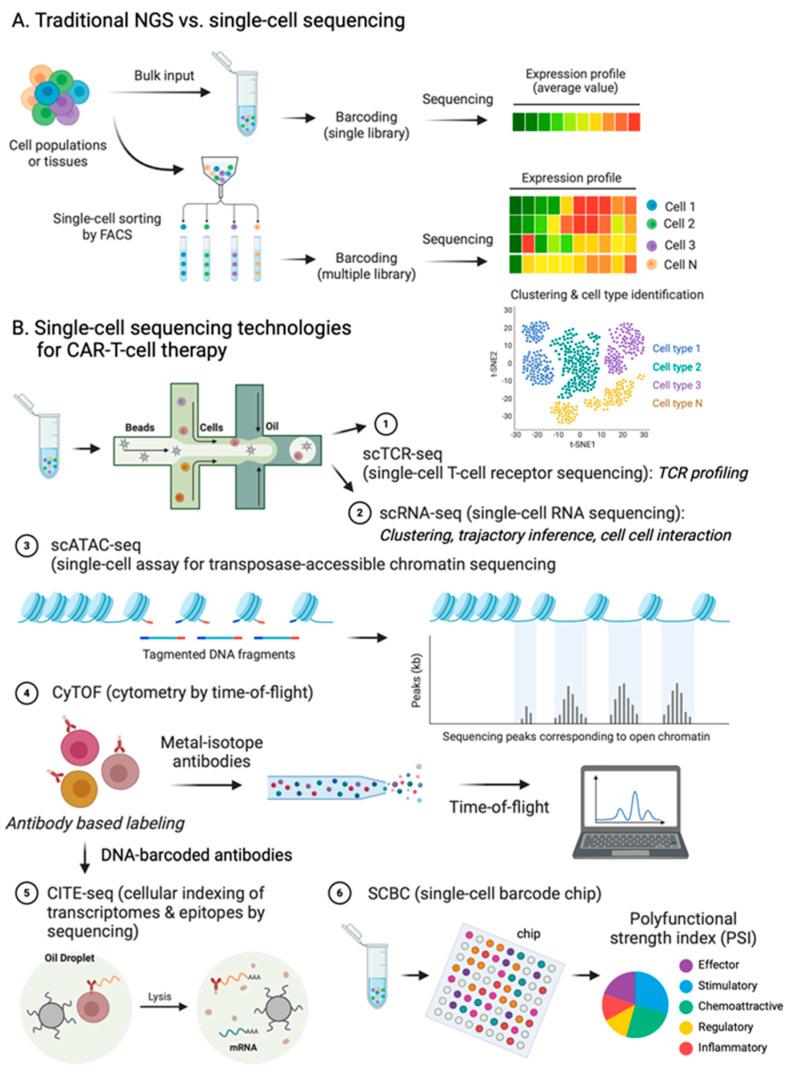
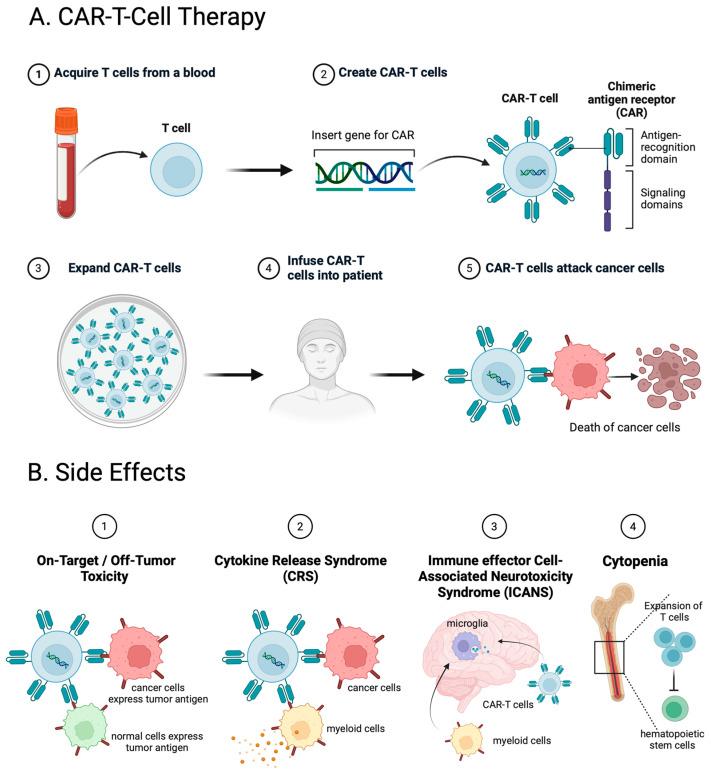
Chimeric antigen receptor (CAR)-T-cell therapy has greatly improved outcomes for patients with relapsed or refractory hematological malignancies. However, challenges such as treatment resistance, relapse, and severe toxicity still hinder its widespread clinical application. Traditional transcriptome analysis has provided limited insights into the complex transcriptional landscape of both leukemia cells and engineered CAR-T-cells, as well as their interactions within the tumor microenvironment. However, with the advent of single-cell sequencing techniques, a paradigm shift has occurred, providing robust tools to unravel the complexities of these factors. These techniques enable an unbiased analysis of cellular heterogeneity and molecular patterns. These insights are invaluable for precise receptor design, guiding gene-based T-cell modification, and optimizing manufacturing conditions. Consequently, this review utilizes modern single-cell sequencing techniques to clarify the transcriptional intricacies of leukemia cells and CAR-Ts. The aim of this manuscript is to discuss the potential mechanisms that contribute to the clinical failures of CAR-T immunotherapy. We examine the biological characteristics of CAR-Ts, the mechanisms that govern clinical responses, and the intricacies of adverse events. By exploring these aspects, we hope to gain a deeper understanding of CAR-T therapy, which will ultimately lead to improved clinical outcomes and broader therapeutic applications.
嵌合抗原受体 (CAR)-T 细胞疗法极大地改善了复发或难治性血液系统恶性肿瘤患者的预后。然而,治疗耐药、复发和严重毒性等挑战仍然阻碍了其广泛的临床应用。传统的转录组分析为白血病细胞和工程化 CAR-T 细胞的复杂转录景观及其在肿瘤微环境中的相互作用提供了有限的见解。然而,随着单细胞测序技术的出现,发生了范式转变,为揭示这些因素的复杂性提供了强大的工具。这些技术能够对细胞异质性和分子模式进行无偏分析。这些见解对于精确的受体设计、指导基于基因的 T 细胞修饰以及优化制造条件非常宝贵。因此,本综述利用现代单细胞测序技术阐明了白血病细胞和 CAR-T 的转录复杂性。本文的目的是讨论导致 CAR-T 免疫疗法临床失败的潜在机制。我们研究了 CAR-T 的生物学特性、控制临床反应的机制以及不良事件的复杂性。通过探索这些方面,我们希望更深入地了解 CAR-T 疗法,从而最终改善临床结果并扩大治疗应用。


 Zotero 插件