
绿茶提取物改善视网膜脱离后视网膜的功能、代谢和形态恶化
Amelioration of Functional, Metabolic, and Morphological Deterioration in the Retina following Retinal Detachment by Green Tea Extract.
作者信息
Chu Kai On, Yip Yolanda Wong Ying, Chan Kwok Ping, Wang Chi Chiu, Ng Danny Siu Chun, Pang Chi Pui
机构信息
Department of Ophthalmology and Visual Sciences, The Chinese University of Hong Kong, Hong Kong, China.
Department of Obstetrics and Gynaecology, The Chinese University of Hong Kong, Hong Kong, China.
出版信息
Antioxidants (Basel). 2024 Feb 15;13(2):235. doi: 10.3390/antiox13020235.
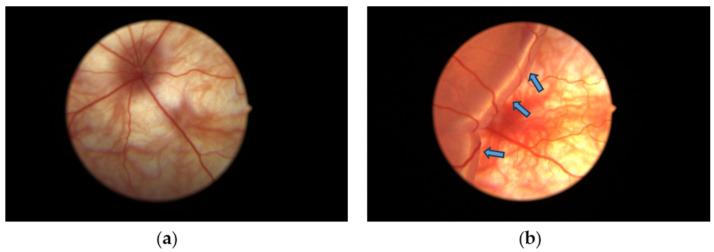
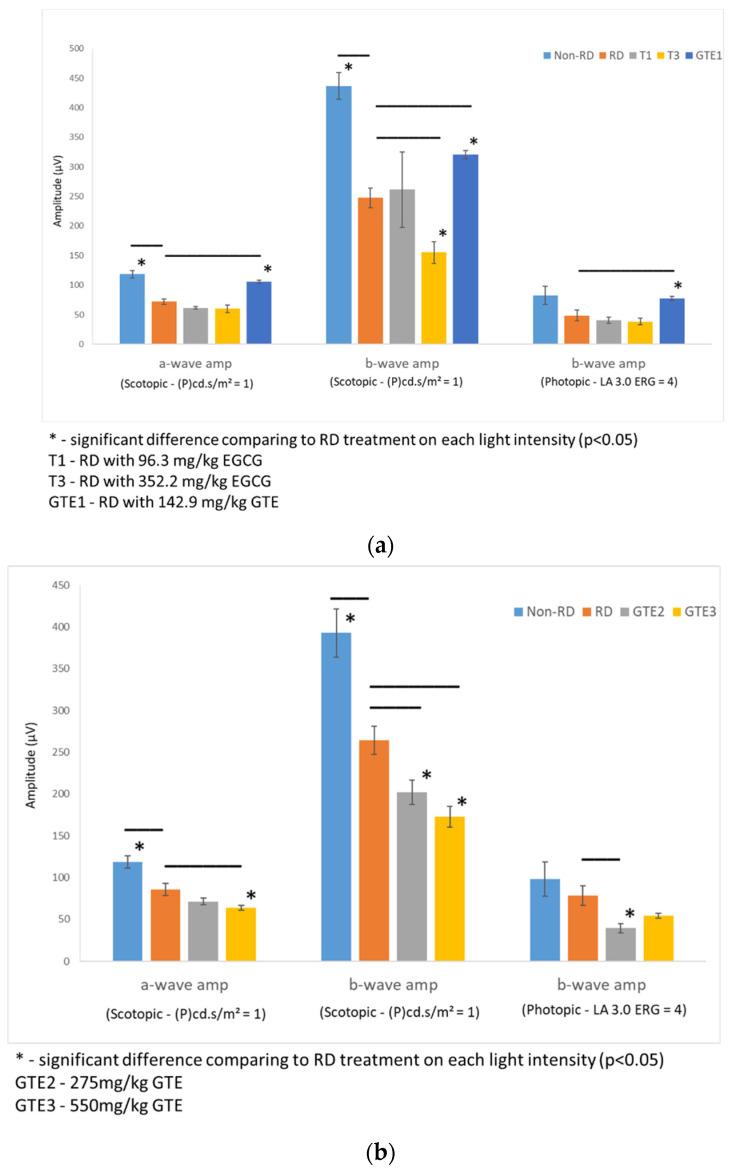
Retinal detachment (RD) can result in the loss of photoreceptors that cause vision impairment and potential blindness. This study explores the protective effects of the oral administration of green tea extract (GTE) in a rat model of RD. Various doses of GTE or epigallocatechin gallate (EGCG), the most active ingredient in green tea catechins, were administered to Sprague Dawley (SD) rats with experimentally induced retinal detachment. The rats received sub-retinal injections of hyaluronic acid (0.1%) to induce RD and were given different doses of GTE and EGCG twice daily for three days. Notably, a low dose of GTE (142.9 mg/kg) caused significantly higher signal amplitudes in electroretinograms (ERGs) compared to higher GTE doses and any doses of EGCG. After administration of a low dose of GTE, the outer nuclear layer thickness, following normalization, of the detached retina reduced to 82.4 ± 8.2% (Mean ± SEM, < 0.05) of the thickness by RD treatment. This thickness was similar to non-RD conditions, at 83.5 ± 4.7% (Mean ± SEM) of the thickness following RD treatment. In addition, the number of TUNEL-positive cells decreased from 76.7 ± 7.4 to 4.7 ± 1.02 (Mean ± SEM, < 0.0001). This reduction was associated with the inhibition of apoptosis through decreased sphingomyelin levels and mitigation of oxidative stress shown by a lowered protein carbonyl level, which may involve suppression of HIF-1α pathways. Furthermore, GTE showed anti-inflammatory effects by reducing inflammatory cytokines and increasing resolving cytokines. In conclusion, low-dose GTE, but not EGCG, significantly alleviated RD-induced apoptosis, oxidative stress, inflammation, and energy insufficiency within a short period and without affecting energy metabolism. These findings suggest the potential of low-dose GTE as a protective agent for the retina in RD.
视网膜脱离(RD)可导致光感受器丧失,进而引起视力损害甚至失明。本研究探讨口服绿茶提取物(GTE)对RD大鼠模型的保护作用。将不同剂量的GTE或表没食子儿茶素没食子酸酯(EGCG,绿茶儿茶素中最具活性的成分)给予实验性诱导视网膜脱离的Sprague Dawley(SD)大鼠。大鼠接受玻璃体内注射透明质酸(0.1%)以诱导RD,并连续三天每天两次给予不同剂量的GTE和EGCG。值得注意的是,与较高剂量的GTE和任何剂量的EGCG相比,低剂量的GTE(142.9 mg/kg)在视网膜电图(ERG)中引起显著更高的信号幅度。给予低剂量的GTE后,脱离视网膜经标准化后的外核层厚度降至RD治疗后厚度的82.4±8.2%(平均值±标准误,P<0.05)。该厚度与非RD条件相似,为RD治疗后厚度的83.5±4.7%(平均值±标准误)。此外,TUNEL阳性细胞数量从76.7±7.4降至4.7±1.02(平均值±标准误,P<0.0001)。这种减少与通过降低鞘磷脂水平抑制细胞凋亡以及通过降低蛋白质羰基水平减轻氧化应激有关,这可能涉及抑制HIF-1α通路。此外,GTE通过减少炎性细胞因子和增加消退性细胞因子表现出抗炎作用。总之,低剂量的GTE而非EGCG在短时间内显著减轻了RD诱导的细胞凋亡、氧化应激、炎症和能量不足,且不影响能量代谢。这些发现表明低剂量GTE作为RD中视网膜保护剂的潜力。



 Zotero 插件