
当炎症应激因素发生剧烈变化时,疾病表型可能在自身免疫性造血衰竭和髓系肿瘤之间发生转变。
When inflammatory stressors dramatically change, disease phenotypes may transform between autoimmune hematopoietic failure and myeloid neoplasms.
机构信息
Department of Hematology, The Central Hospital of Qingdao West Coast New Area, Qingdao, Shandong, China.
Department of Hematology, The Affiliated Hospital of Qingdao University, Qingdao, Shandong, China.
出版信息
Front Immunol. 2024 Feb 15;15:1339971. doi: 10.3389/fimmu.2024.1339971. eCollection 2024.
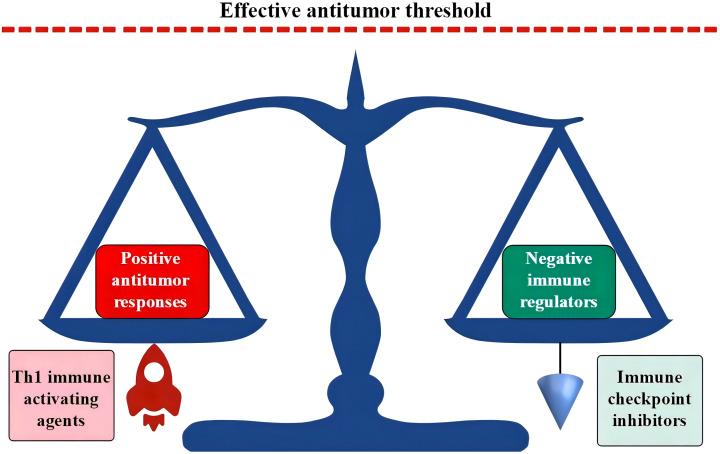
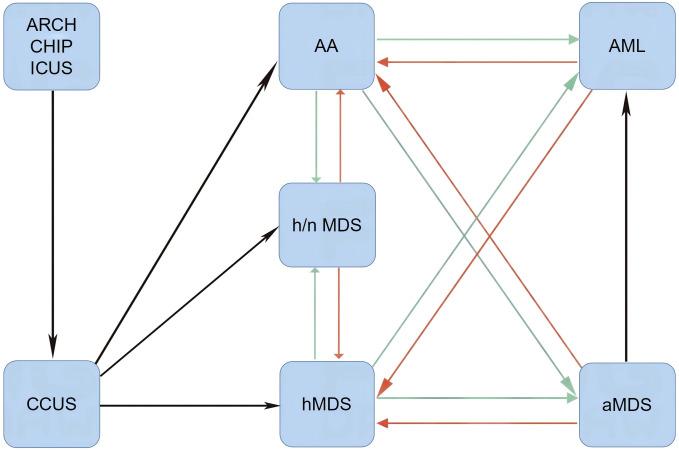
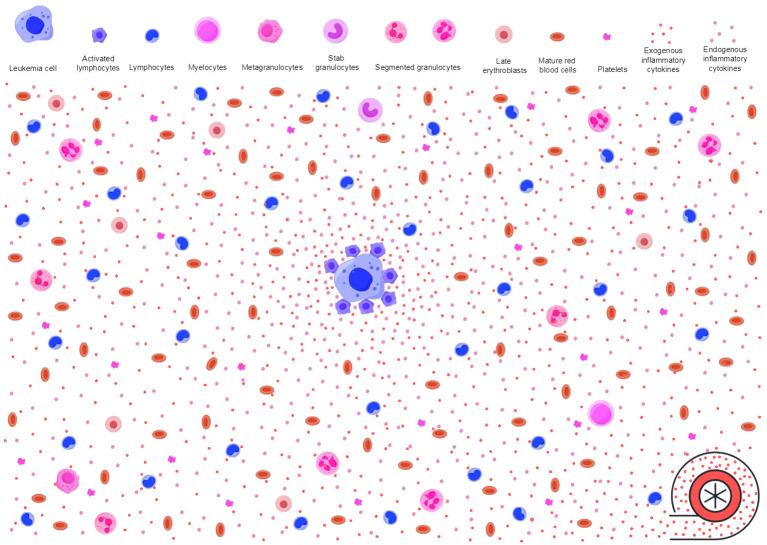
Aplastic anemia (AA) and hypoplastic myelodysplastic syndrome are paradigms of autoimmune hematopoietic failure (AHF). Myelodysplastic syndrome and acute myeloid leukemia are unequivocal myeloid neoplasms (MNs). Currently, AA is also known to be a clonal hematological disease. Genetic aberrations typically observed in MNs are detected in approximately one-third of AA patients. In AA patients harboring MN-related genetic aberrations, a poor response to immunosuppressive therapy (IST) and an increased risk of transformation to MNs occurring either naturally or after IST are predicted. Approximately 10%-15% of patients with severe AA transform the disease phenotype to MNs following IST, and in some patients, leukemic transformation emerges during or shortly after IST. Phenotypic transformations between AHF and MNs can occur reciprocally. A fraction of advanced MN patients experience an aplastic crisis during which leukemic blasts are repressed. The switch that shapes the disease phenotype is a change in the strength of extramedullary inflammation. Both AHF and MNs have an immune-active bone marrow (BM) environment (BME). In AHF patients, an inflamed BME can be evoked by infiltrated immune cells targeting neoplastic molecules, which contributes to the BM-specific autoimmune impairment. Autoimmune responses in AHF may represent an antileukemic mechanism, and inflammatory stressors strengthen antileukemic immunity, at least in a significant proportion of patients who have MN-related genetic aberrations. During active inflammatory episodes, normal and leukemic hematopoieses are suppressed, which leads to the occurrence of aplastic cytopenia and leukemic cell regression. The successful treatment of underlying infections mitigates inflammatory stress-related antileukemic activities and promotes the penetration of leukemic hematopoiesis. The effect of IST is similar to that of treating underlying infections. Investigating inflammatory stress-powered antileukemic immunity is highly important in theoretical studies and clinical practice, especially given the wide application of immune-activating agents and immune checkpoint inhibitors in the treatment of hematological neoplasms.
再生障碍性贫血(AA)和低增生性骨髓增生异常综合征是自身免疫性造血衰竭(AHF)的范例。骨髓增生异常综合征和急性髓系白血病是明确的髓系肿瘤(MNs)。目前,AA 也被认为是一种克隆性血液病。在大约三分之一的 AA 患者中检测到典型存在于 MNs 中的遗传异常。在携带 MN 相关遗传异常的 AA 患者中,预测其对免疫抑制治疗(IST)的反应不佳,并且自然或 IST 后向 MN 转化的风险增加。在接受 IST 治疗后,大约 10%-15%的严重 AA 患者会将疾病表型转化为 MN,在一些患者中,白血病转化出现在 IST 期间或之后不久。AHF 和 MN 之间的表型转化可以相互发生。一部分晚期 MN 患者在接受 IST 期间会经历再生障碍性危象,在此期间白血病细胞被抑制。塑造疾病表型的开关是骨髓(BM)外炎症强度的变化。AHF 和 MN 都有一个免疫活跃的 BM 环境(BME)。在 AHF 患者中,针对肿瘤分子的浸润免疫细胞可以引发炎症 BM,这导致 BM 特有的自身免疫损伤。AHF 中的自身免疫反应可能代表一种抗白血病机制,炎症应激因子增强了抗白血病免疫,至少在具有 MN 相关遗传异常的患者中,这种情况在很大一部分患者中存在。在活跃的炎症发作期间,正常和白血病造血受到抑制,导致再生障碍性细胞减少症和白血病细胞消退。成功治疗潜在感染减轻了炎症应激相关的抗白血病活性,并促进了白血病造血的渗透。IST 的效果类似于治疗潜在感染。在理论研究和临床实践中,研究炎症应激驱动的抗白血病免疫非常重要,特别是在免疫激活剂和免疫检查点抑制剂广泛应用于治疗血液系统肿瘤的情况下。

 Zotero 插件