
深入分析了一部分肠道共生菌,揭示了它们具有代谢具有益生元潜力的膳食碳水化合物的功能能力。
In-depth characterization of a selection of gut commensal bacteria reveals their functional capacities to metabolize dietary carbohydrates with prebiotic potential.
机构信息
Micalis Institute, Institut National de Recherche pour l'Agriculture, l'Alimentation et l'Environnement (INRAE), AgroParisTech, Université Paris-Saclay, Jouy-en-Josas, France.
General Mills France, Boulogne Billancourt, France.
出版信息
mSystems. 2024 Apr 16;9(4):e0140123. doi: 10.1128/msystems.01401-23. Epub 2024 Mar 5.
UNLABELLED
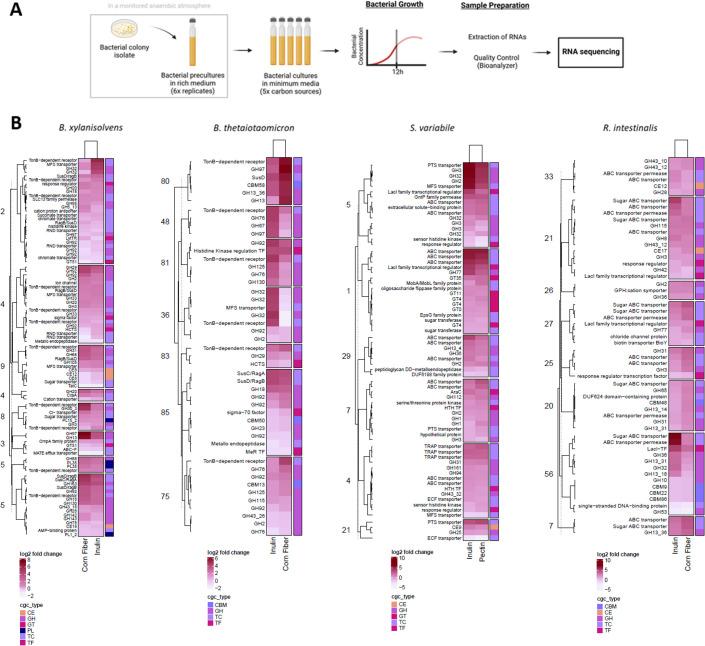
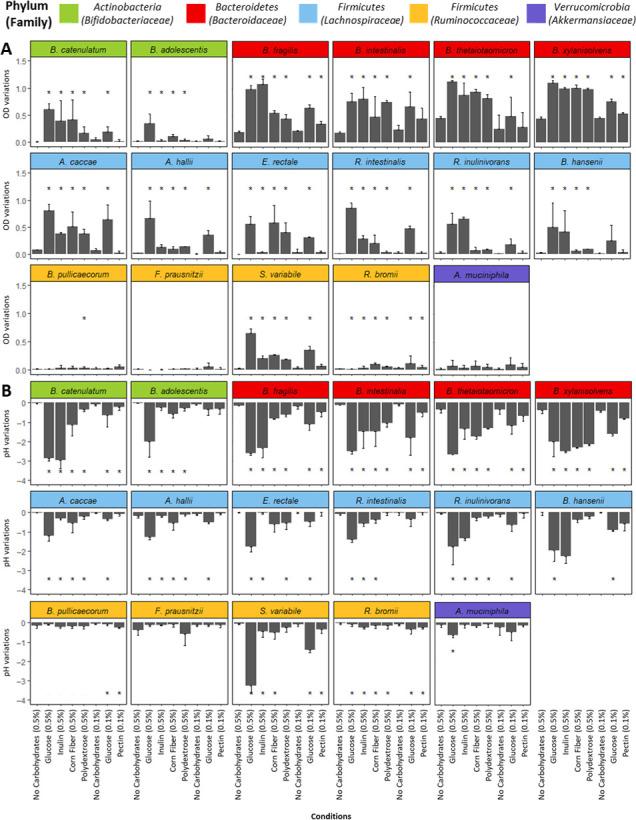
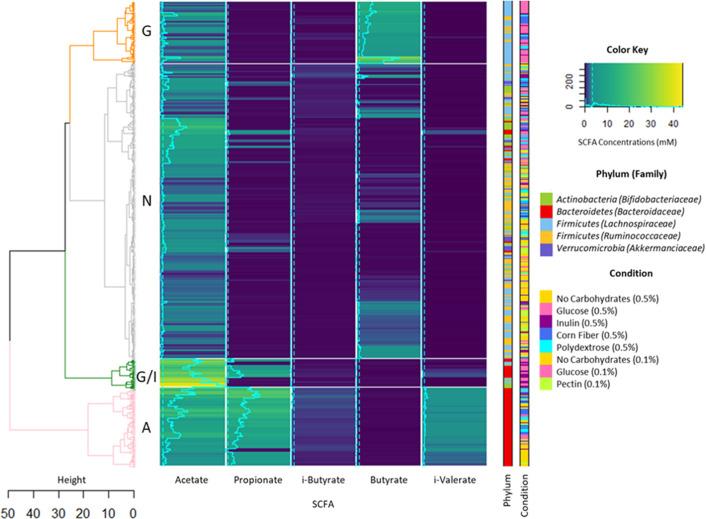
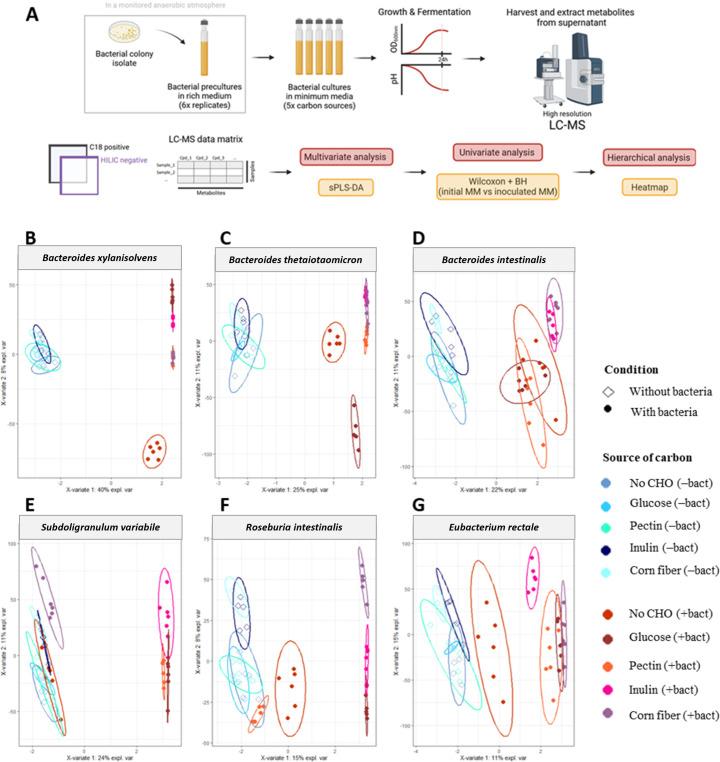
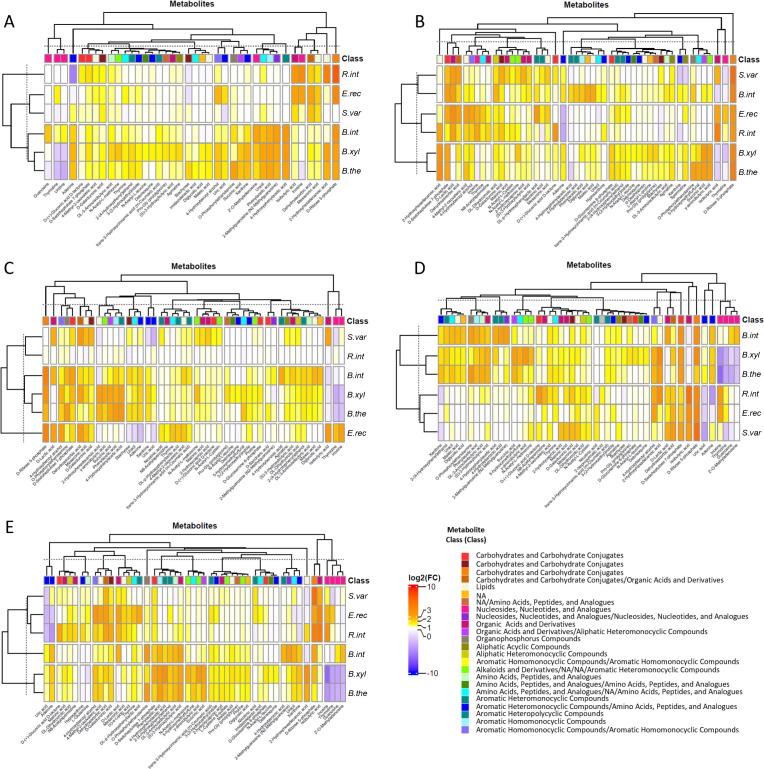
The microbial utilization of dietary carbohydrates is closely linked to the pivotal role of the gut microbiome in human health. Inherent to the modulation of complex microbial communities, a prebiotic implies the selective utilization of a specific substrate, relying on the metabolic capacities of targeted microbes. In this study, we investigated the metabolic capacities of 17 commensal bacteria of the human gut microbiome toward dietary carbohydrates with prebiotic potential. First, experiments allowed the classification of bacterial growth and fermentation profiles in response to various carbon sources, including agave inulin, corn fiber, polydextrose, and citrus pectin. The influence of phylogenetic affiliation appeared to statistically outweigh carbon sources in determining the degree of carbohydrate utilization. Second, we narrowed our focus on six commensal bacteria representative of the and phyla to perform an untargeted high-resolution liquid chromatography-mass spectrometry metabolomic analysis: , , , , and exhibited distinct metabolomic profiles in response to different carbon sources. The relative abundance of bacterial metabolites was significantly influenced by dietary carbohydrates, with these effects being strain-specific and/or carbohydrate-specific. Particularly, the findings indicated an elevation in short-chain fatty acids and other metabolites, including succinate, gamma-aminobutyric acid, and nicotinic acid. These metabolites were associated with putative health benefits. Finally, an RNA-Seq transcriptomic approach provided deeper insights into the underlying mechanisms of carbohydrate metabolization. Restricting our focus on four commensal bacteria, including , and , carbon sources did significantly modulate the level of bacterial genes related to the enzymatic machinery involved in the metabolization of dietary carbohydrates. This study provides a holistic view of the molecular strategies induced during the dynamic interplay between dietary carbohydrates with prebiotic potential and gut commensal bacteria.
IMPORTANCE
This study explores at a molecular level the interactions between commensal health-relevant bacteria and dietary carbohydrates holding prebiotic potential. We showed that prebiotic breakdown involves the specific activation of gene expression related to carbohydrate metabolism. We also identified metabolites produced by each bacteria that are potentially related to our digestive health. The characterization of the functional activities of health-relevant bacteria toward prebiotic substances can yield a better application of prebiotics in clinical interventions and personalized nutrition. Overall, this study highlights the importance of identifying the impact of prebiotics at a low resolution of the gut microbiota to characterize the activities of targeted bacteria that can play a crucial role in our health.
未加标签
饮食碳水化合物的微生物利用与肠道微生物群在人类健康中的关键作用密切相关。作为复杂微生物群落调节的固有属性,益生元意味着对特定底物的选择性利用,依赖于目标微生物的代谢能力。在这项研究中,我们研究了 17 种人类肠道微生物群共生菌对具有益生元潜力的饮食碳水化合物的代谢能力。首先,实验允许根据各种碳源(包括龙舌兰菊粉、玉米纤维、聚右旋糖和柑橘果胶)对细菌生长和发酵模式进行分类。系统发育相关性的影响似乎在决定碳水化合物利用程度方面大大超过了碳源。其次,我们将重点缩小到代表 和 门的六种共生菌,以进行非靶向高分辨率液相色谱-质谱代谢组学分析: 、 、 、 、 和 表现出不同的代谢组学特征,以响应不同的碳源。细菌代谢物的相对丰度受饮食碳水化合物的显著影响,这些影响具有菌株特异性和/或碳水化合物特异性。特别是,研究结果表明短链脂肪酸和其他代谢物(包括琥珀酸、γ-氨基丁酸和烟酸)的含量升高。这些代谢物与潜在的健康益处有关。最后,RNA-Seq 转录组学方法提供了对碳水化合物代谢底层机制的更深入了解。将我们的重点限制在包括 、 和 在内的四种共生菌上,碳源确实显著调节了与饮食碳水化合物代谢相关的酶机制相关的细菌基因的水平。这项研究提供了一个整体的观点,即在具有益生元潜力的饮食碳水化合物与肠道共生菌之间的动态相互作用过程中诱导的分子策略。
重要性
本研究在分子水平上探索了与具有益生元潜力的饮食碳水化合物相互作用的相关共生健康细菌,我们表明,益生元的分解涉及到与碳水化合物代谢相关的基因表达的特异性激活。我们还确定了每种细菌产生的潜在与我们的消化健康有关的代谢物。对健康相关细菌对益生元物质的功能活性进行特征描述,可以更好地将益生元应用于临床干预和个性化营养。总的来说,这项研究强调了在肠道微生物组的低分辨率下识别益生元影响的重要性,以描述在我们的健康中可能发挥关键作用的靶向细菌的活性。
 Zotero 插件