
C 反应蛋白/淋巴细胞比值作为急性胰腺炎的预后生物标志物:一项评估疾病严重程度的横断面研究。
C-reactive protein/lymphocyte ratio as a prognostic biomarker in acute pancreatitis: a cross-sectional study assessing disease severity.
机构信息
Department of Gastroenterology, First Hospital of Quanzhou Affiliated to Fujian Medical University, Quanzhou, Fujian, People's Republic of China.
出版信息
Int J Surg. 2024 Jun 1;110(6):3223-3229. doi: 10.1097/JS9.0000000000001273.
BACKGROUND
The C-reactive protein/lymphocyte ratio (CLR) is a prognostic biomarker of various diseases. However, its significance in acute pancreatitis (AP) remains unknown. The main aim of this study was to investigate the association between the CLR and disease severity in patients with AP.
METHODS
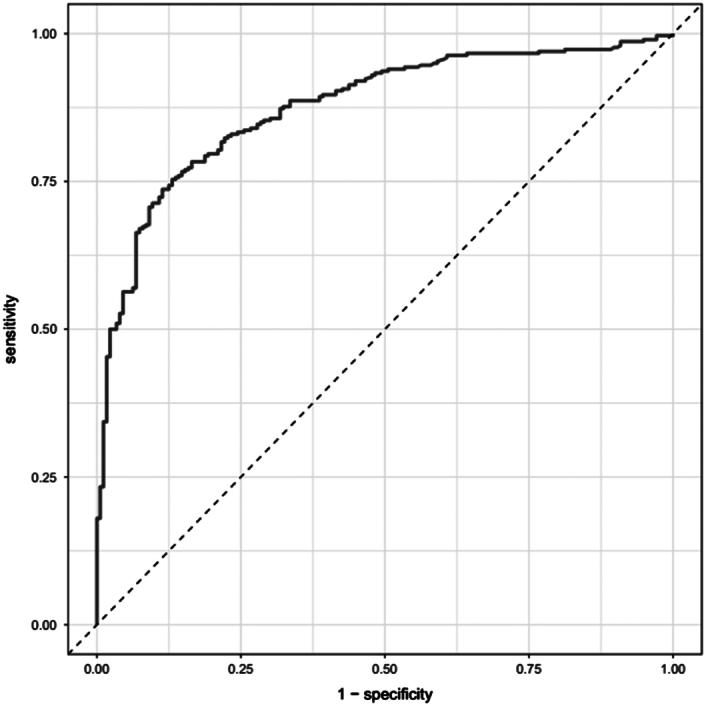
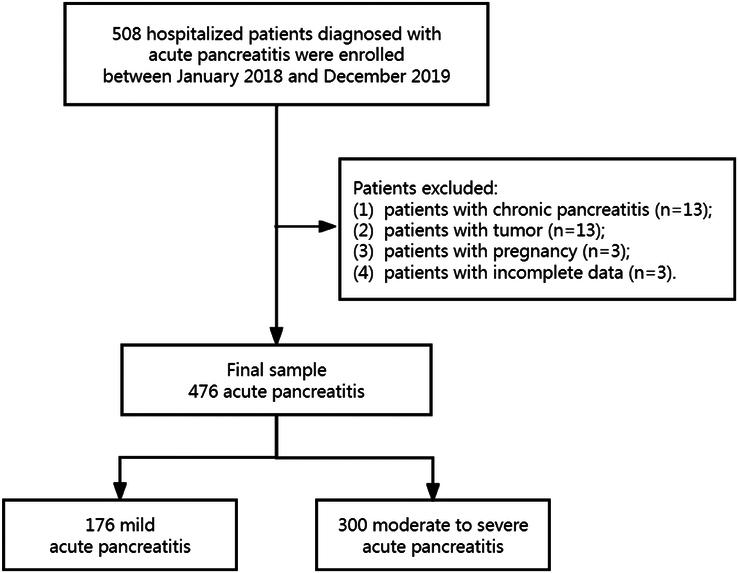
This cross-sectional study included 476 AP patients [mild acute pancreatitis (MAP), n =176; moderately severe acute pancreatitis (MSAP) and severe acute pancreatitis (SAP), n =300]. The primary exposure of interest was the baseline CLR. The primary outcome was the incidence of moderate to severe AP. Multivariate logistic regression and restricted cubic spline analyses were performed to evaluate the association between the CLR and the incidence of moderate to severe AP. Receiver operating characteristic (ROC) analysis was conducted to assess the predictive efficacy, sensitivity, and specificity of CLR in predicting the incidence of moderate to severe AP.
RESULTS
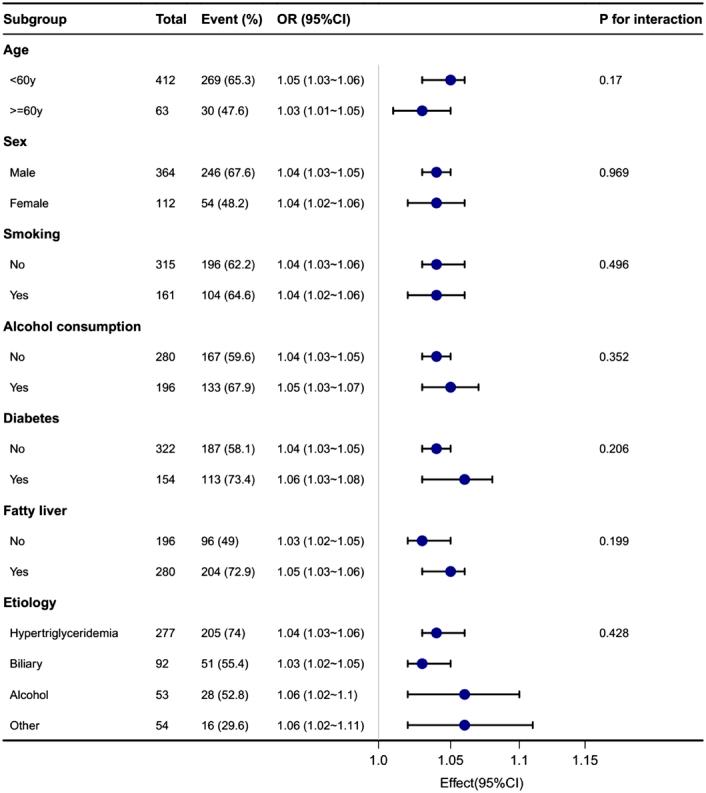
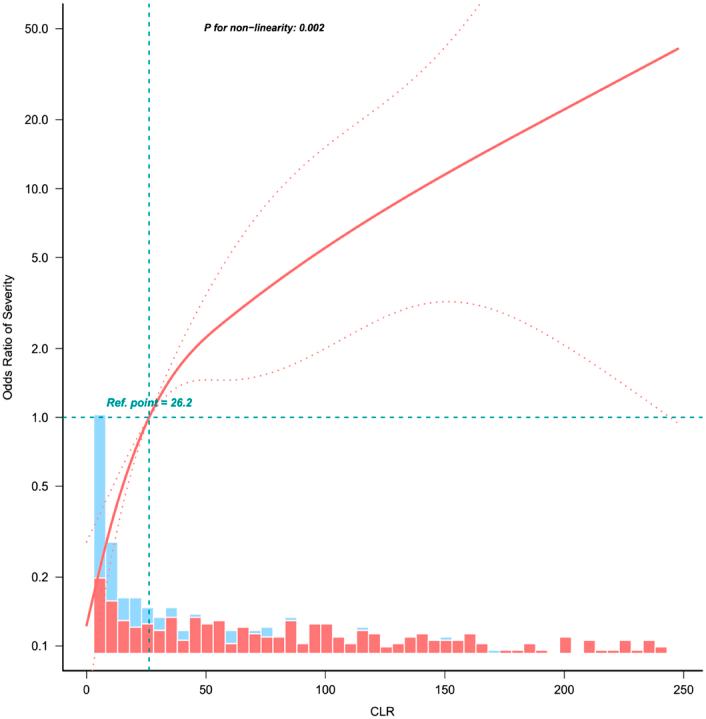
The mean age of the patients was 44±13.2 years, and 76.5% were male. The distribution of CLR was 31.6 (interquartile range, 4.5, 101.7). Moderate to severe AP occurred in 300 cases (63.0%). After multiple adjustments, CLR was independently associated with the incidence of moderate to severe AP (odds ratio, 1.04; 95% CI: 1.03-1.05; P < 0.001). A nonlinear relationship was found between CLR and the incidence of moderate to severe AP, with a threshold of approximately 45. The effect size and CI below and above the threshold value were 1.061 (1.033-1.089) and 1.014 (0.997-1.031), respectively. The area under the curve (AUC) for CLR was 87.577% (95% CI: 84.443- 90.710%) with an optimal cut-off value of 30.835, resulting in a sensitivity of 73.7% and a specificity of 88.6%.
CONCLUSIONS
There was a nonlinear relationship with a saturation effect between the CLR and the incidence of moderate to severe AP. The CLR measured within 24 h of admission may serve as a promising biomarker for predicting the emergence of moderate to severe AP, thereby providing a more scientifically grounded basis for preventing such cases. Nonetheless, further research is warranted to validate and strengthen these findings.
背景
C 反应蛋白/淋巴细胞比值(CLR)是多种疾病的预后生物标志物。然而,其在急性胰腺炎(AP)中的意义尚不清楚。本研究的主要目的是探讨 CLR 与 AP 患者疾病严重程度之间的关系。
方法
本横断面研究纳入了 476 例 AP 患者[轻度急性胰腺炎(MAP),n=176;中度重症急性胰腺炎(MSAP)和重症急性胰腺炎(SAP),n=300]。主要暴露因素为基线 CLR。主要结局为中重度 AP 的发生率。采用多变量逻辑回归和限制性立方样条分析评估 CLR 与中重度 AP 发生率之间的关系。采用受试者工作特征(ROC)曲线分析评估 CLR 预测中重度 AP 发生率的预测效能、敏感度和特异度。
结果
患者的平均年龄为 44±13.2 岁,76.5%为男性。CLR 的分布范围为 31.6(四分位距,4.5,101.7)。300 例患者发生中重度 AP(63.0%)。经过多次调整后,CLR 与中重度 AP 的发生率独立相关(比值比,1.04;95%置信区间:1.03-1.05;P<0.001)。CLR 与中重度 AP 发生率之间存在非线性关系,阈值约为 45。阈值以下和以上的效应大小和 CI 分别为 1.061(1.033-1.089)和 1.014(0.997-1.031)。CLR 的曲线下面积(AUC)为 87.577%(95%置信区间:84.443%-90.710%),最佳截断值为 30.835,灵敏度为 73.7%,特异度为 88.6%。
结论
CLR 与中重度 AP 发生率之间存在非线性关系,存在饱和效应。入院 24 小时内测量的 CLR 可能成为预测中重度 AP 发生的有前途的生物标志物,从而为预防此类病例提供更科学的依据。然而,需要进一步的研究来验证和加强这些发现。
 Zotero 插件