
2022 年至 2023 年中国医院科室抗菌药物耐药性的流行病学分析。
Epidemiologic analysis of antimicrobial resistance in hospital departments in China from 2022 to 2023.
机构信息
Department of Clinical Pharmacy, The Seventh People's Hospital of Hebei Province, 389 Jungong Road, Xicheng District, Dingzhou, 073000, China.
Department of Hospital Office, The Seventh People's Hospital of Hebei Province, 389 Jungong Road, Xicheng District, Dingzhou, 073000, China.
出版信息
J Health Popul Nutr. 2024 Mar 6;43(1):39. doi: 10.1186/s41043-024-00526-2.
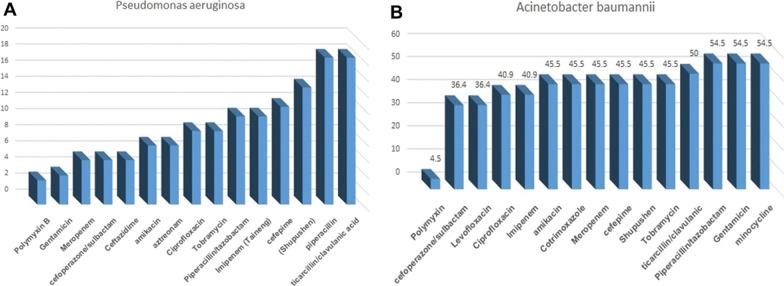
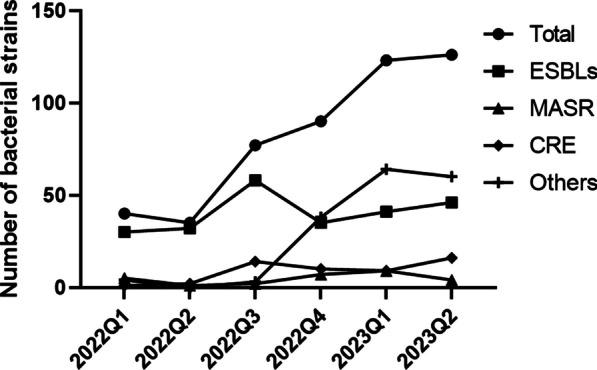
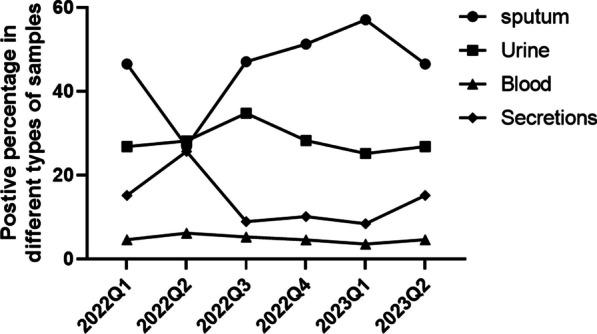
Bacterial drug resistance monitoring in hospitals is a crucial aspect of healthcare management and a growing concern worldwide. In this study, we analysed the bacterial drug resistance surveillance in our hospital from 2022 Q1 to 2023 Q2. The main sampling sources were respiratory, blood, and urine-based, and the main clinical infections were respiratory and genitourinary in nature. Specimens were inoculated and cultured; bacterial strains were isolated using a VITEK® 2 Compact 60-card automatic microorganism identifier (bioMerieux, Paris, France) and their matching identification cards were identified, and manual tests were supplemented for strain identification. The most common Gram-positive bacteria detected were Staphylococcus aureus, followed by Enterococcus faecalis (E. faecalis), Staphylococcus epidermidis (S. epidermidis), and Staphylococcus haemolyticus (S. haemolyticus). The most common Gram-negative bacteria detected were Escherichia coli, Klebsiella pneumoniae, and Pseudomonas aeruginosa. The most prevalent multidrug-resistant bacteria were those producing extended-spectrum beta-lactamases, followed by methicillin-resistant Staphylococcus aureus, followed by carbapenem-resistant Enterobacterales. This study suggests that the prevention and control of infections in the respiratory and genitourinary systems should be the focus of anti-infective work and that the use of antimicrobials should be reduced and regulated to prevent the emergence and spread of resistant bacteria.
医院细菌耐药性监测是医疗保健管理的重要方面,也是全球日益关注的问题。本研究分析了 2022 年第 1 季度至 2023 年第 2 季度我院的细菌耐药性监测情况。主要采样来源为呼吸道、血液和尿液,主要临床感染为呼吸道和泌尿生殖道感染。采集标本进行接种和培养;使用 VITEK® 2 Compact 60 卡自动微生物鉴定仪(法国梅里埃公司)及其配套鉴定卡分离细菌菌株,并进行人工试验补充菌株鉴定。检测到的常见革兰氏阳性菌依次为金黄色葡萄球菌、粪肠球菌(E. faecalis)、表皮葡萄球菌(S. epidermidis)和溶血性葡萄球菌(S. haemolyticus)。检测到的常见革兰氏阴性菌依次为大肠埃希菌、肺炎克雷伯菌和铜绿假单胞菌。最常见的多药耐药菌是产超广谱β-内酰胺酶的细菌,其次是耐甲氧西林金黄色葡萄球菌,其次是耐碳青霉烯类肠杆菌科细菌。本研究表明,应重点防控呼吸道和泌尿生殖道系统感染,减少并规范抗菌药物的使用,以预防和控制耐药菌的出现和传播。
 Zotero 插件