
单侧和双侧前庭病变中的姿势障碍
Postural impairments in unilateral and bilateral vestibulopathy.
作者信息
Corre Julie, Cugnot Jean-François, Boutabla Anissa, Cavuscens Samuel, Ranieri Maurizio, van de Berg Raymond, Peterka Robert J, Guinand Nils, Fornos Angélica Pérez
机构信息
Division of Otorhinolaryngology Head and Neck Surgery, Geneva University Hospitals, University of Geneva, Geneva, Switzerland.
Division of Clinical Neurosciences, Geneva University Hospitals, Geneva, Switzerland.
出版信息
Front Neurol. 2024 Feb 21;15:1324868. doi: 10.3389/fneur.2024.1324868. eCollection 2024.
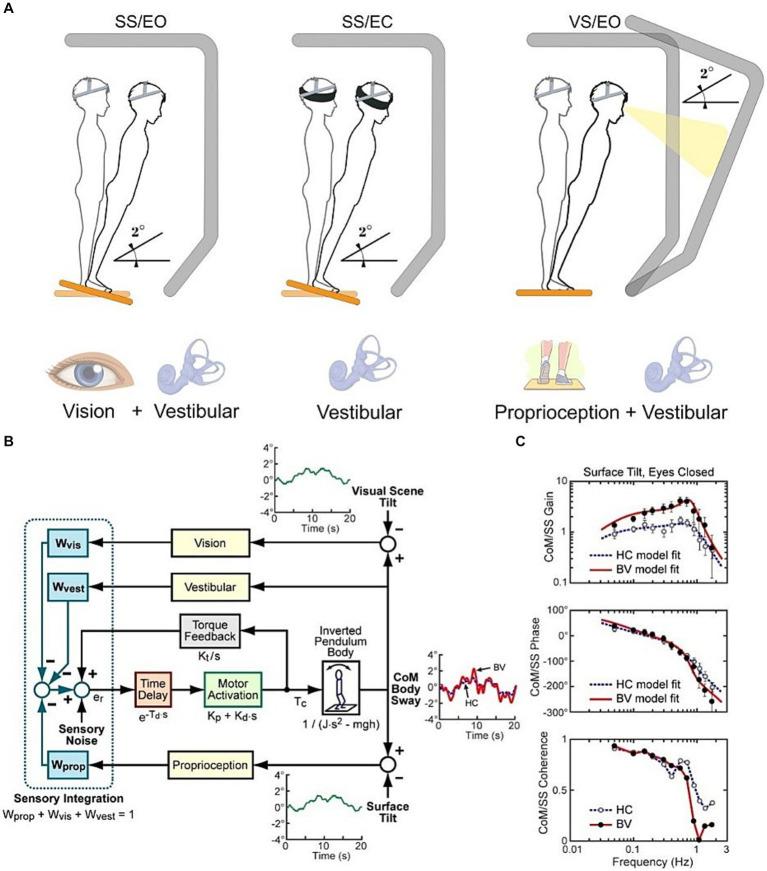
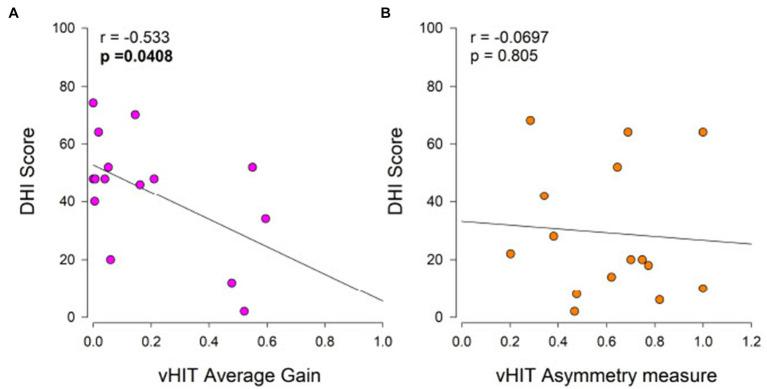
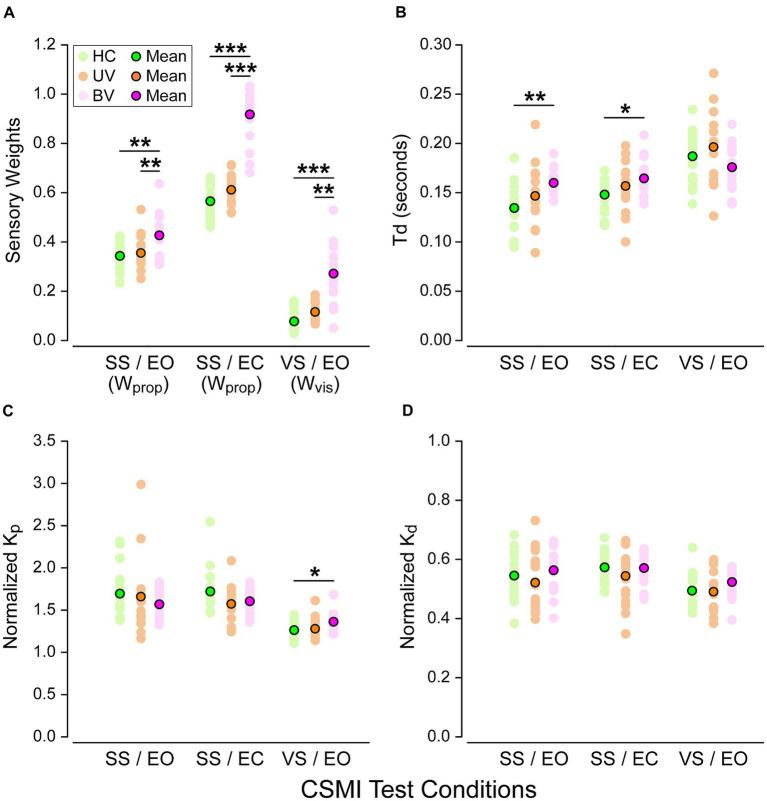
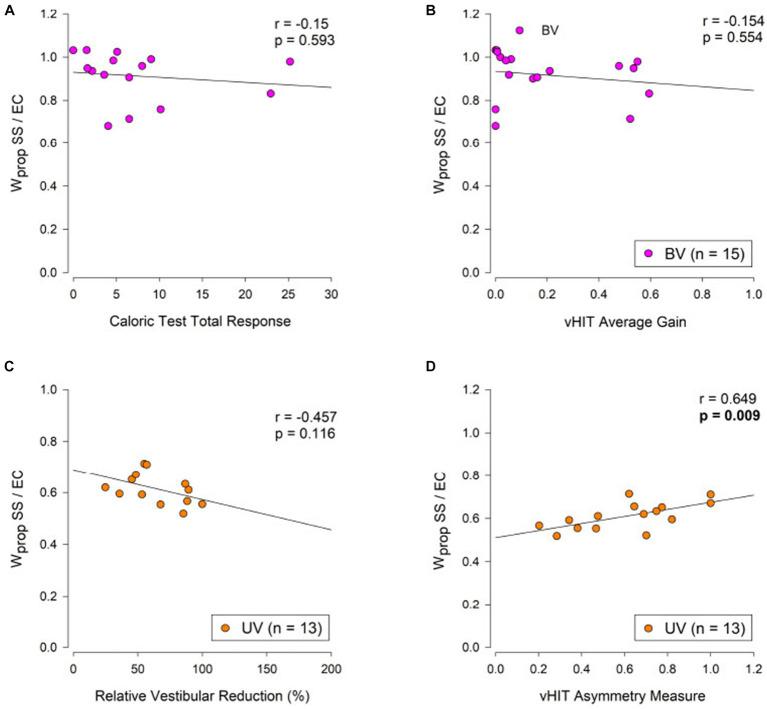
Chronic imbalance is a major complaint of patients suffering from bilateral vestibulopathy (BV) and is often reported by patients with chronic unilateral vestibulopathy (UV), leading to increased risk of falling. We used the Central SensoriMotor Integration (CSMI) test, which evaluates sensory integration, time delay, and motor activation contributions to standing balance control, to determine whether CSMI measures could distinguish between healthy control (HC), UV, and BV subjects and to characterize vestibular, proprioceptive, and visual contributions expressed as sensory weights. We also hypothesized that sensory weight values would be associated with the results of vestibular assessments (vestibulo ocular reflex tests and Dizziness Handicap Inventory scores). Twenty HCs, 15 UVs and 17 BVs performed three CSMI conditions evoking sway in response to pseudorandom (1) surface tilts with eyes open or, (2) surface tilts with eyes closed, and (3) visual surround tilts. Proprioceptive weights were identified in surface tilt conditions and visual weights were identified in the visual tilt condition. BVs relied significantly more on proprioception. There was no overlap in proprioceptive weights between BV and HC subjects and minimal overlap between UV and BV subjects in the eyes-closed surface-tilt condition. Additionally, visual sensory weights were greater in BVs and were similarly able to distinguish BV from HC and UV subjects. We found no significant correlations between sensory weights and the results of vestibular assessments. Sensory weights from CSMI testing could provide a useful measure for diagnosing and for objectively evaluating the effectiveness of rehabilitation efforts and future treatments designed to restore vestibular function such as hair cell regeneration and vestibular implants.
慢性平衡失调是双侧前庭病(BV)患者的主要诉求,慢性单侧前庭病(UV)患者也常常报告有这种情况,这会导致跌倒风险增加。我们使用了中枢感觉运动整合(CSMI)测试,该测试评估感觉整合、时间延迟以及运动激活对站立平衡控制的贡献,以确定CSMI测量能否区分健康对照组(HC)、UV和BV受试者,并表征以前庭、本体感觉和视觉贡献表示的感觉权重。我们还假设感觉权重值将与前庭评估结果(前庭眼反射测试和头晕残障量表评分)相关。20名HC受试者、15名UV受试者和17名BV受试者进行了三种CSMI测试条件,以响应伪随机(1)睁眼时的表面倾斜、(2)闭眼时的表面倾斜以及(3)视觉环境倾斜,从而引起身体摆动。在表面倾斜条件下确定本体感觉权重,在视觉倾斜条件下确定视觉权重。BV受试者对本体感觉的依赖明显更多。在闭眼表面倾斜条件下,BV与HC受试者之间的本体感觉权重没有重叠,UV与BV受试者之间的重叠也极少。此外,BV受试者的视觉感觉权重更大,同样能够区分BV与HC和UV受试者。我们发现感觉权重与前庭评估结果之间没有显著相关性。CSMI测试的感觉权重可为诊断以及客观评估旨在恢复前庭功能(如毛细胞再生和前庭植入物)的康复努力和未来治疗的有效性提供有用的测量方法。



 Zotero 插件