
埃塞俄比亚糖尿病患者高血糖急症的治疗效果不佳及相关因素:一项系统评价与荟萃分析
Poor treatment outcome and associated factors of hyperglycemic emergencies among diabetic patients in Ethiopia: A systematic review and meta-analysis.
作者信息
Tassew Worku Chekol, Bayeh Gashaw Melkie, Ferede Yeshiwas Ayale, Zeleke Agerie Mengistie
机构信息
Department of Medical Nursing, Teda Health Science College, Gondar, Ethiopia.
Department of Environmental Health, Enjibara University, Enjibara, Ethiopia.
出版信息
Metabol Open. 2024 Feb 21;21:100275. doi: 10.1016/j.metop.2024.100275. eCollection 2024 Mar.
BACKGROUND
Despite the fact that hyperglycemic crisis poses a significant threat to the health care systems of developing countries like Ethiopia, there is a dearth of reliable data regarding the poor treatment outcome and associated factors among hyperglycemic emergencies in Ethiopia. Therefore, this review aimed to assess poor treatment outcome and associated factors of hyperglycemic emergencies among diabetic patients in Ethiopia.
METHODS
Published articles regarding poor treatment outcome and associated factors of hyperglycemic emergencies among diabetic patients in Ethiopia were extensively searched from PubMed, Google Scholar, Cochrane library, and African journal online. After extraction, data were exported to Stata software version 11 (Stata Corp LLC, TX, USA) for analysis. Statistically, the Cochrane Q-test and I statistics were used to determine the presence or absence of heterogeneity.
RESULTS
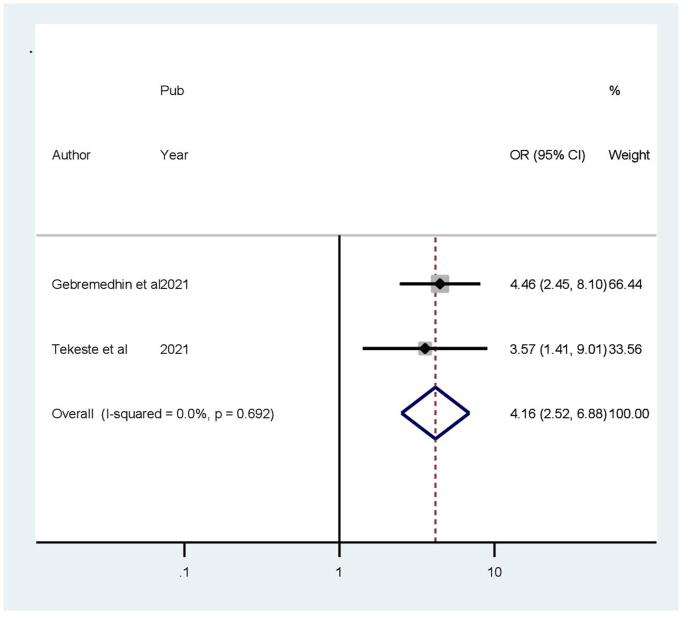
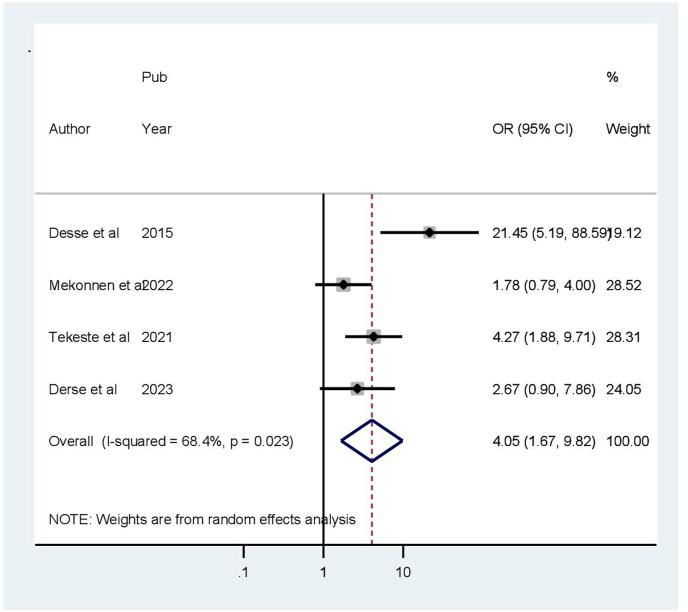
3650 duplicates were eliminated from the 4291 papers (PubMed [18], Google scholar (1170), African journal online [21], and Cochrane library (3082)). The pooled estimate of poor treatment outcome among hyperglycemic emergencies in Ethiopia is found to be 16.21% (95% CI: 11.01, 21.41, P < 0.001). Creatinine level >1.2 mg/dl, stroke, sepsis and comorbidity were associated factors of poor treatment outcome.
CONCLUSION
Poor treatment outcome from hyperglycemic emergencies among diabetic patients was found to be high. Poor treatment outcome was predicted for those patients who had creatinine level >1.2 mg/dl, stroke, sepsis and comorbidity. As a result, we recommend healthcare providers to monitor thoroughly and have close follow-ups for patients with the identified predictors to improve poor treatment outcome from hyperglycemic crises.
背景
尽管高血糖危象对埃塞俄比亚等发展中国家的医疗保健系统构成重大威胁,但埃塞俄比亚缺乏关于高血糖紧急情况治疗效果不佳及相关因素的可靠数据。因此,本综述旨在评估埃塞俄比亚糖尿病患者高血糖紧急情况的治疗效果不佳及相关因素。
方法
从PubMed、谷歌学术、Cochrane图书馆和非洲在线期刊广泛检索已发表的关于埃塞俄比亚糖尿病患者高血糖紧急情况治疗效果不佳及相关因素的文章。提取数据后,将其导出到Stata软件版本11(美国德克萨斯州Stata公司)进行分析。在统计学上,使用Cochrane Q检验和I统计量来确定是否存在异质性。
结果
从4291篇论文(PubMed[18篇]、谷歌学术[1170篇]、非洲在线期刊[21篇]和Cochrane图书馆[3082篇])中排除了3650篇重复文章。埃塞俄比亚高血糖紧急情况治疗效果不佳的合并估计值为16.21%(95%CI:11.01,21.41,P<0.001)。肌酐水平>1.2mg/dl、中风、败血症和合并症是治疗效果不佳的相关因素。
结论
发现糖尿病患者高血糖紧急情况的治疗效果不佳率很高。肌酐水平>1.2mg/dl、中风、败血症和合并症的患者治疗效果不佳。因此,我们建议医疗保健提供者对有确定预测因素的患者进行全面监测并密切随访,以改善高血糖危象的治疗效果不佳情况。


 Zotero 插件