
环境因素对精液微生物组的影响及其对精子质量的影响。
Effect of environmental factors on seminal microbiome and impact on sperm quality.
机构信息
AndrosRecife, Andrology Clinic, Recife, Brazil.
ANDROFERT, Andrology and Human Reproduction Clinic, Campinas, Brazil.
出版信息
Front Endocrinol (Lausanne). 2024 Feb 22;15:1348186. doi: 10.3389/fendo.2024.1348186. eCollection 2024.
OBJECTIVE
This review provides a comprehensive overview of the existing research on the seminal microbiome and its association with male infertility, while also highlighting areas that warrant further investigation.
METHODS
A narrative review was conducted, encompassing all relevant studies published between 1980-2023 on the male reproductive tract microbiome in humans. This review considered studies utilizing culture-based, polymerase chain reaction (PCR)-based, and next-generation sequencing (NGS)-based methodologies to analyze the microbiome. Data extraction encompassed sample types (semen or testicular tissue), study designs, participant characteristics, employed techniques, and critical findings.
RESULTS
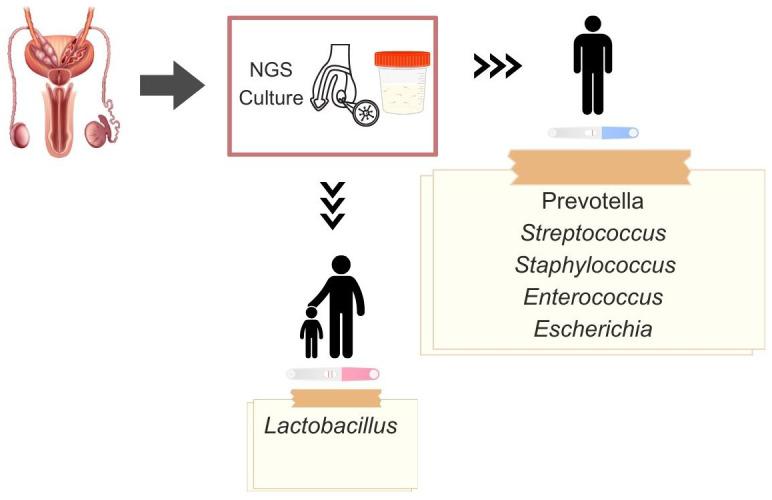
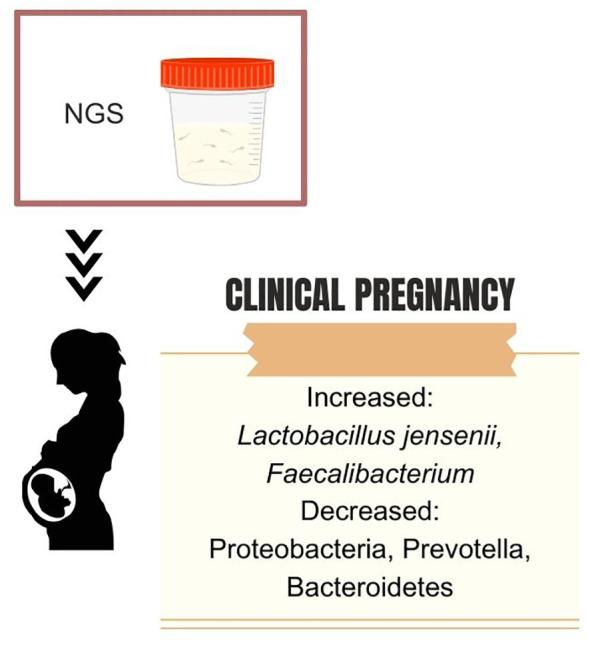
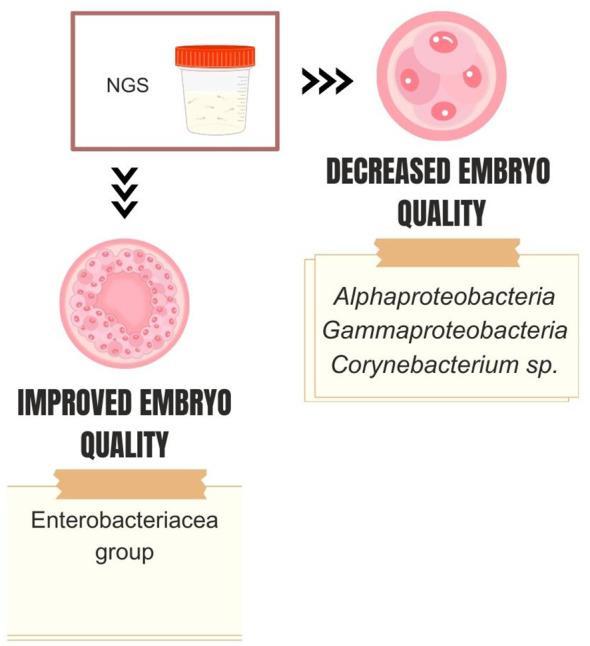
We included 37 studies comprising 9,310 participants. Among these, 16 studies used culture-based methods, 16 utilized NGS, and five employed a combination of methods for microorganism identification. Notably, none of the studies assessed fungi or viruses. All NGS-based studies identified the presence of bacteria in all semen samples. Two notable characteristics of the seminal microbiome were observed: substantial variability in species composition among individuals and the formation of microbial communities with a dominant species. Studies examining the testicular microbiome revealed that the testicular compartment is not sterile. Interestingly, sexually active couples shared 56% of predominant genera, and among couples with positive cultures in both partners, 61% of them shared at least one genital pathogen. In couples with infertility of known causes, there was an overlap in bacterial composition between the seminal and vaginal microbiomes, featuring an increased prevalence of Staphylococcus and Streptococcus genera. Furthermore, the seminal microbiome had discernible effects on reproductive outcomes. However, bacteria in IVF culture media did not seem to impact pregnancy rates.
CONCLUSION
Existing literature underscores that various genera of bacteria colonize the male reproductive tract. These organisms do not exist independently; instead, they play a pivotal role in regulating functions and maintaining hemostasis. Future research should prioritize longitudinal and prospective studies and investigations into the influence of infertility causes and commonly prescribed medication to enhance our understanding of the seminal microbiota's role in reproductive health.
目的
本综述全面概述了现有的关于精原微生物组及其与男性不育症关联的研究,同时强调了值得进一步研究的领域。
方法
进行了叙述性综述,包括 1980 年至 2023 年期间在人类生殖管道微生物组方面发表的所有相关研究。本综述考虑了使用培养法、聚合酶链反应(PCR)法和下一代测序(NGS)法分析微生物组的研究。数据提取包括样本类型(精液或睾丸组织)、研究设计、参与者特征、采用的技术和关键发现。
结果
我们纳入了 37 项研究,共包括 9310 名参与者。其中,16 项研究采用了培养法,16 项研究采用了 NGS,5 项研究采用了微生物鉴定的组合方法。值得注意的是,没有一项研究评估真菌或病毒。所有基于 NGS 的研究都在所有精液样本中鉴定出了细菌的存在。精原微生物组的两个显著特征是:个体间物种组成的巨大变异性和以优势物种形成的微生物群落。研究睾丸微生物组的结果表明,睾丸隔室并非无菌。有趣的是,有性生活的夫妇有 56%的主要属是共同的,在两个伴侣的阳性培养中,有 61%的夫妇至少共享一种生殖病原体。在已知病因的不育夫妇中,精液和阴道微生物组之间存在细菌组成的重叠,葡萄球菌和链球菌属的患病率增加。此外,精原微生物组对生殖结局有明显影响。然而,IVF 培养介质中的细菌似乎并不影响妊娠率。
结论
现有文献强调了各种细菌属定植于男性生殖管道。这些生物体并非孤立存在,而是在调节功能和维持止血方面发挥着关键作用。未来的研究应优先进行纵向和前瞻性研究,并调查不育病因和常用药物的影响,以增强我们对生殖健康中精原微生物群作用的理解。


 Zotero 插件