
宏基因组学揭示了精液改变男性的特定微生物特征。
Metagenomics Reveals Specific Microbial Features in Males with Semen Alterations.
机构信息
Department of Molecular Medicine and Medical Biotechnologies, Federico II University, Via Sergio Pansini 5, 80131 Napoli, Italy.
CEINGE-Biotecnologie Avanzate Franco Salvatore, Via G. Salvatore 486, 80145 Napoli, Italy.
出版信息
Genes (Basel). 2023 Jun 6;14(6):1228. doi: 10.3390/genes14061228.
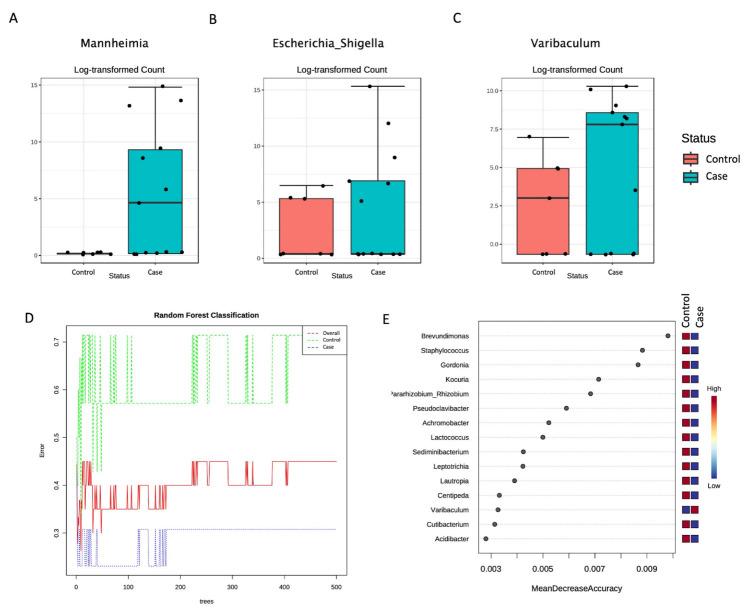
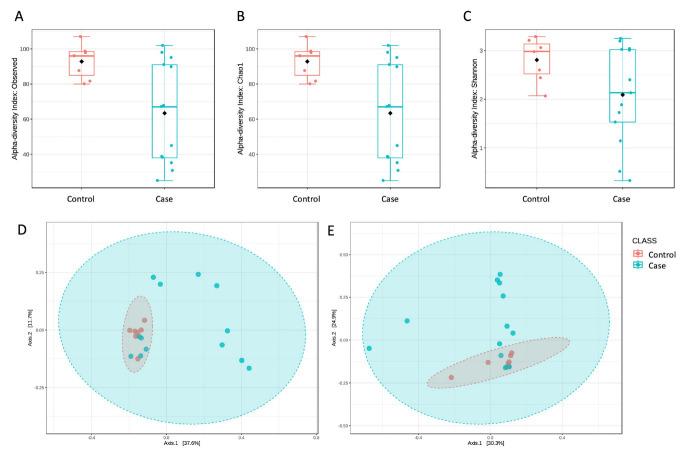
Infertility incidence is rising worldwide, with male infertility accounting for about 50% of cases. To date, several factors have been associated with male infertility; in particular, it has been suggested that semen microbiota may play a role. Here, we report the NGS-based analyses of 20 semen samples collected from men with (Case) and without (Control) semen alterations. Genomic DNA was extracted from each collected sample, and a specific PCR was carried out to amplify the V4-V6 regions of the 16S rRNA. Sequence reactions were carried out on the MiSeq and analyzed by specific bioinformatic tools. We found a reduced richness and evenness in the Case versus the Control group. Moreover, specific genera, the , the and the were significantly increased in the Case compared to the Control group. Finally, we highlighted a correlation between the microbial profile and semen hyperviscosity. Even if further studies are required on larger groups of subjects to confirm these findings and explore mechanistic hypotheses, our results confirm the correlation between semen features and seminal microbiota. These data, in turn, may open the way to the possible use of semen microbiota as an attractive target for developing novel strategies for infertility management.
全球范围内不孕不育的发病率正在上升,其中男性不育约占 50%。迄今为止,已经有一些因素与男性不育有关;特别是,有人提出精液微生物群可能起作用。在这里,我们报告了对 20 份精液样本的 NGS 分析,这些样本来自有(病例)和没有(对照)精液改变的男性。从每个收集的样本中提取基因组 DNA,并进行特定的 PCR 扩增 16S rRNA 的 V4-V6 区。在 MiSeq 上进行序列反应,并通过特定的生物信息学工具进行分析。我们发现病例组的丰富度和均匀度降低。此外,与对照组相比,病例组中的特定属、和 明显增加。最后,我们强调了微生物群与精液高粘性之间的相关性。尽管需要对更大的研究对象群体进行进一步研究来证实这些发现并探讨机制假说,但我们的结果证实了精液特征与精液微生物群之间的相关性。这些数据反过来可能为利用精液微生物群作为开发治疗不育症的新策略的有吸引力的目标开辟道路。

 Zotero 插件