
不育患者的精索微生物群特征:对精子数量、活力和形态的影响。
Spermatic Microbiome Characteristics in Infertile Patients: Impact on Sperm Count, Mobility, and Morphology.
作者信息
Gachet Clémence, Prat Manon, Burucoa Christophe, Grivard Philippe, Pichon Maxime
机构信息
Laboratory of Andrology and Medically Assisted Reproduction Laboratory, Centre Hospitalier Universitaire de Poitiers, 86021 Poitiers, France.
Bacteriology Laboratory, Infectious Agents Department, Centre Hospitalier Universitaire de Poitiers, 86021 Poitiers, France.
出版信息
J Clin Med. 2022 Mar 9;11(6):1505. doi: 10.3390/jcm11061505.
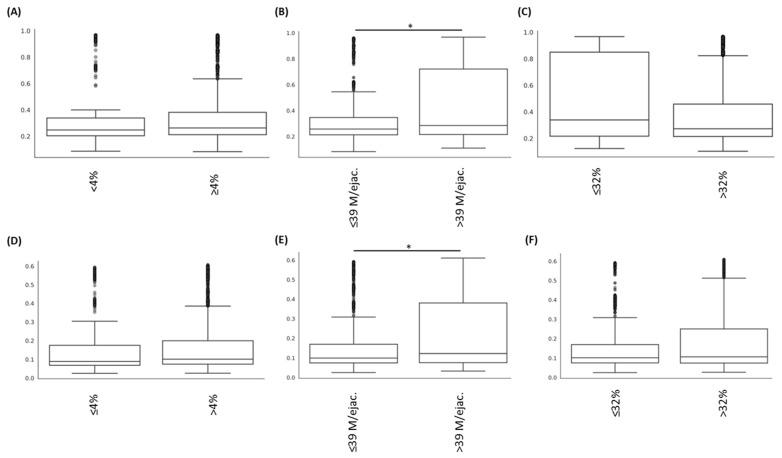
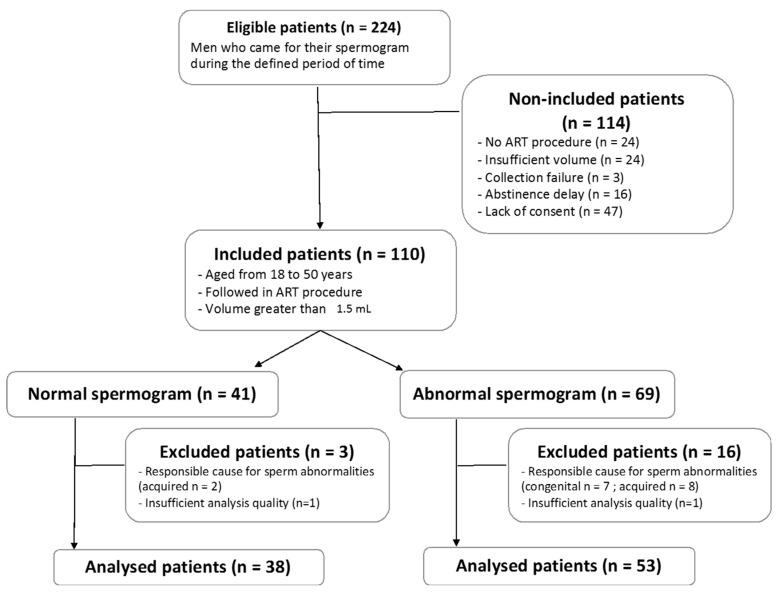
Through sperm alteration, semen microbiota tend to be recognized as a cause of infertility, but due to the limited number of studies focusing on this ecological niche, this hypothesis remains controversial. This study aimed to characterize and compare the bacterial communities of sperm samples from patients undergoing couple infertility treatment at the time of diagnosis. The study was prospective (September 2019 to March 2020), monocentric, and focused on alterations of spermatic parameters: count, motility, and morphology. After the amplification of the 16S rDNA (V1 to V3), libraries (n = 91, including 53 patients with abnormalities) were sequenced using the MiSeq platform (Illumina). After quality control processing using a homemade pipeline (QIIME2 modules), the main genera were: Prevotella, Finegoldia, Pseudomonas, Peptinophilus, Streptococcus, Anaerococcus and Corynebacterium. Restricted diversity was observed in samples from patients with abnormal sperm morphology (α-diversity, p < 0.05), whereas diversity increased in patients with an abnormal sperm count (β-diversity, p < 0.05). The enrichment of the genus Prevotella and Haemophilus was observed in negative sperm culture samples and samples with abnormal counts, respectively (p < 0.05). Microbiota differed in their composition according to sperm parameters. Finally, this work highlights the need for the optimization of the management of couples undergoing infertility treatment, possibly by modulating the genital microbiome.
通过精子改变,精液微生物群往往被认为是不孕的一个原因,但由于专注于这一生态位的研究数量有限,这一假设仍存在争议。本研究旨在对诊断时接受夫妻不孕治疗的患者精子样本中的细菌群落进行特征分析和比较。该研究为前瞻性研究(2019年9月至2020年3月),单中心研究,重点关注精子参数的改变:数量、活力和形态。在扩增16S rDNA(V1至V3)后,使用MiSeq平台(Illumina)对文库(n = 91,包括53例异常患者)进行测序。在使用自制流程(QIIME2模块)进行质量控制处理后,主要菌属为:普雷沃菌属、费氏球菌属、假单胞菌属、消化球菌属、链球菌属、厌氧球菌属和棒状杆菌属。在精子形态异常患者的样本中观察到多样性受限(α多样性,p < 0.05),而在精子数量异常的患者中多样性增加(β多样性,p < 0.05)。分别在精子培养阴性样本和数量异常的样本中观察到普雷沃菌属和嗜血杆菌属的富集(p < 0.05)。微生物群的组成因精子参数而异。最后,这项工作强调了优化接受不孕治疗夫妇管理的必要性,可能通过调节生殖微生物群来实现。

 Zotero 插件