
非小细胞肺癌脑转移的当前药物治疗。
Current pharmacologic treatment of brain metastasis in non-small cell lung cancer.
机构信息
Division of Medical Oncology and Respiratory Medicine, Department of Internal Medicine, Shimane University Faculty of Medicine, 89-1, Enyacho, Izumo, Shimane, 693-8501, Japan.
出版信息
Clin Exp Metastasis. 2024 Oct;41(5):549-565. doi: 10.1007/s10585-024-10276-4. Epub 2024 Mar 11.
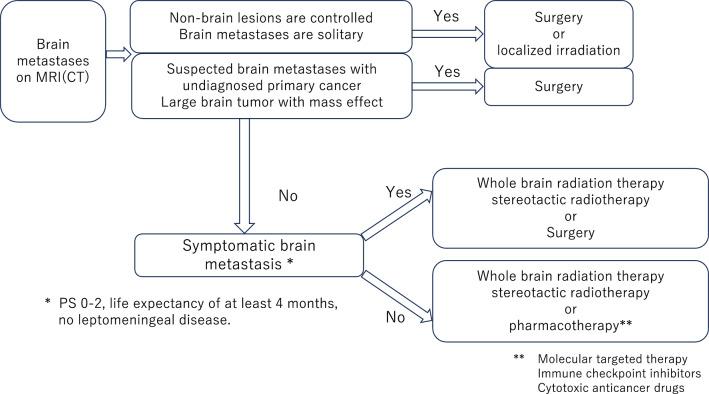
Lung cancer is a type of cancer that can metastasize to the lungs, brain, bones, liver, adrenal glands, and other organs; however, the occurrence of brain metastases is the most common event. Symptoms of brain metastasis include motor dysfunction, mental dysfunction, seizures, headaches, nausea, and vomiting, and significantly reduce the quality of life of cancer patients. Brain metastases are a poor prognostic factor, and controlling them is extremely important for prolonging prognosis and improving the quality of life. Currently, local surgery and radiotherapy are recommended for their treatment. However, recently, cancer treatments using molecular-targeted drugs and immune checkpoint inhibitors have been introduced, which may also be effective against brain metastases. Therefore, it is necessary to determine whether local or systemic therapy is optimal for each case. In this review, we focus on recent findings regarding drug therapy in treating brain metastases from advanced non-small cell lung cancer.
肺癌是一种可以转移到肺部、大脑、骨骼、肝脏、肾上腺和其他器官的癌症;然而,脑转移的发生是最常见的事件。脑转移的症状包括运动功能障碍、精神功能障碍、癫痫发作、头痛、恶心和呕吐,显著降低了癌症患者的生活质量。脑转移是预后不良的因素,控制脑转移对于延长预后和提高生活质量非常重要。目前,推荐采用局部手术和放疗来治疗脑转移。然而,最近,使用分子靶向药物和免疫检查点抑制剂的癌症治疗方法已经被引入,这些方法可能对脑转移也有效。因此,有必要确定对每个病例是采用局部治疗还是全身治疗。在这篇综述中,我们重点关注治疗晚期非小细胞肺癌脑转移的药物治疗的最新发现。
 Zotero 插件