
高脂饮食诱导的循环胆汁酸减少促成小鼠中与肠道微生物群相关的肥胖。
High-Fat Diet-Induced Decreased Circulating Bile Acids Contribute to Obesity Associated with Gut Microbiota in Mice.
作者信息
Cai Haiying, Zhang Junhui, Liu Chang, Le Thanh Ninh, Lu Yuyun, Feng Fengqin, Zhao Minjie
机构信息
School of Biological and Chemical Engineering, Zhejiang University of Science & Technology, Hangzhou 310023, China.
College of Biosystems Engineering and Food Science, Zhejiang University, Hangzhou 310058, China.
出版信息
Foods. 2024 Feb 25;13(5):699. doi: 10.3390/foods13050699.
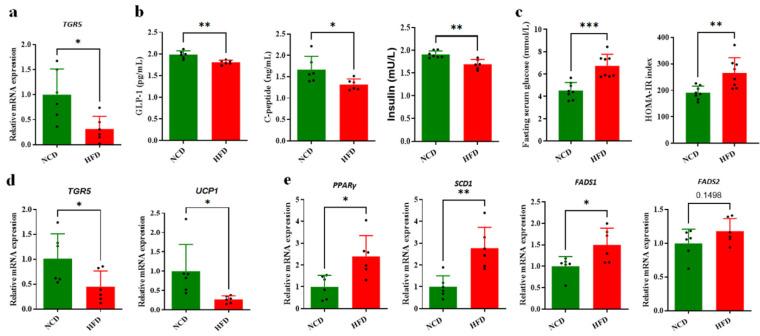
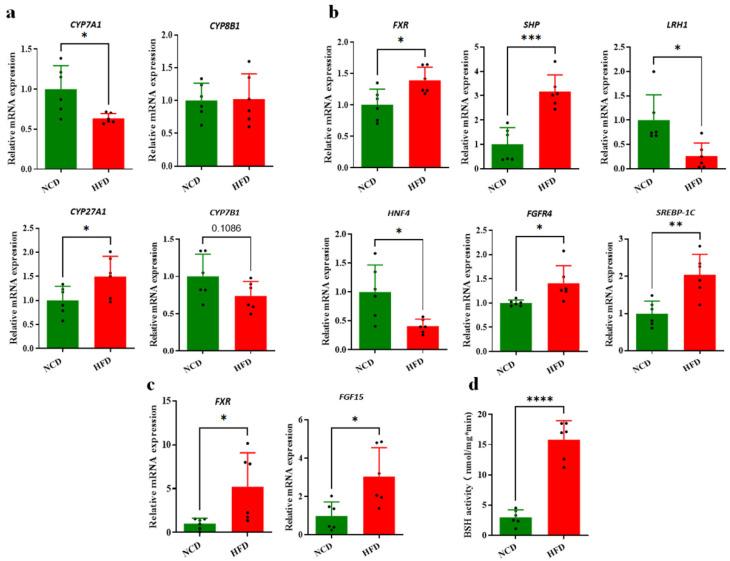
The altered circulating bile acids (BAs) modulate gut microbiota, energy metabolism and various physiological functions. BA profiles in liver, serum, ileum and feces of HFD-fed mice were analyzed with normal chow diet (NCD)-fed mice after 16-week feeding. Furthermore, gut microbiota was analyzed and its correlation analysis with BA was performed. The result showed that long-term HFD feeding significantly decreased hepatic and serum BA levels, mainly attributed to the inhibition of hepatic BA synthesis and the reduced reabsorption efficiency of BAs in enterohepatic circulation. It also significantly impaired glucose and lipid homeostasis and gut microbiota in mice. We found significantly higher bile salt hydrolase activity in ileal microbes and a higher ratio of free BAs to conjugated BA content in ileal contents in HFD groups compared with NCD group mice, which might account for the activated intestinal farnesoid X receptor signaling on liver BA synthesis inhibition and reduced ileal reabsorption. The decreased circulating BAs were associated with the dysregulation of the lipid metabolism according to the decreased TGR5 signaling in the ileum and BAT. In addition, it is astonishing to find extremely high percentages of taurocholate and 12-OH BAs in liver and serum BA profiles of both groups, which was mainly attributed to the high substrate selectivity for 12-OH BAs of the intestinal BAs transporter during the ileal reabsorption of enterohepatic circulation. This study revealed a significant effect of long-term HFD feeding on the decreased circulating BA pool in mice, which impaired lipid homeostasis and gut microbiota, and collectively resulted in metabolic disorders and obesity.
循环胆汁酸(BAs)的改变会调节肠道微生物群、能量代谢和各种生理功能。在喂食16周后,对高脂饮食(HFD)喂养的小鼠与正常饮食(NCD)喂养的小鼠的肝脏、血清、回肠和粪便中的胆汁酸谱进行了分析。此外,还对肠道微生物群进行了分析,并进行了其与胆汁酸的相关性分析。结果表明,长期高脂饮食喂养显著降低了肝脏和血清中的胆汁酸水平,这主要归因于肝脏胆汁酸合成的抑制以及肠肝循环中胆汁酸重吸收效率的降低。它还显著损害了小鼠的葡萄糖和脂质稳态以及肠道微生物群。我们发现,与正常饮食组小鼠相比,高脂饮食组小鼠回肠微生物中的胆汁盐水解酶活性显著更高,回肠内容物中游离胆汁酸与结合胆汁酸含量的比例也更高,这可能解释了肠道法尼醇X受体信号激活对肝脏胆汁酸合成的抑制以及回肠重吸收的减少。根据回肠和棕色脂肪组织中TGR5信号的降低,循环胆汁酸的减少与脂质代谢失调有关。此外,令人惊讶的是,两组的肝脏和血清胆汁酸谱中牛磺胆酸盐和12-羟基胆汁酸的比例极高,这主要归因于肠肝循环回肠重吸收过程中肠道胆汁酸转运体对12-羟基胆汁酸的高底物选择性。这项研究揭示了长期高脂饮食喂养对小鼠循环胆汁酸池减少的显著影响,这损害了脂质稳态和肠道微生物群,并共同导致代谢紊乱和肥胖。




 Zotero 插件