
依达拉奉抗氧化治疗的最新进展:在神经退行性疾病中的应用拓展。
Update on Antioxidant Therapy with Edaravone: Expanding Applications in Neurodegenerative Diseases.
机构信息
Department of Neurology, Okayama University Graduate School of Medicine, Dentistry and Pharmaceutical Sciences, 2-5-1 Shikata-cho, Okayama 700-8558, Japan.
Department of Neurology, National Center of Neurology and Psychiatry, Tokyo 187-8551, Japan.
出版信息
Int J Mol Sci. 2024 Mar 3;25(5):2945. doi: 10.3390/ijms25052945.
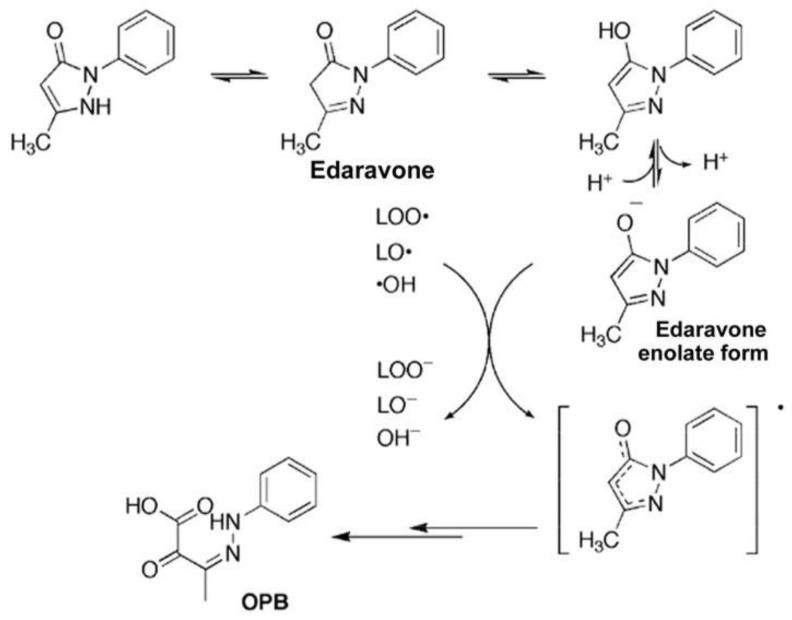
The brain is susceptible to oxidative stress, which is associated with various neurological diseases. Edaravone (MCI-186, 3-methyl-1 pheny-2-pyrazolin-5-one), a free radical scavenger, has promising effects by quenching hydroxyl radicals (∙OH) and inhibiting both ∙OH-dependent and ∙OH-independent lipid peroxidation. Edaravone was initially developed in Japan as a neuroprotective agent for acute cerebral infarction and was later applied clinically to treat amyotrophic lateral sclerosis (ALS), a neurodegenerative disease. There is accumulating evidence for the therapeutic effects of edaravone in a wide range of diseases related to oxidative stress, including ischemic stroke, ALS, Alzheimer's disease, and placental ischemia. These neuroprotective effects have expanded the potential applications of edaravone. Data from experimental animal models support its safety for long-term use, implying broader applications in various neurodegenerative diseases. In this review, we explain the unique characteristics of edaravone, summarize recent findings for specific diseases, and discuss its prospects for future therapeutic applications.
大脑易受到氧化应激的影响,而氧化应激与各种神经疾病有关。依达拉奉(MCI-186,3-甲基-1-苯基-2-吡唑啉-5-酮)是一种自由基清除剂,可通过淬灭羟基自由基(·OH)和抑制·OH 依赖性和·OH 非依赖性脂质过氧化来发挥有前景的作用。依达拉奉最初在日本被开发为急性脑梗死的神经保护剂,后来在临床上用于治疗肌萎缩侧索硬化症(ALS),一种神经退行性疾病。越来越多的证据表明依达拉奉在与氧化应激相关的各种疾病中具有治疗作用,包括缺血性中风、ALS、阿尔茨海默病和胎盘缺血。这些神经保护作用扩大了依达拉奉的潜在应用。来自实验动物模型的数据支持其长期使用的安全性,这意味着它在各种神经退行性疾病中有更广泛的应用。在这篇综述中,我们解释了依达拉奉的独特特征,总结了针对特定疾病的最新发现,并讨论了其未来治疗应用的前景。


 Zotero 插件