
citrin 缺乏症的临床概况:一种多方面疾病的全球视角。
Clinical landscape of citrin deficiency: A global perspective on a multifaceted condition.
机构信息
University Children's Hospital Zurich and Children's Research Centre, Zurich, Switzerland.
Department of Pediatrics, Faculty of Life Sciences, Kumamoto University, Kumamoto, Japan.
出版信息
J Inherit Metab Dis. 2024 Nov;47(6):1144-1156. doi: 10.1002/jimd.12722. Epub 2024 Mar 19.
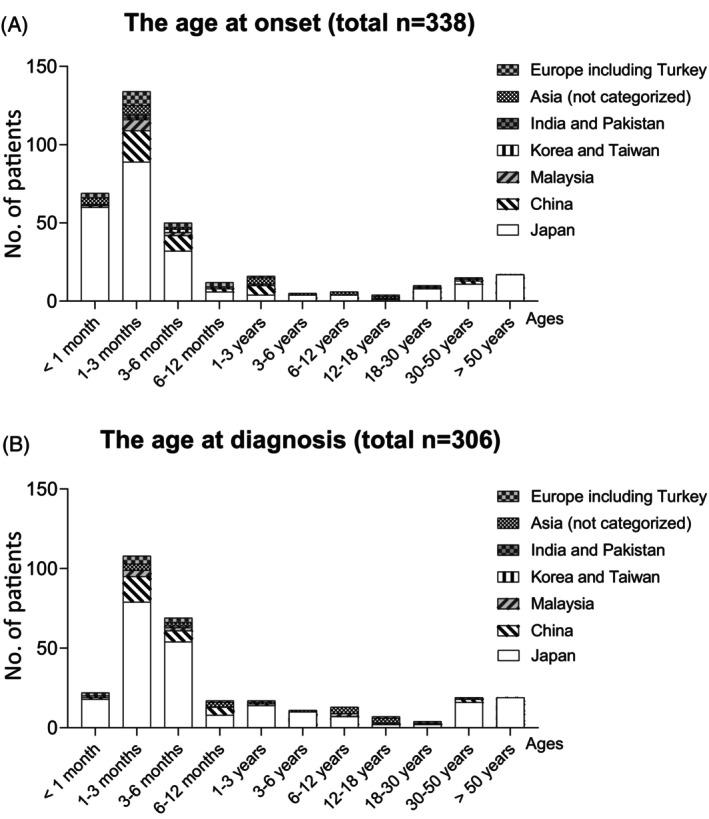
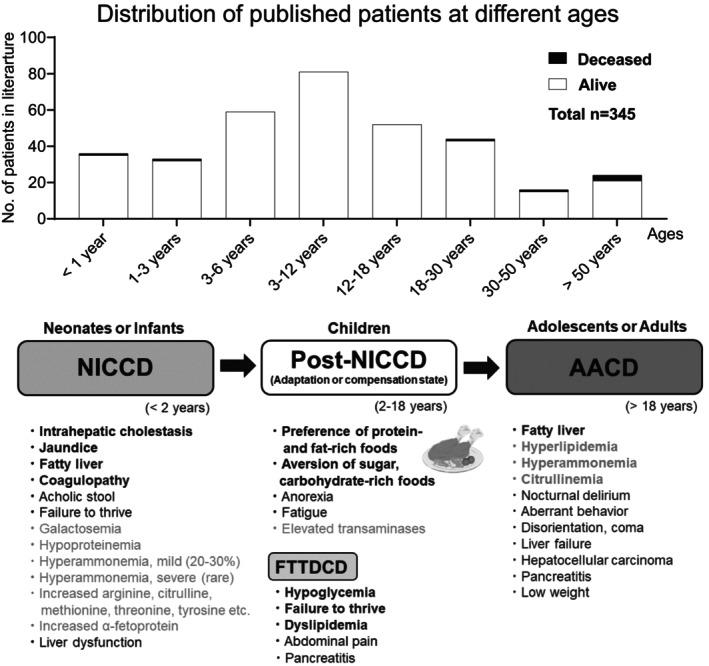
Citrin deficiency is an autosomal recessive disorder caused by a defect of citrin resulting from mutations in SLC25A13. The clinical manifestation is very variable and comprises three types: neonatal intrahepatic cholestasis caused by citrin deficiency (NICCD: OMIM 605814), post-NICCD including failure to thrive and dyslipidemia caused by citrin deficiency, and adult-onset type II citrullinemia (CTLN2: OMIM 603471). Frequently, NICCD can run with a mild clinical course and manifestations may resolve in the post-NICCD. However, a subset of patients may develop CTLN2 when they become more than 18 years old, and this condition is potentially life-threatening. Since a combination of diet with low-carbohydrate and high-fat content supplemented with medium-chain triglycerides is expected to ameliorate most manifestations and to prevent the progression to CTLN2, early detection and intervention are important and may improve long-term outcome in patients. Moreover, infusion of high sugar solution and/or glycerol may be life-threatening in patients with citrin deficiency, particularly CTLN2. The disease is highly prevalent in East Asian countries but is more and more recognized as a global entity. Since newborn screening for citrin deficiency has only been introduced in a few countries, the diagnosis still mainly relies on clinical suspicion followed by genetic testing or selective metabolic screening. This paper aims at describing (1) the different stages of the disease focusing on clinical aspects; (2) the current published clinical situation in East Asia, Europe, and North America; (3) current efforts in increasing awareness by establishing management guidelines and patient registries, hereby illustrating the ongoing development of a global network for this rare disease.
Citrin 缺乏症是一种常染色体隐性遗传病,由 SLC25A13 基因突变导致 citrin 缺陷引起。临床表现非常多样,包括三种类型:由 citrin 缺乏引起的新生儿肝内胆汁淤积症(NICCD:OMIM 605814)、NICCD 后包括生长不良和脂代谢异常的 citrin 缺乏症、以及成年起病型 II 型瓜氨酸血症(CTLN2:OMIM 603471)。通常,NICCD 可呈轻度临床病程,临床表现可能在 NICCD 后缓解。然而,一部分患者在超过 18 岁时可能会发展为 CTLN2,这种情况可能有生命危险。由于低碳水化合物和高脂肪含量的饮食结合补充中链甘油三酯有望改善大多数临床表现并防止进展为 CTLN2,因此早期发现和干预非常重要,可能会改善患者的长期预后。此外,输注高糖溶液和/或甘油可能对 citrin 缺乏症患者,特别是 CTLN2 患者有生命危险。这种疾病在东亚国家非常普遍,但越来越被认为是一种全球性疾病。由于 citrin 缺乏症的新生儿筛查仅在少数几个国家开展,因此诊断仍然主要依赖于临床怀疑,然后进行基因检测或选择性代谢筛查。本文旨在描述(1)疾病的不同阶段,重点是临床方面;(2)东亚、欧洲和北美的当前已发表临床情况;(3)通过建立管理指南和患者登记册来提高认识的当前努力,由此说明正在为这种罕见疾病建立一个全球性网络。
 Zotero 插件