
纤维分布式传感用于智能服装。
Distributed sensing along fibers for smart clothing.
机构信息
Biomedical and Mobile Health Technology Laboratory, Department of Health Sciences and Technology, ETH Zurich, Lengghalde 5, 8008 Zurich, Switzerland.
出版信息
Sci Adv. 2024 Mar 22;10(12):eadj9708. doi: 10.1126/sciadv.adj9708. Epub 2024 Mar 20.
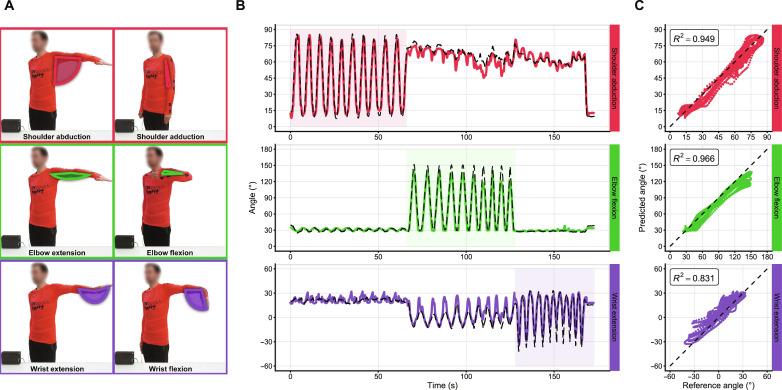
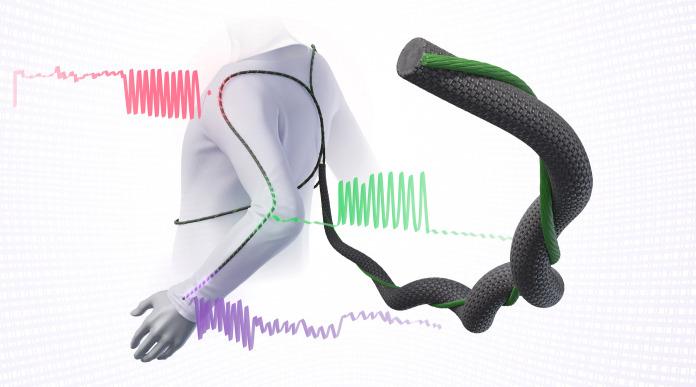
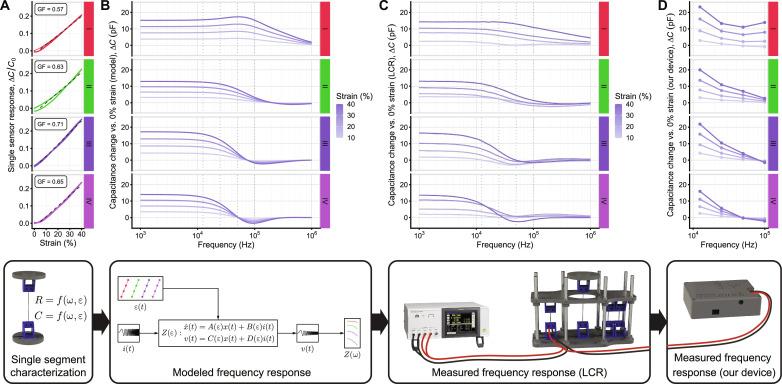
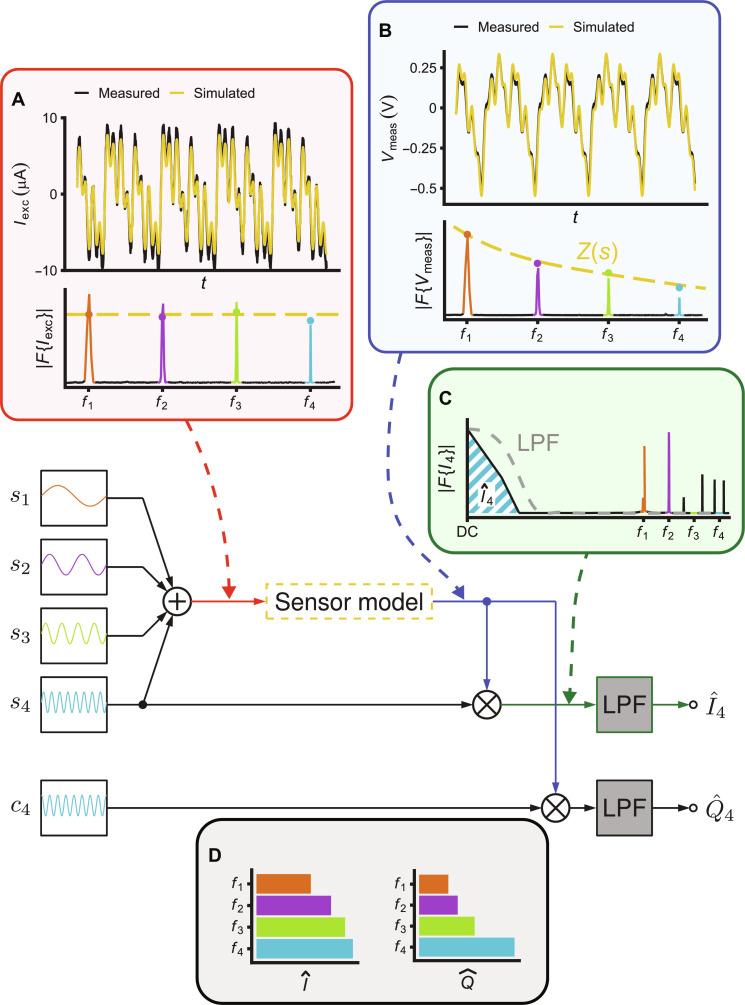
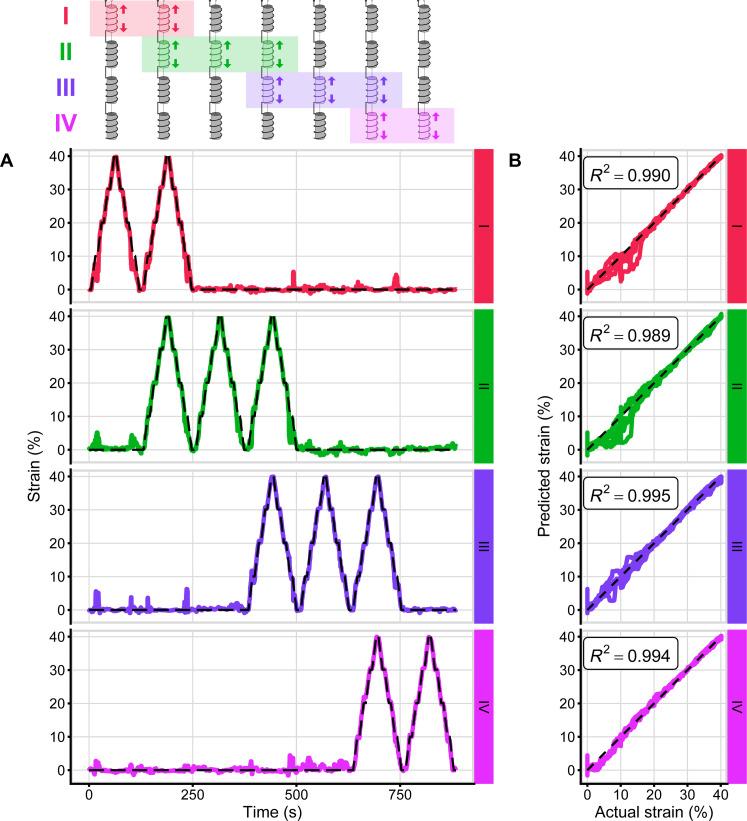
Textile sensors transform our everyday clothing into a means to track movement and biosignals in a completely unobtrusive way. One major hindrance to the adoption of "smart" clothing is the difficulty encountered with connections and space when scaling up the number of sensors. There is a lack of research addressing a key limitation in wearable electronics: Connections between rigid and textile elements are often unreliable, and they require interfacing sensors in a way incompatible with textile mass production methods. We introduce a prototype garment, compact readout circuit, and algorithm to measure localized strain along multiple regions of a fiber. We use a helical auxetic yarn sensor with tunable sensitivity along its length to selectively respond to strain signals. We demonstrate distributed sensing in clothing, monitoring arm joint angles from a single continuous fiber. Compared to optical motion capture, we achieve around five degrees error in reconstructing shoulder, elbow, and wrist joint angles.
纺织传感器将我们日常的衣物变成了一种以完全不引人注目的方式追踪运动和生物信号的手段。将“智能”服装推广应用的一个主要障碍是,随着传感器数量的增加,连接和空间方面会遇到困难。在可穿戴电子产品方面,有一个关键的限制因素尚未得到充分研究:刚性和纺织元件之间的连接往往不可靠,并且它们需要以与纺织大规模生产方法不兼容的方式连接传感器。我们引入了一种原型服装、紧凑的读出电路和算法,用于测量纤维的多个区域的局部应变。我们使用一种具有沿其长度可调灵敏度的螺旋形各向异性纱线传感器来选择性地响应应变信号。我们展示了服装中的分布式传感,从单根连续纤维监测手臂关节角度。与光学运动捕捉相比,我们在重建肩部、肘部和腕关节角度方面的误差约为五度。


 Zotero 插件