
DNAJB1-PRKACA 融合新抗原引发罕见的内源性 T 细胞反应,增强了纤维板层肝细胞癌的细胞治疗效果。
DNAJB1-PRKACA fusion neoantigens elicit rare endogenous T cell responses that potentiate cell therapy for fibrolamellar carcinoma.
机构信息
Department of Immunology, St. Jude Children's Research Hospital, Memphis, TN 38105, USA.
Department of Biochemistry and Molecular Biology and Infection and Immunity Program, Biomedicine Discovery Institute, Monash University, Melbourne, VIC 3800, Australia.
出版信息
Cell Rep Med. 2024 Mar 19;5(3):101469. doi: 10.1016/j.xcrm.2024.101469.
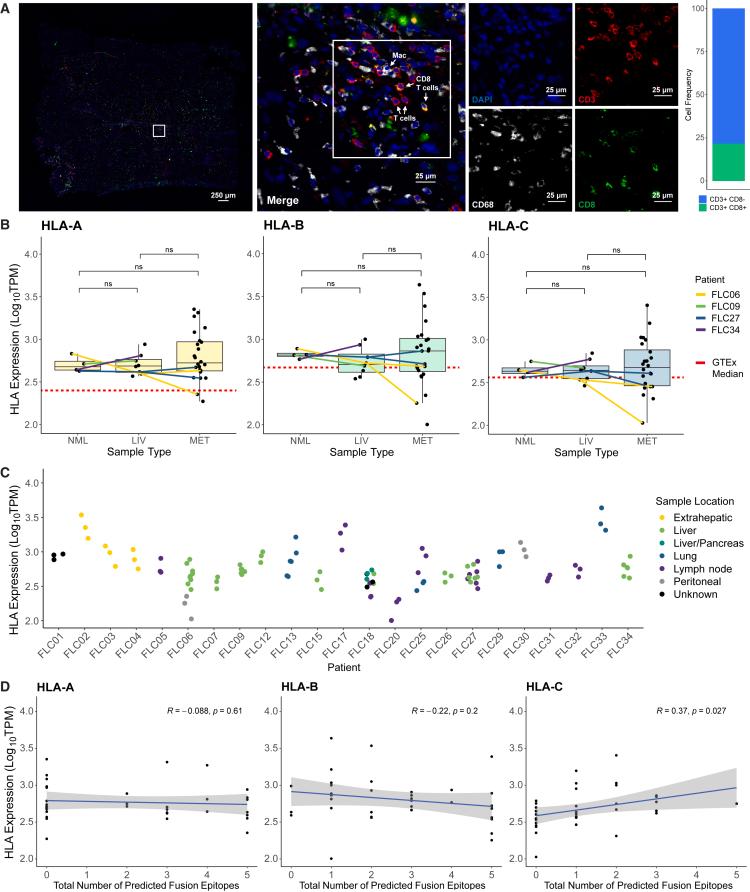
Fibrolamellar carcinoma (FLC) is a liver tumor with a high mortality burden and few treatment options. A promising therapeutic vulnerability in FLC is its driver mutation, a conserved DNAJB1-PRKACA gene fusion that could be an ideal target neoantigen for immunotherapy. In this study, we aim to define endogenous CD8 T cell responses to this fusion in FLC patients and evaluate fusion-specific T cell receptors (TCRs) for use in cellular immunotherapies. We observe that fusion-specific CD8 T cells are rare and that FLC patient TCR repertoires lack large clusters of related TCR sequences characteristic of potent antigen-specific responses, potentially explaining why endogenous immune responses are insufficient to clear FLC tumors. Nevertheless, we define two functional fusion-specific TCRs, one of which has strong anti-tumor activity in vivo. Together, our results provide insights into the fragmented nature of neoantigen-specific repertoires in humans and indicate routes for clinical development of successful immunotherapies for FLC.
纤维板层肝细胞癌(FLC)是一种死亡率高、治疗选择有限的肝脏肿瘤。FLC 中一个有前途的治疗弱点是其驱动突变,即一个保守的 DNAJB1-PRKACA 基因融合,它可能是免疫治疗的理想新抗原靶点。在这项研究中,我们旨在定义 FLC 患者中对该融合的内源性 CD8 T 细胞反应,并评估融合特异性 T 细胞受体(TCR)在细胞免疫治疗中的应用。我们观察到融合特异性 CD8 T 细胞很少,并且 FLC 患者的 TCR 库缺乏大量与潜在抗原特异性反应相关的相关 TCR 序列簇,这可能解释了为什么内源性免疫反应不足以清除 FLC 肿瘤。尽管如此,我们还是定义了两个功能性的融合特异性 TCR,其中一个在体内具有很强的抗肿瘤活性。总之,我们的研究结果提供了人类新抗原特异性库片段化性质的见解,并为 FLC 的成功免疫治疗的临床开发指明了方向。




 Zotero 插件