
抗体依赖细胞的细胞毒性诱导型抗 EGFR 抗体作为对 BRAF 抑制剂耐药的皮肤黑色素瘤的有效治疗选择。
Antibody dependent cellular cytotoxicity-inducing anti-EGFR antibodies as effective therapeutic option for cutaneous melanoma resistant to BRAF inhibitors.
机构信息
Immunopathology and Cancer Biomarkers, Department of Translational Research, Centro di Riferimento Oncologico di Aviano (CRO) IRCCS, Aviano, Italy.
Frazer Institute, The University of Queensland, Brisbane, QLD, Australia.
出版信息
Front Immunol. 2024 Mar 6;15:1336566. doi: 10.3389/fimmu.2024.1336566. eCollection 2024.
INTRODUCTION
About 50% of cutaneous melanoma (CM) patients present activating BRAF mutations that can be effectively targeted by BRAF inhibitors (BRAFi). However, 20% of CM patients exhibit intrinsic drug resistance to BRAFi, while most of the others develop adaptive resistance over time. The mechanisms involved in BRAFi resistance are disparate and globally seem to rewire the cellular signaling profile by up-regulating different receptor tyrosine kinases (RTKs), such as the epidermal growth factor receptor (EGFR). RTKs inhibitors have not clearly demonstrated anti-tumor activity in BRAFi resistant models. To overcome this issue, we wondered whether the shared up-regulated RTK phenotype associated with BRAFi resistance could be exploited by using immune weapons as the antibody-dependent cell cytotoxicity (ADCC)-mediated effect of anti-RTKs antibodies, and kill tumor cells independently from the mechanistic roots.
METHODS AND RESULTS
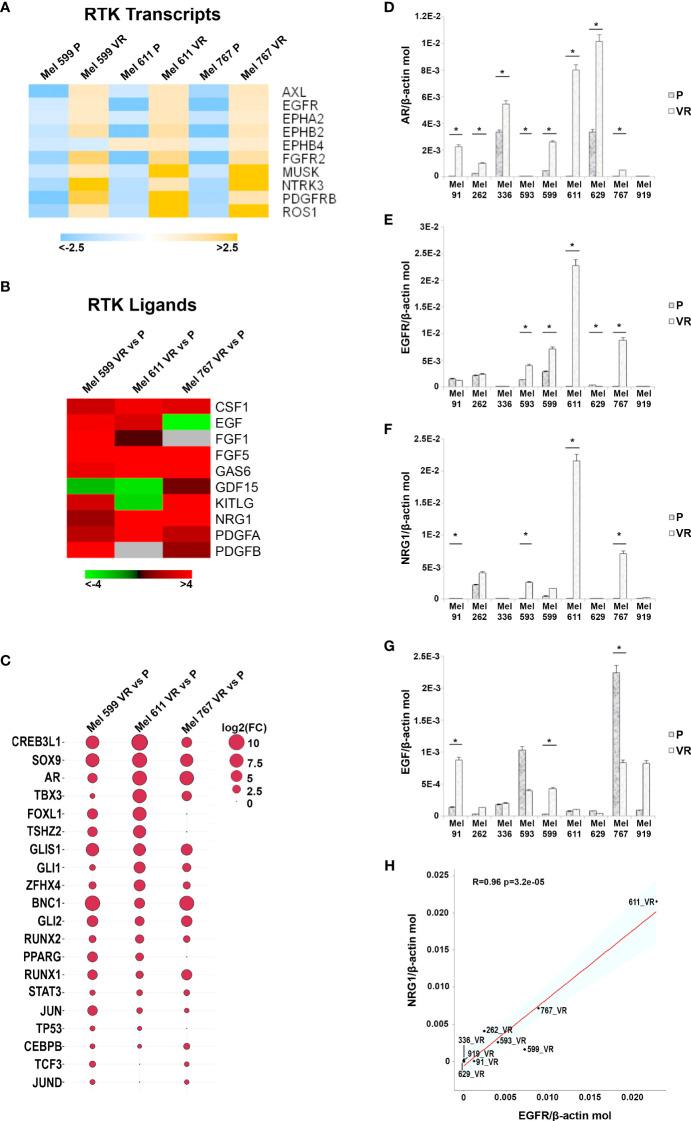
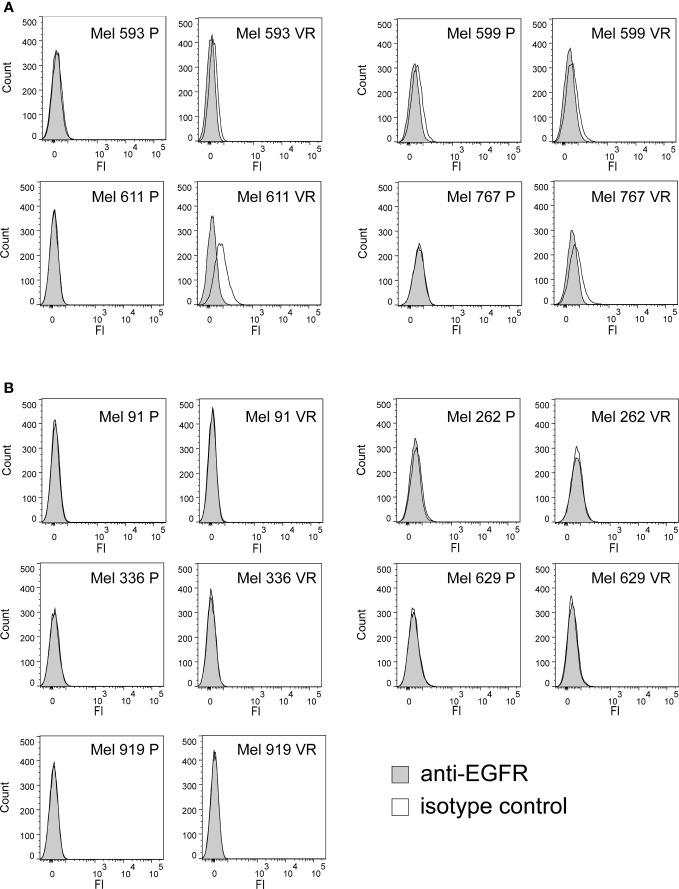
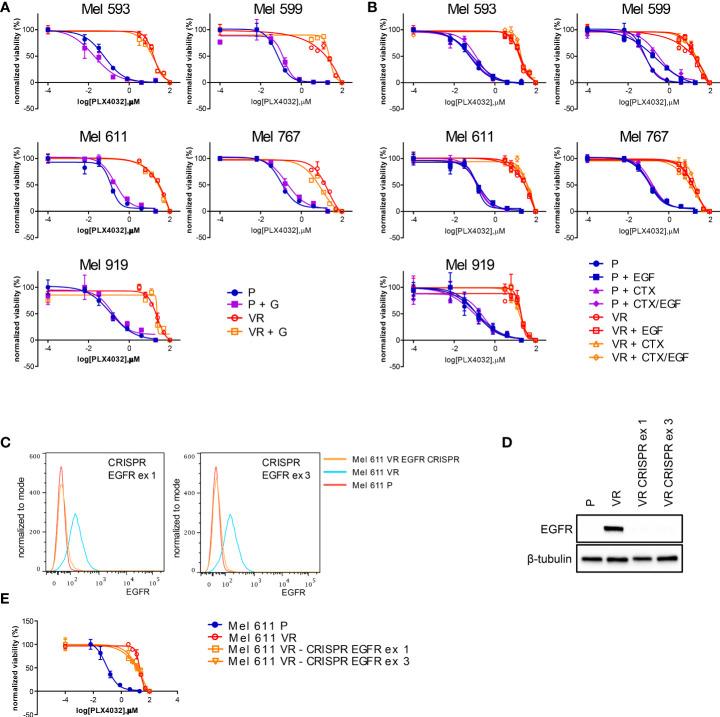
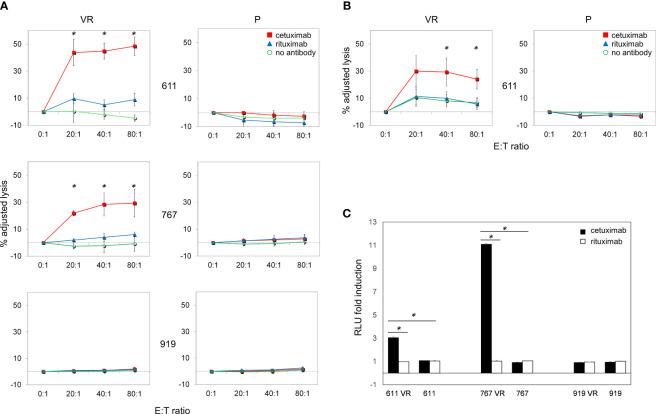
By using an model of BRAFi resistance, we detected increased membrane expression of EGFR, both at mRNA and protein level in 4 out of 9 BRAFi-resistant (VR) CM cultures as compared to their parental sensitive cells. Increased EGFR phosphorylation and AKT activation were observed in the VR CM cultures. EGFR signaling appeared dispensable for maintaining resistance, since small molecule-, antibody- and CRISPR-targeting of EGFR did not restore sensitivity of VR cells to BRAFi. Importantly, immune-targeting of EGFR by the anti-EGFR antibody cetuximab efficiently and specifically killed EGFR-expressing VR CM cells, both and in humanized mouse models , triggering ADCC by healthy donors' and patients' peripheral blood cells.
CONCLUSION
Our data demonstrate the efficacy of immune targeting of RTKs expressed by CM relapsing on BRAFi, providing the proof-of-concept supporting the assessment of anti-RTK antibodies in combination therapies in this setting. This strategy might be expected to concomitantly trigger the crosstalk of adaptive immune response leading to a complementing T cell immune rejection of tumors.
简介
约 50%的皮肤黑色素瘤(CM)患者存在可被 BRAF 抑制剂(BRAFi)有效靶向的激活 BRAF 突变。然而,20%的 CM 患者对 BRAFi 存在内在耐药性,而大多数其他患者随着时间的推移会产生适应性耐药性。涉及 BRAFi 耐药的机制不同,总体上似乎通过上调不同的受体酪氨酸激酶(RTKs),如表皮生长因子受体(EGFR),重新布线细胞信号转导谱。RTKs 抑制剂在 BRAFi 耐药模型中并未明显显示出抗肿瘤活性。为了克服这个问题,我们想知道与 BRAFi 耐药相关的上调 RTK 表型是否可以被免疫武器利用,例如抗 RTKs 抗体的抗体依赖细胞细胞毒性(ADCC)介导的作用,并独立于机制根源杀死肿瘤细胞。
方法和结果
通过使用 BRAFi 耐药模型,我们在 9 个 BRAFi 耐药(VR)CM 培养物中的 4 个中检测到 EGFR 的膜表达增加,无论是在 mRNA 还是蛋白质水平上,与它们的亲本敏感细胞相比。在 VR CM 培养物中观察到 EGFR 磷酸化和 AKT 激活增加。EGFR 信号似乎对维持耐药性不是必需的,因为小分子、抗体和 CRISPR 靶向 EGFR 不会恢复 VR 细胞对 BRAFi 的敏感性。重要的是,抗 EGFR 抗体西妥昔单抗通过 ADCC 有效且特异性地杀死表达 EGFR 的 VR CM 细胞,无论是在体外还是在人源化小鼠模型中,触发来自健康供体和患者外周血细胞的 ADCC。
结论
我们的数据证明了针对在 BRAFi 上复发的 CM 表达的 RTKs 进行免疫靶向的疗效,为在这种情况下评估抗 RTK 抗体联合治疗提供了概念验证支持。这种策略有望同时引发适应性免疫反应的串扰,导致肿瘤的 T 细胞免疫排斥互补。


 Zotero 插件