
N6-异戊烯基腺苷通过靶向 PKM2 的表达和活性抑制脑胶质瘤细胞的有氧糖酵解。
N6-isopentenyladenosine inhibits aerobic glycolysis in glioblastoma cells by targeting PKM2 expression and activity.
机构信息
Department of Molecular Medicine and Medical Biotechnology, University of Naples 'Federico II', Naples, Italy.
Neurosurgery Unit A.O. San Giovanni di Dio e Ruggi d' Aragona - Salerno's School of Medicine Largo Città di Ippocrate, Salerno, Italy.
出版信息
FEBS Open Bio. 2024 May;14(5):843-854. doi: 10.1002/2211-5463.13766. Epub 2024 Mar 21.
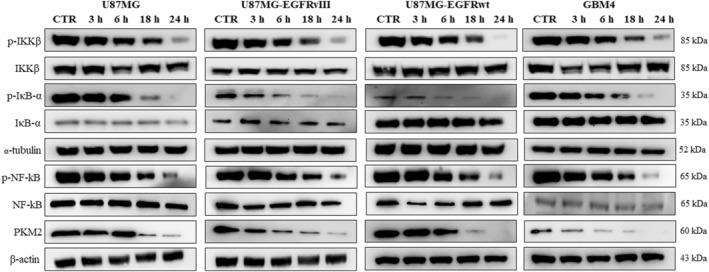
Glioblastoma (GBM) is a primary tumor in the central nervous system with poor prognosis. It exhibits elevated glucose uptake and lactate production. This metabolic state of aerobic glycolysis is known as the Warburg effect. N6-isopentenyladenosine (iPA), a natural cytokine modified with an isopentenyl moiety derived from the mevalonate pathway, has well-established anti-tumor activity. It inhibits cell proliferation in glioma cells, inducing cell death by apoptosis and/or necroptosis. In the present study, we found that iPA inhibits aerobic glycolysis in unmodified U87MG cells and in the same cell line engineered to over-express wild-type epidermal growth factor receptor (EGFR) or EGFR variant III (vIII), as well as in a primary GBM4 patient-derived cell line. The detection of glycolysis showed that iPA treatment suppressed ATP and lactate production. We also evaluated the response of iPA treatment in normal human astrocyte primary cells, healthy counterpart cells of the brain. Aerobic glycolysis in treated normal human astrocyte cells did not show significant changes compared to GBM cells. To determine the mechanism of iPA action on aerobic glycolysis, we investigated the expression of certain enzymes involved in this metabolic pathway. We observed that iPA reduced the expression of pyruvate kinase M2 (PKM2), which plays a key role in the regulation of aerobic glycolysis, promoting tumor cell proliferation. The reduction of PKM2 expression is a result of the inhibition of the inhibitor of nuclear factor kappa-B kinase subunit, beta/nuclear factor-kappa B pathway upon iPA treatment. In conclusion, these experimental results show that iPA may inhibit aerobic glycolysis of GBM in stabilized cell lines and primary GBM cells by targeting the expression and activity of PKM2.
胶质母细胞瘤(GBM)是一种中枢神经系统原发性肿瘤,预后较差。它表现出葡萄糖摄取和乳酸生成的增加。这种有氧糖酵解的代谢状态被称为沃伯格效应。N6-异戊烯基腺嘌呤(iPA)是一种天然细胞因子,经过甲羟戊酸途径衍生的异戊烯基修饰,具有明确的抗肿瘤活性。它抑制神经胶质瘤细胞的增殖,通过细胞凋亡和/或坏死诱导细胞死亡。在本研究中,我们发现 iPA 抑制未经修饰的 U87MG 细胞以及过表达野生型表皮生长因子受体(EGFR)或 EGFR 变体 III(vIII)的相同细胞系以及源自原发性 GBM4 患者的细胞系中的有氧糖酵解。糖酵解检测表明,iPA 处理抑制了 ATP 和乳酸的产生。我们还评估了 iPA 处理在正常人星形胶质细胞原代细胞(大脑的健康对照细胞)中的反应。与 GBM 细胞相比,经处理的正常人星形胶质细胞中的有氧糖酵解没有显示出明显变化。为了确定 iPA 对有氧糖酵解作用的机制,我们研究了参与该代谢途径的某些酶的表达。我们观察到 iPA 降低了丙酮酸激酶 M2(PKM2)的表达,PKM2 在调节有氧糖酵解中起关键作用,促进肿瘤细胞增殖。PKM2 表达的降低是由于 iPA 处理抑制了核因子 kappa-B 激酶亚单位抑制剂和核因子-kappa B 途径。总之,这些实验结果表明,iPA 可能通过靶向 PKM2 的表达和活性来抑制稳定细胞系和原发性 GBM 细胞中的有氧糖酵解。


 Zotero 插件