
非编码RNA转录本,通过调控广泛的细胞过程和信号机制,成为膀胱癌顺铂化疗耐药的惊人调节因子。
Non-coding RNA transcripts, incredible modulators of cisplatin chemo-resistance in bladder cancer through operating a broad spectrum of cellular processes and signaling mechanism.
作者信息
Hashem Mehrdad, Mohandesi Khosroshahi Elaheh, Aliahmady Melika, Ghanei Morvarid, Soofi Rezaie Yasamin, Alsadat Jafari Yasamin, Rezaei Fatemeh, Khodaparast Eskadehi Ramtin, Kia Kojoori Kimia, Jamshidian Faranak, Nabavi Noushin, Rashidi Mohsen, Hasani Sadi Farzaneh, Taheriazam Afshin, Entezari Maliheh
机构信息
Department of Genetics, Faculty of Advanced Science and Technology, Tehran Medical Sciences, Islamic Azad University, Tehran, Iran.
Farhikhtegan Medical Convergence Sciences Research Center, Farhikhtegan Hospital Tehran Medical Sciences, Islamic Azad University, Tehran, Iran.
出版信息
Noncoding RNA Res. 2024 Jan 22;9(2):560-582. doi: 10.1016/j.ncrna.2024.01.009. eCollection 2024 Jun.
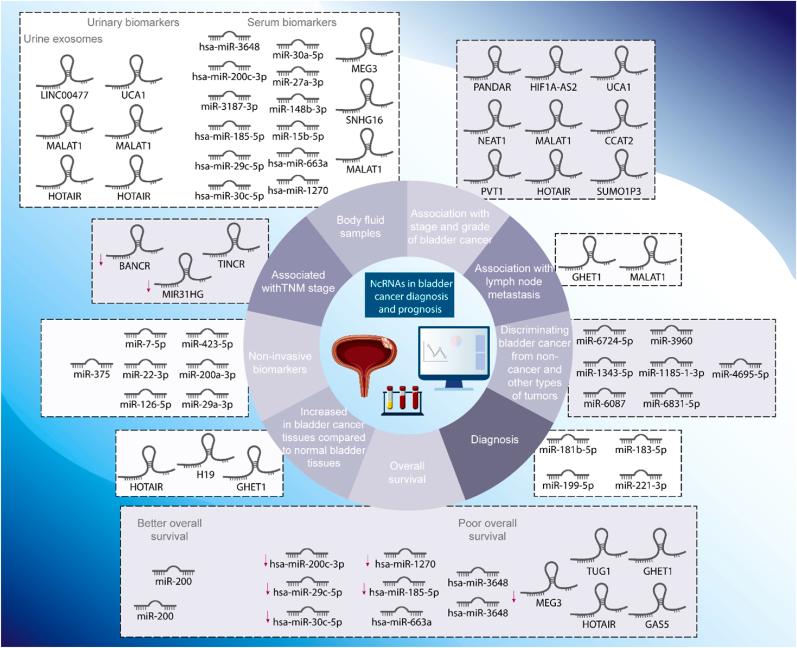
Bladder cancer (BC) is a highly frequent neoplasm in correlation with significant rate of morbidity, mortality, and cost. The onset of BC is predominantly triggered by environmental and/or occupational exposures to carcinogens, such as tobacco. There are two distinct pathways by which BC can be developed, including non-muscle-invasive papillary tumors (NMIBC) and non-papillary (or solid) muscle-invasive tumors (MIBC). The Cancer Genome Atlas project has further recognized key genetic drivers of MIBC along with its subtypes with particular properties and therapeutic responses; nonetheless, NMIBC is the predominant BC presentation among the suffering individuals. Radical cystoprostatectomy, radiotherapy, and chemotherapy have been verified to be the common therapeutic interventions in metastatic tumors, among which chemotherapeutics are more conventionally utilized. Although multiple chemo drugs have been broadly administered for BC treatment, cisplatin is reportedly the most effective chemo drug against the corresponding malignancy. Notwithstanding, tumor recurrence is usually occurred following the consumption of cisplatin regimens, particularly due to the progression of chemo-resistant trait. In this framework, non-coding RNAs (ncRNAs), as abundant RNA transcripts arise from the human genome, are introduced to serve as crucial contributors to tumor expansion and cisplatin chemo-resistance in bladder neoplasm. In the current review, we first investigated the best-known ncRNAs, i.e. microRNAs (miRNAs), long ncRNAs (lncRNAs), and circular RNAs (circRNAs), correlated with cisplatin chemo-resistance in BC cells and tissues. We noticed that these ncRNAs could mediate the BC-related cisplatin-resistant phenotype through diverse cellular processes and signaling mechanisms, reviewed here. Eventually, diagnostic and prognostic potential of ncRNAs, as well as their therapeutic capabilities were highlighted in regard to BC management.
膀胱癌(BC)是一种高发肿瘤,其发病率、死亡率和治疗成本都很高。BC的发病主要由环境和/或职业接触致癌物引发,如烟草。BC的发生有两种不同途径,包括非肌层浸润性乳头状肿瘤(NMIBC)和非乳头状(或实体)肌层浸润性肿瘤(MIBC)。癌症基因组图谱项目进一步明确了MIBC及其具有特定特性和治疗反应的亚型的关键基因驱动因素;尽管如此,NMIBC仍是患者中最主要的BC表现形式。根治性膀胱前列腺切除术、放疗和化疗已被证实是转移性肿瘤的常见治疗手段,其中化疗药物的使用更为普遍。虽然多种化疗药物已广泛用于BC治疗,但据报道顺铂是针对相应恶性肿瘤最有效的化疗药物。然而,使用顺铂治疗方案后通常会出现肿瘤复发,特别是由于化疗耐药性的进展。在此框架下,非编码RNA(ncRNA)作为人类基因组产生的丰富RNA转录本,被引入作为膀胱肿瘤中肿瘤进展和顺铂化疗耐药性的关键促成因素。在本综述中,我们首先研究了最著名的ncRNA,即微小RNA(miRNA)、长链ncRNA(lncRNA)和环状RNA(circRNA),它们与BC细胞和组织中的顺铂化疗耐药性相关。我们注意到,这些ncRNA可以通过多种细胞过程和信号机制介导BC相关的顺铂耐药表型,本文对此进行了综述。最后,强调了ncRNA在BC管理方面的诊断和预后潜力及其治疗能力。


 Zotero 插件