
靶向炎症作为癌症治疗方法。
Targeting inflammation as cancer therapy.
机构信息
Laboratory of Aging Research and Cancer Drug Target, State Key Laboratory of Biotherapy and Cancer Center, National Clinical Research Center for Geriatrics, West China Hospital, Sichuan University, No.17, Block3, Southern Renmin Road, Chengdu, 610041, Sichuan, People's Republic of China.
Department of Thoracic Surgery, West China Hospital, Sichuan University, Chengdu, People's Republic of China.
出版信息
J Hematol Oncol. 2024 Mar 22;17(1):13. doi: 10.1186/s13045-024-01528-7.
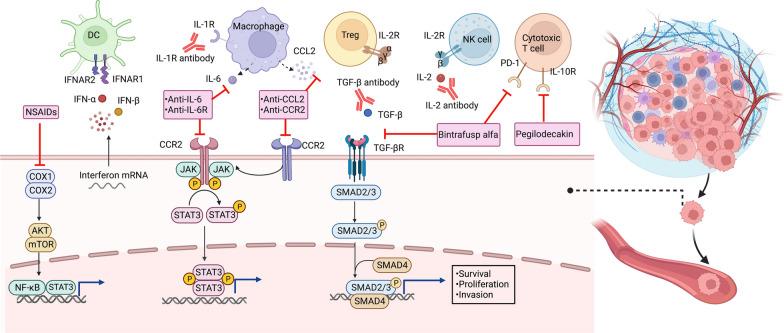
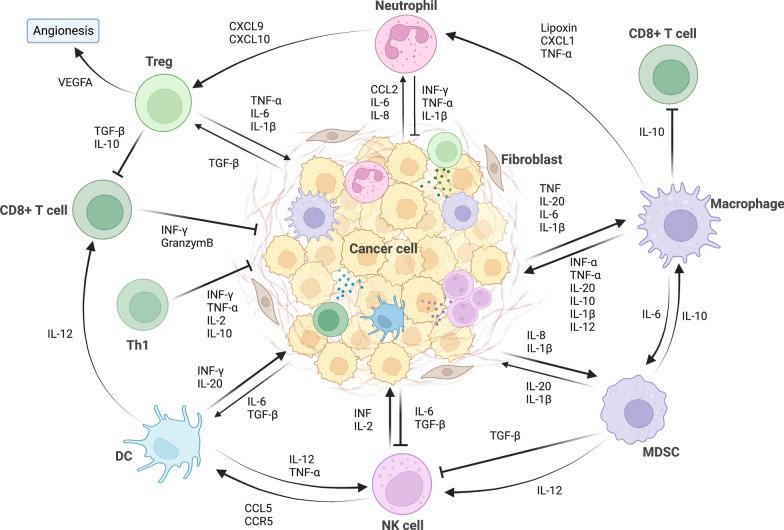
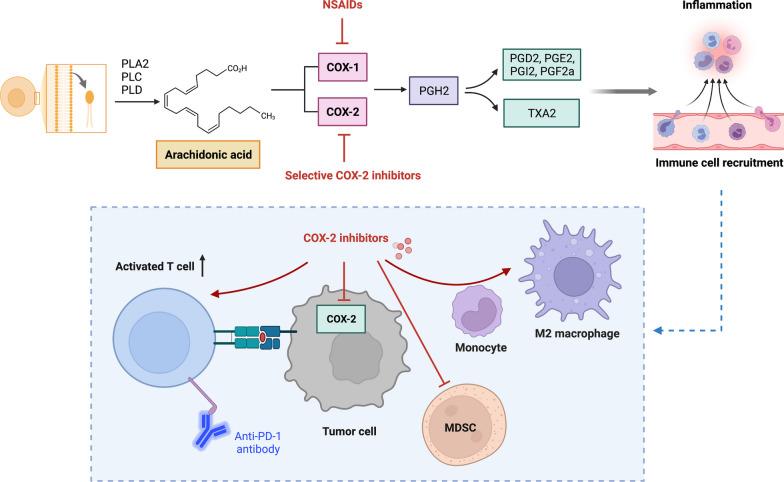
Inflammation has accompanied human beings since the emergence of wounds and infections. In the past decades, numerous efforts have been undertaken to explore the potential role of inflammation in cancer, from tumor development, invasion, and metastasis to the resistance of tumors to treatment. Inflammation-targeted agents not only demonstrate the potential to suppress cancer development, but also to improve the efficacy of other therapeutic modalities. In this review, we describe the highly dynamic and complex inflammatory tumor microenvironment, with discussion on key inflammation mediators in cancer including inflammatory cells, inflammatory cytokines, and their downstream intracellular pathways. In addition, we especially address the role of inflammation in cancer development and highlight the action mechanisms of inflammation-targeted therapies in antitumor response. Finally, we summarize the results from both preclinical and clinical studies up to date to illustrate the translation potential of inflammation-targeted therapies.
炎症伴随着人类的出现而出现,与伤口和感染如影随形。在过去几十年中,人们进行了大量研究,探索炎症在癌症中的潜在作用,包括肿瘤的发生、侵袭和转移,以及肿瘤对治疗的耐药性。炎症靶向药物不仅具有抑制癌症发展的潜力,而且还能提高其他治疗方式的疗效。在这篇综述中,我们描述了高度动态和复杂的炎症肿瘤微环境,并讨论了癌症中的关键炎症介质,包括炎症细胞、炎症细胞因子及其下游细胞内途径。此外,我们特别关注炎症在癌症发展中的作用,并强调了炎症靶向治疗在抗肿瘤反应中的作用机制。最后,我们总结了迄今为止临床前和临床研究的结果,以说明炎症靶向治疗的转化潜力。
 Zotero 插件