
野鸟源 H6N2 流感病毒在小鼠中单次传代后获得增强的致病性。
Wild Bird-Origin H6N2 Influenza Virus Acquires Enhanced Pathogenicity after Single Passage in Mice.
机构信息
Key Laboratory of Livestock Infectious Diseases, Ministry of Education, Key Laboratory of Zoonosis, Laboratory of Ruminant Infectious Disease Prevention and Control (East), Ministry of Agriculture and Rural Affairs, Liaoning Panjin Wetland Ecosystem National Observation and Research Station, College of Animal Science and Veterinary Medicine, Shenyang Agricultural University, 120 Dongling Rd., Shenyang 110866, China.
出版信息
Viruses. 2024 Feb 25;16(3):357. doi: 10.3390/v16030357.
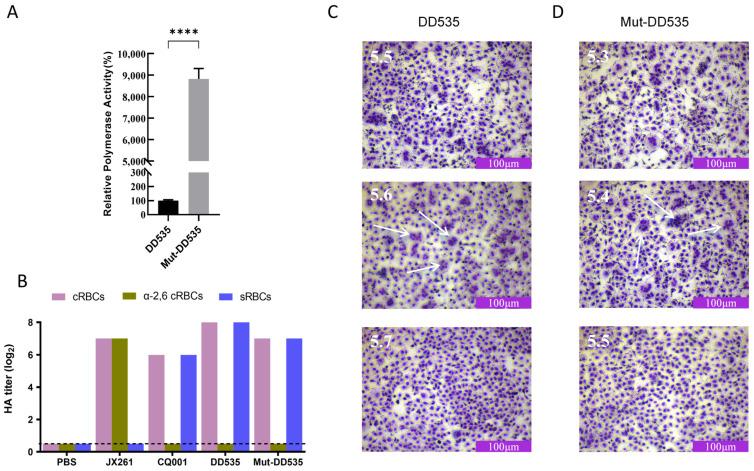
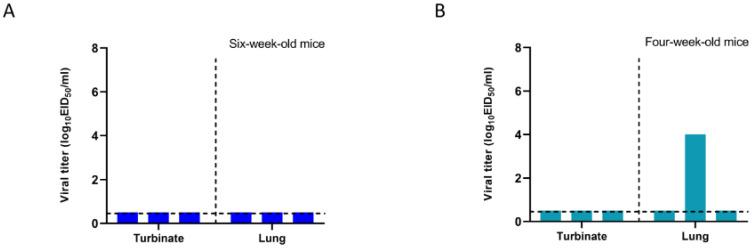
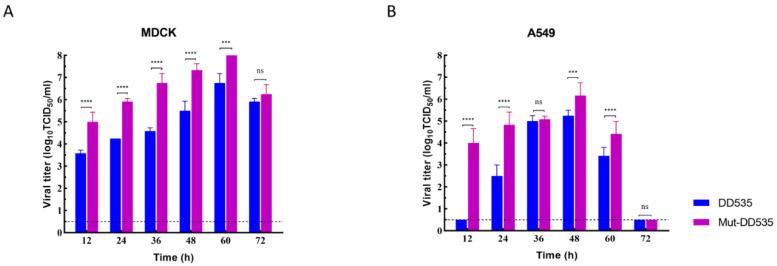
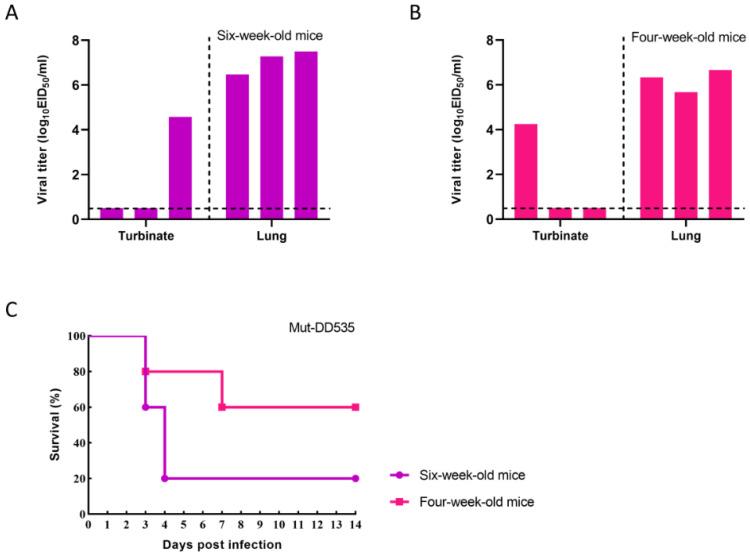
The H6 subtype of avian influenza viruses (AIVs) has emerged as one of the predominant subtypes in both wild and domestic avian species. Currently, H6 AIVs have acquired the ability to infect a wide range of mammals, though the related molecular mechanisms have yet to be fully investigated. In this study, a wild bird-origin H6N2 AIV was isolated from the East Asian-Australasian migratory flyway region located in Liaoning Province. This H6N2 virus initially expressed limited replication in mice. However, after one passage in mice, the virus acquired two mutations, PB2 E627K and HA A110V. The mutant displayed enhanced replication both in vitro and in vivo, proving lethal to mice. But the mutant retained the α-2, 3-linked sialic acid binding property and failed to transmit in guinea pigs. We explored the molecular mechanisms underlying the pathogenicity difference between the wild type and the mutant. Our findings revealed that PB2 E627K dramatically enhanced the polymerase activity of the H6N2 virus, while the HA A110V mutation decreased the pH of HA activation. This study demonstrated that the H6N2 subtype wild bird-origin AIV easily acquired the mammalian adaptation. The monitoring and evaluation of H6 wild bird-origin AIV should be strengthened.
禽流感病毒(AIV)的 H6 亚型已成为野生和家禽鸟类中主要的亚型之一。目前,H6 AIV 已获得感染多种哺乳动物的能力,尽管相关的分子机制尚未得到充分研究。在本研究中,从位于辽宁省的东亚-澳大拉西亚迁徙飞行路线区域分离到一株野生鸟类来源的 H6N2 AIV。该 H6N2 病毒最初在小鼠中表达有限的复制能力。然而,在小鼠中传代一次后,该病毒获得了两个突变,即 PB2 E627K 和 HA A110V。突变株在体外和体内显示出增强的复制能力,对小鼠具有致死性。但突变株保留了α-2,3-连接的唾液酸结合特性,无法在豚鼠中传播。我们探索了野生型和突变型之间致病性差异的分子机制。研究结果表明,PB2 E627K 极大地增强了 H6N2 病毒的聚合酶活性,而 HA A110V 突变降低了 HA 激活的 pH 值。本研究表明,H6N2 亚型野生鸟类来源的 AIV 容易获得哺乳动物适应性。应加强对 H6 野生鸟类来源 AIV 的监测和评估。

 Zotero 插件