
国家健康访谈调查中的结直肠癌筛查趋势:不同方式对总体筛查率影响的分析。
Trends in Colorectal Cancer Screening from the National Health Interview Survey: Analysis of the Impact of Different Modalities on Overall Screening Rates.
机构信息
Division of Gastroenterology and Hepatology, Mayo Clinic, Rochester, Minnesota.
Division of Quantitative Health Sciences, Mayo Clinic, Rochester, Minnesota.
出版信息
Cancer Prev Res (Phila). 2024 Jun 4;17(6):275-280. doi: 10.1158/1940-6207.CAPR-23-0443.
UNLABELLED
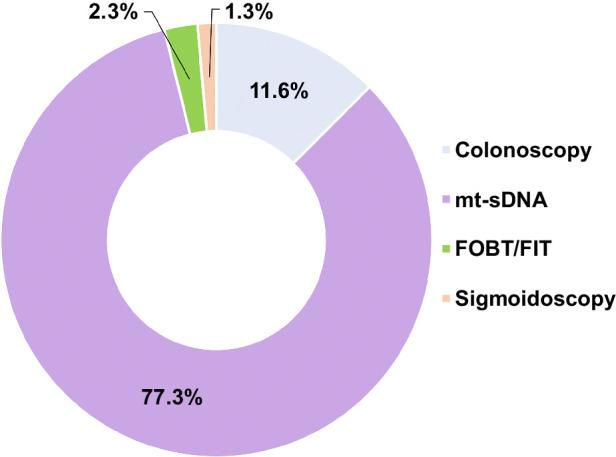
Colorectal cancer is the second leading cause of cancer-related mortality in adults in the United States. Despite compelling evidence of improved outcomes in colorectal cancer, screening rates are not optimal. This study aimed to characterize colorectal cancer screening trends over the last two decades and assess the impact of various screening modalities on overall colorectal cancer screening rates. Using National Health Interview Survey data from 2005 to 2021, we examined colorectal cancer screening [colonoscopy, multitarget stool DNA (mt-sDNA), fecal occult blood test (FOBT)/fecal immunochemical test, sigmoidoscopy, CT colonography] rates among adults ages 50-75 years (n = 85,571). A pseudo-time-series cross-sectional (pseudo-TSCS) analysis was conducted including a random effects generalized least squares regression model to estimate the relative impact of each modality on changes in colorectal cancer screening rates. Among 50 to 75 year olds, the estimated colorectal cancer screening rate increased from 47.7% in 2005 to 69.9% in 2021, with the largest increase between 2005 and 2010 (47.7%-60.7%). Rates subsequently plateaued until 2015 but increased from 63.5% in 2015 to 69.9% in 2018. This was primarily driven by the increased use of mt-sDNA (2.5% in 2018 to 6.6% in 2021). Pseudo-TSCS analysis results showed that mt-sDNA contributed substantially to the increase in overall screening rates (77.3%; P < 0.0001) between 2018 and 2021. While colorectal cancer screening rates increased from 2005 to 2021, they remain below the 80% goal. The introduction of mt-sDNA, a noninvasive screening test may have improved overall rates. Sustained efforts are required to further increase screening rates to improve patient outcomes and offering a range of screening options is likely to contribute to achieving this goal.
PREVENTION RELEVANCE
This retrospective study highlights the importance of convenient stool-based colorectal cancer screening options to achieve the national goal of 80% for overall colorectal cancer screening rates. Empowering screening-eligible individuals with a choice for their colorectal cancer screening tests is imperative.
目的
本研究旨在描述过去二十年中结直肠癌筛查趋势,并评估各种筛查方式对总体结直肠癌筛查率的影响。
方法
使用 2005 年至 2021 年国家健康访谈调查数据,我们检查了 50-75 岁成年人(n=85571)的结直肠癌筛查[结肠镜检查、多靶点粪便 DNA(mt-sDNA)、粪便潜血试验(FOBT)/粪便免疫化学试验、乙状结肠镜检查、CT 结肠成像]率。进行了伪时间序列横断面(pseudo-TSCS)分析,包括随机效应广义最小二乘回归模型,以估计每种方式对结直肠癌筛查率变化的相对影响。
结果
在 50 至 75 岁的人群中,估计的结直肠癌筛查率从 2005 年的 47.7%增加到 2021 年的 69.9%,2005 年至 2010 年增幅最大(47.7%-60.7%)。随后,该比率趋于平稳,直到 2015 年,但从 2015 年的 63.5%增加到 2018 年的 69.9%。这主要是由于 mt-sDNA 的使用增加(2018 年为 2.5%,2021 年为 6.6%)。伪时间序列分析结果表明,mt-sDNA 对 2018 年至 2021 年间总体筛查率的增加做出了重大贡献(77.3%;P<0.0001)。虽然 2005 年至 2021 年间结直肠癌筛查率有所上升,但仍低于 80%的目标。非侵入性筛查试验 mt-sDNA 的引入可能提高了总体比率。需要持续努力进一步提高筛查率,以改善患者预后,并提供一系列筛查选择可能有助于实现这一目标。
结论
本回顾性研究强调了方便的粪便结直肠癌筛查选择的重要性,以实现全国 80%的总体结直肠癌筛查率目标。赋予筛查合格个人选择其结直肠癌筛查测试的权利至关重要。


 Zotero 插件