
有物质使用障碍的自杀未遂者中父母教养方式的表观遗传候选基因关联研究。
An epigenetic candidate-gene association study of parental styles in suicide attempters with substance use disorders.
机构信息
Département Universitaire de Psychiatrie et de Médecine Addictologique, GHU APHP. Nord, Assistance Publique - Hôpitaux de Paris, Paris, France.
INSERM UMR-S 1144, Optimisation Thérapeutique en Neurospsychopharmacologie, OTeN, Université Paris Cité, Paris, France.
出版信息
Addict Biol. 2024 Apr;29(4):e13392. doi: 10.1111/adb.13392.
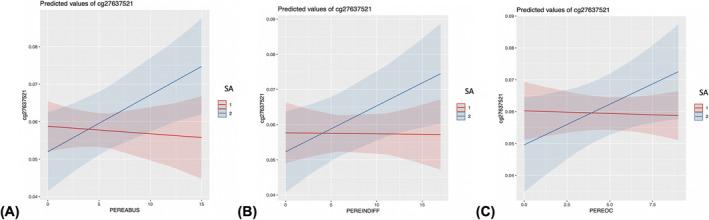
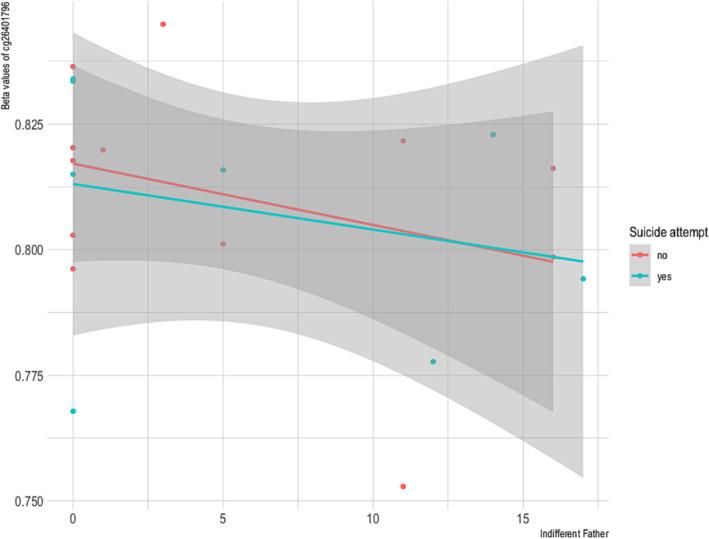
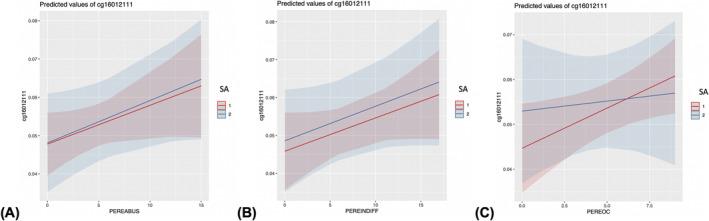
Suicide attempts (SA) are prevalent in substance use disorders (SUD). Epigenetic mechanisms may play a pivotal role in the molecular mechanisms of environmental effects eliciting suicidal behaviour in this population. Hypothalamic-pituitary-adrenal axis (HPA), oxytocin and neurotrophin pathways have been consistently involved in SA, yet , their interplay with childhood adversity remains unclear, particularly in SUD. In 24 outpatients with SUDs, we examined the relation between three parental dysfunctional styles and history of SA with methylation of 32 genes from these pathways, eventually analysing 823 methylation sites. Extensive phenotypic characterization was obtained using a semi-structured interview. Parental style was patient-reported using the Measure of Parental Style (MOPS) questionnaire, analysed with and without imputation of missing items. Linear regressions were performed to adjust for possible confounders, followed by multiple testing correction. We describe both differentially methylated probes (DMPs) and regions (DMRs) for each set of analyses (with and without imputation of MOPS items). Without imputation, five DMRs in OXTR, CRH and NTF3 significantly interacted with MOPS father abuse to increase the risk for lifetime SA, thus covering the three pathways. After imputation of missing MOPS items, two other DMPs from FKBP5 and SOCS3 significantly interacted with each of the three father styles to increase the risk for SA. Although our findings must be interpreted with caution due to small sample size, they suggest implications of stress reactivity genes in the suicidal risk of SUD patients and highlight the significance of father dysfunction as a potential marker of childhood adversity in SUD patients.
自杀企图(SA)在物质使用障碍(SUD)中很常见。表观遗传机制可能在环境影响引发该人群自杀行为的分子机制中发挥关键作用。下丘脑-垂体-肾上腺轴(HPA)、催产素和神经营养素途径一直与 SA 有关,但它们与儿童期逆境的相互作用仍不清楚,尤其是在 SUD 中。在 24 名 SUD 门诊患者中,我们研究了三种父母功能障碍模式与 SA 史与这些途径的 32 个基因甲基化之间的关系,最终分析了 823 个甲基化位点。使用半结构化访谈获得了广泛的表型特征。使用父母风格量表(MOPS)问卷报告父母风格,分析时不考虑和考虑缺失项目的情况。进行线性回归以调整可能的混杂因素,然后进行多重检验校正。我们描述了每组分析(考虑和不考虑 MOPS 项目的缺失值)的差异甲基化探针(DMP)和区域(DMR)。不考虑 MOPS 项目的缺失值,OXTR、CRH 和 NTF3 中的五个 DMR 与 MOPS 父亲虐待显著相互作用,增加了终生 SA 的风险,从而涵盖了这三个途径。在缺失 MOPS 项目的情况下进行插补后,FKBP5 和 SOCS3 中的另外两个 DMP 与三个父亲风格中的每一个都显著相互作用,增加了 SA 的风险。尽管由于样本量小,我们的发现必须谨慎解释,但它们表明应激反应基因在 SUD 患者自杀风险中的意义,并强调了父亲功能障碍作为 SUD 患者儿童期逆境潜在标志物的重要性。
 Zotero 插件