
与二硫键介导的程序性坏死相关的肌动蛋白细胞骨架基因的泛癌和单细胞分析
Pan-cancer and single-cell analysis of actin cytoskeleton genes related to disulfidptosis.
作者信息
Shen Li-Ping, Jiang Han-Tao
机构信息
Department of Clinical Laboratory, Taizhou Hospital of Zhejiang Province affiliated to Wenzhou Medical University, Taizhou, 318000, Zhejiang Province, China.
Department of Orthopedics, Taizhou Hospital of Zhejiang Province affiliated to Wenzhou Medical University, Taizhou, 318000, Zhejiang Province, China.
出版信息
Open Med (Wars). 2024 Mar 30;19(1):20240929. doi: 10.1515/med-2024-0929. eCollection 2024.
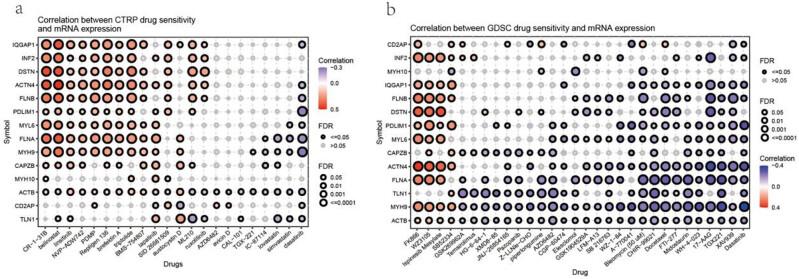
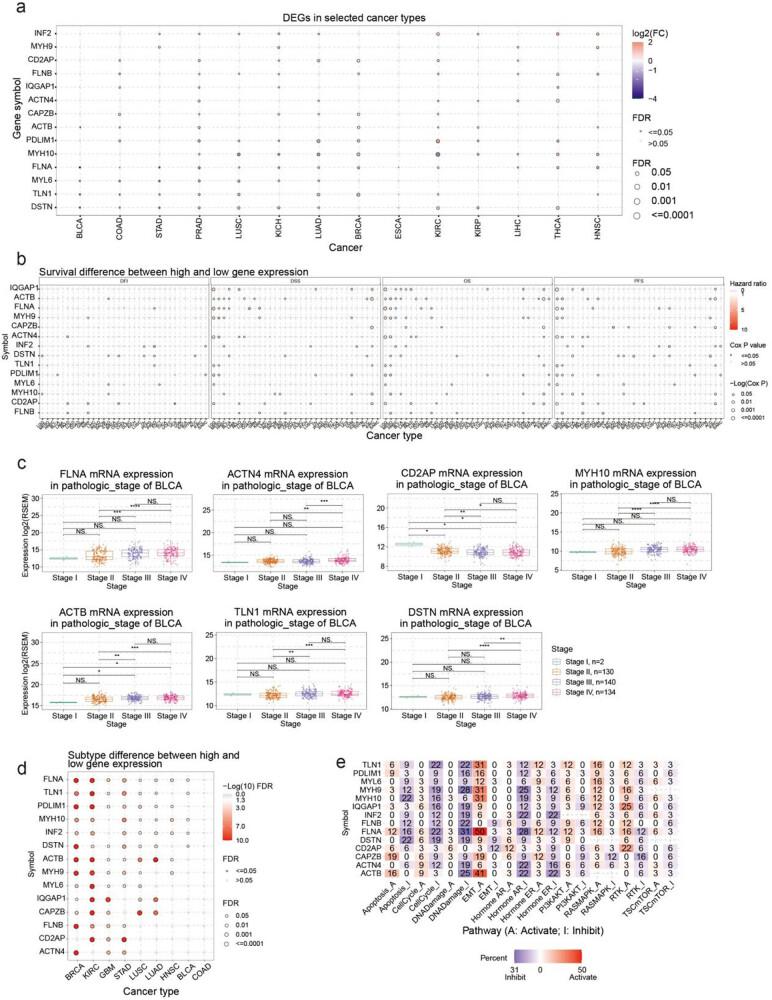
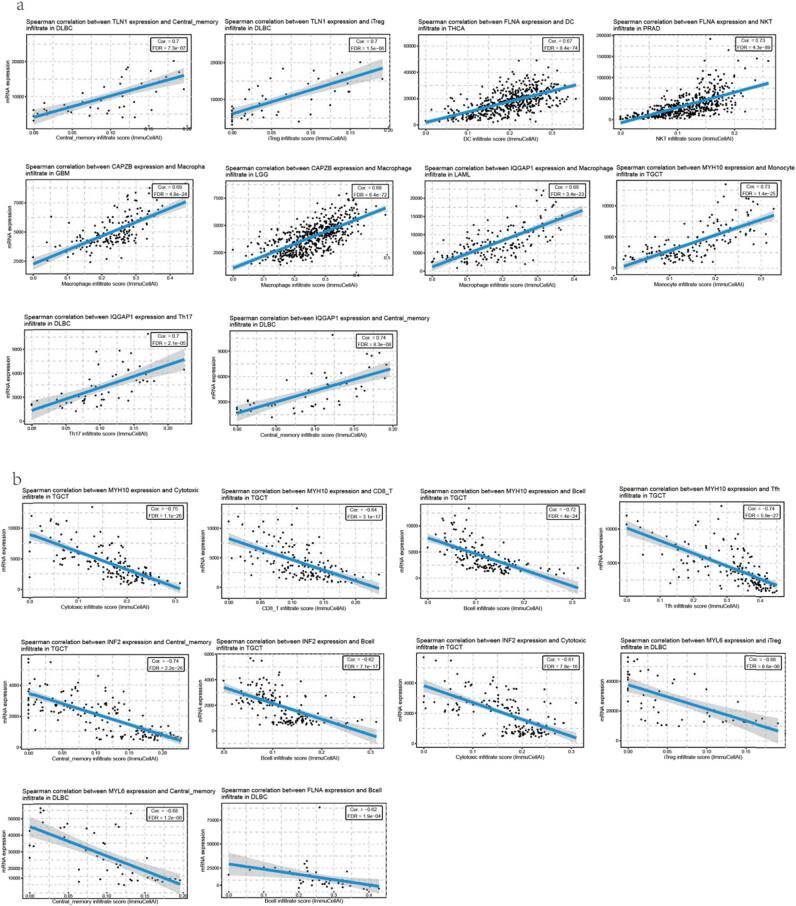
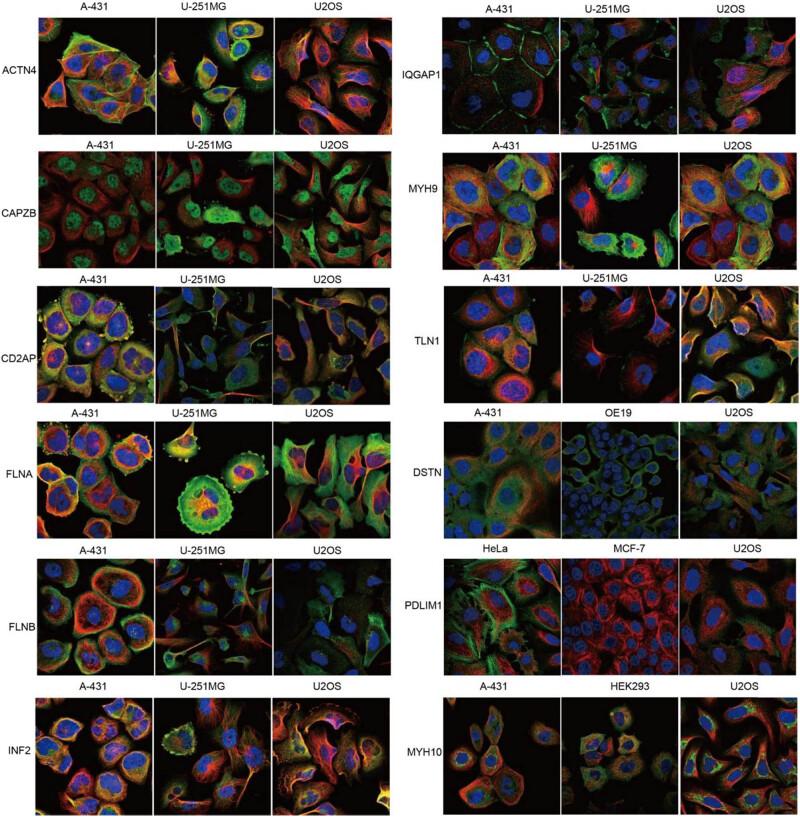
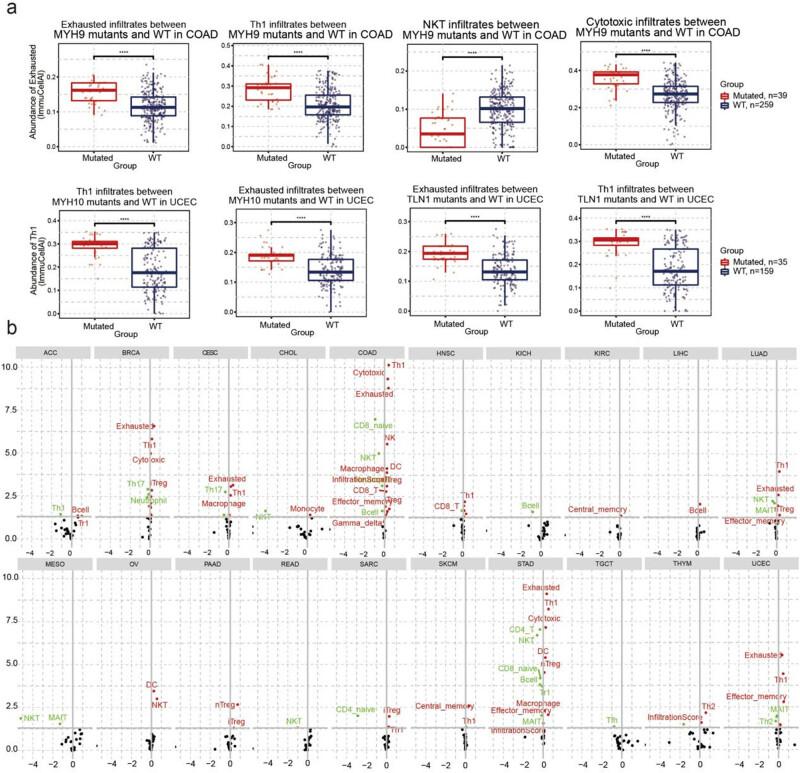
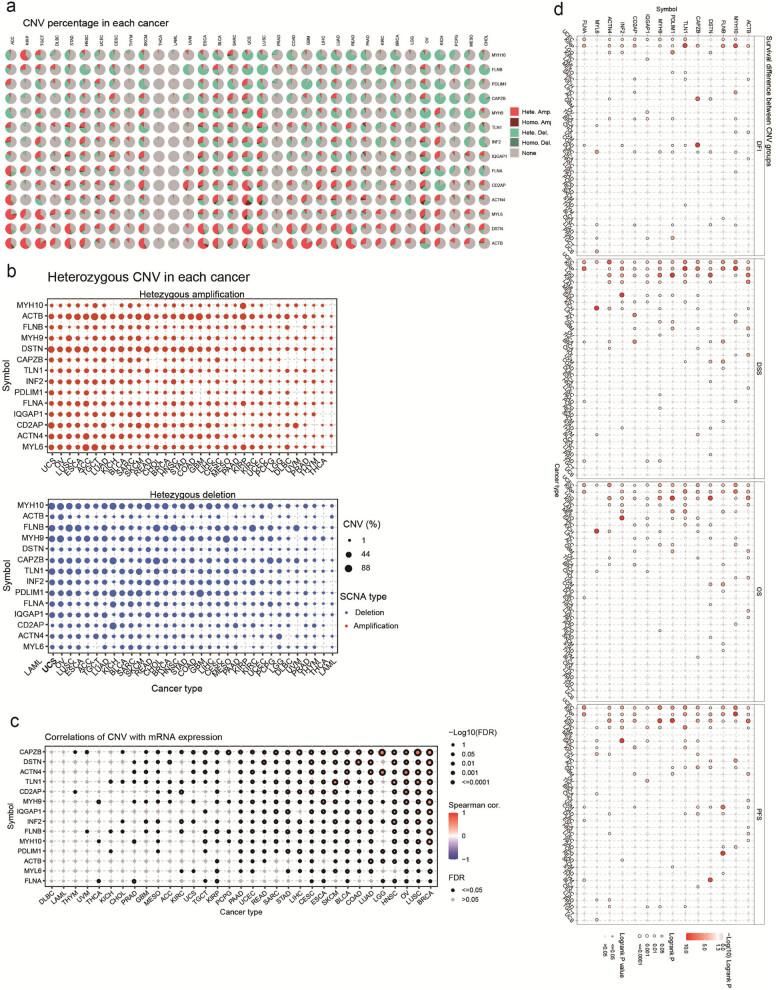
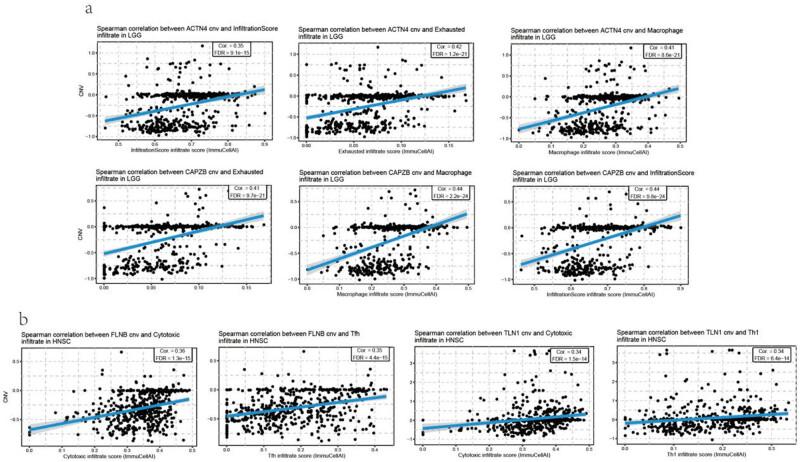
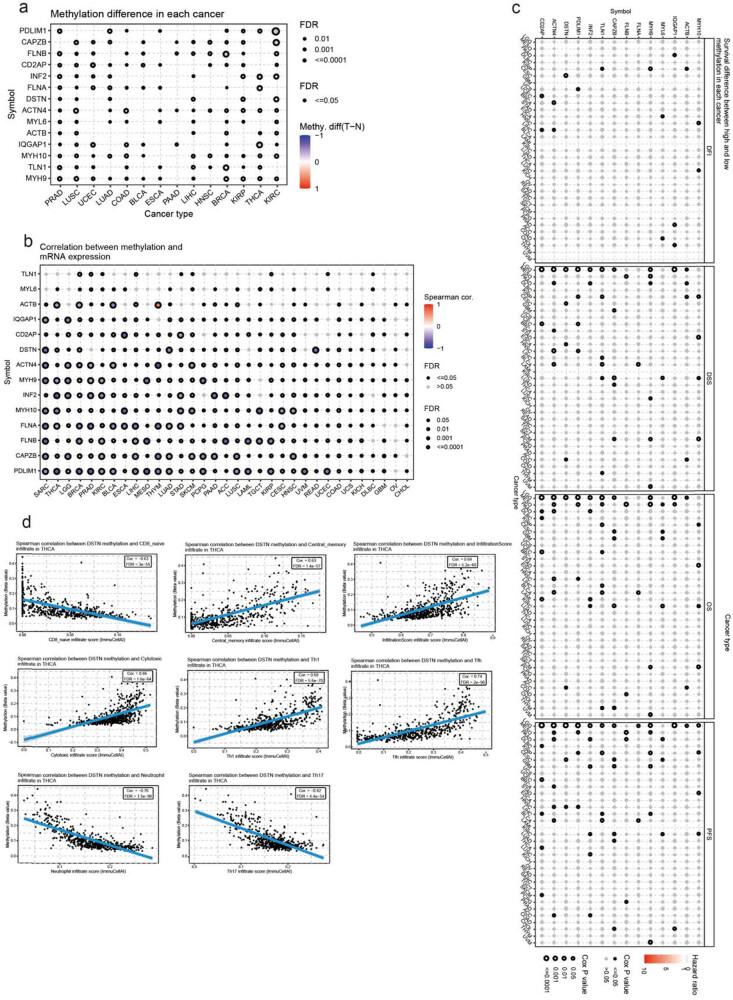
Disulfidptosis was recently reported to be caused by abnormal disulfide accumulation in cells with high SLC7A11 levels subjected to glucose starvation, suggesting that targeting disulfidptosis was a potential strategy for cancer treatment. We analyzed the relationships between gene expression and mutations and prognoses of patients. In addition, the correlation between gene expression and immune cell infiltration was explored. The potential regulatory mechanisms of these genes were assessed by investigating their related signaling pathways involved in cancer, their expression patterns, and their cellular localization. Most cancer types showed a negative correlation between the gene-set variation analysis (GSVA) scores and infiltration of B cells and neutrophils, and a positive correlation between GSVA scores and infiltration of natural killer T and induced regulatory T cells. Single-cell analysis revealed that , , and were highly expressed in different bladder urothelial carcinoma subtypes, but showed a low expression. Immunofluorescence staining showed that actin cytoskeleton proteins were mainly localized in the actin filaments and plasma membrane. Notably, IQGAP1 was localized in the cell junctions. In conclusion, this study provided an overview of disulfidptosis-related actin cytoskeleton genes in pan-cancer. These genes were associated with the survival of patients and might be involved in cancer-related pathways.
最近有报道称,二硫化物诱导的细胞死亡是由SLC7A11水平较高的细胞在葡萄糖饥饿状态下异常积累二硫化物所致,这表明靶向二硫化物诱导的细胞死亡是一种潜在的癌症治疗策略。我们分析了基因表达与突变以及患者预后之间的关系。此外,还探讨了基因表达与免疫细胞浸润之间的相关性。通过研究这些基因在癌症中涉及的相关信号通路、表达模式及其细胞定位,评估了它们的潜在调控机制。大多数癌症类型在基因集变异分析(GSVA)评分与B细胞和中性粒细胞浸润之间呈负相关,而在GSVA评分与自然杀伤T细胞和诱导调节性T细胞浸润之间呈正相关。单细胞分析显示,[具体基因1]、[具体基因2]和[具体基因3]在不同的膀胱尿路上皮癌亚型中高表达,但[具体基因4]表达较低。免疫荧光染色显示,肌动蛋白细胞骨架蛋白主要定位于肌动蛋白丝和质膜。值得注意的是,IQGAP1定位于细胞连接处。总之,本研究概述了泛癌中与二硫化物诱导的细胞死亡相关的肌动蛋白细胞骨架基因。这些基因与患者的生存相关,可能参与癌症相关通路。



 Zotero 插件