
Abelson 激酶受其αI-螺旋调节的分子基础。
The molecular basis of Abelson kinase regulation by its αI-helix.
机构信息
Structural Biology and Biophysics, Biozentrum, University of Basel, Basel, Switzerland.
出版信息
Elife. 2024 Apr 8;12:RP92324. doi: 10.7554/eLife.92324.
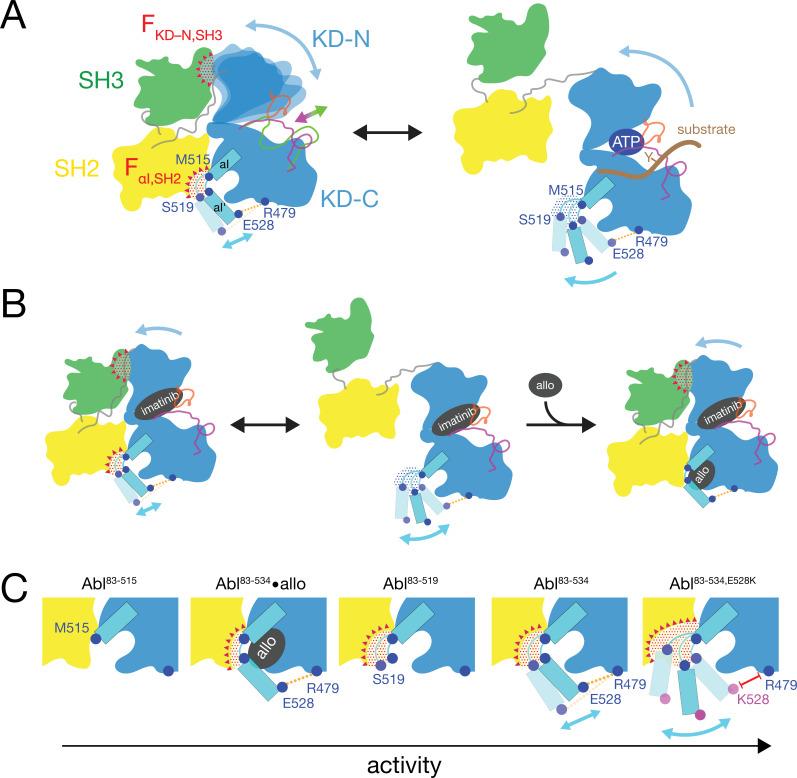
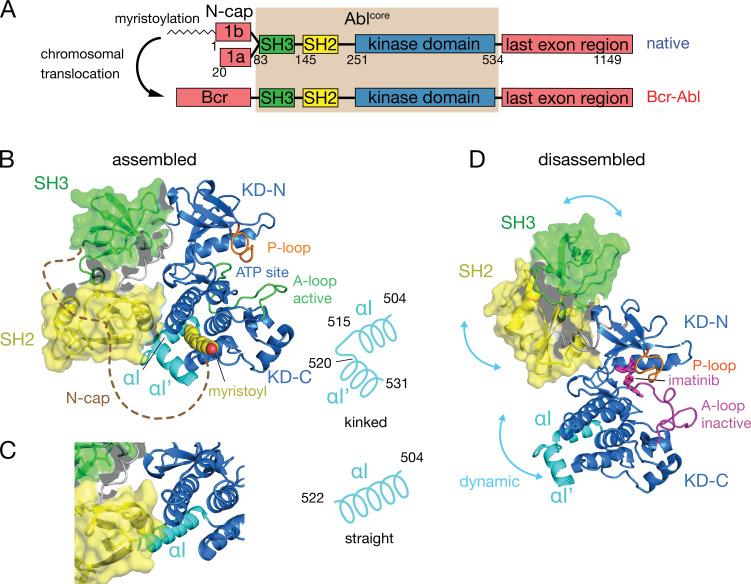
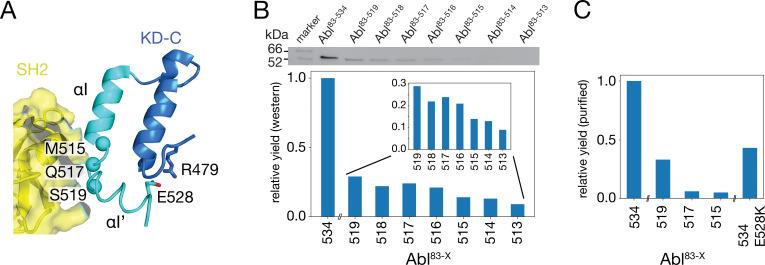
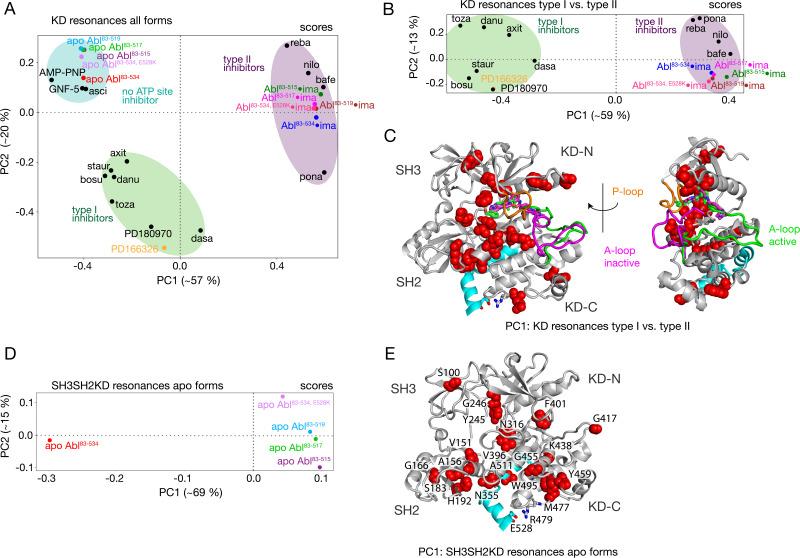
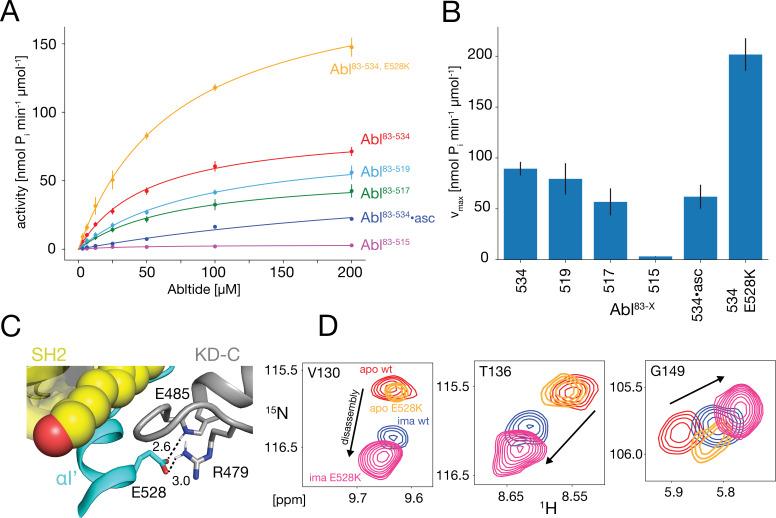
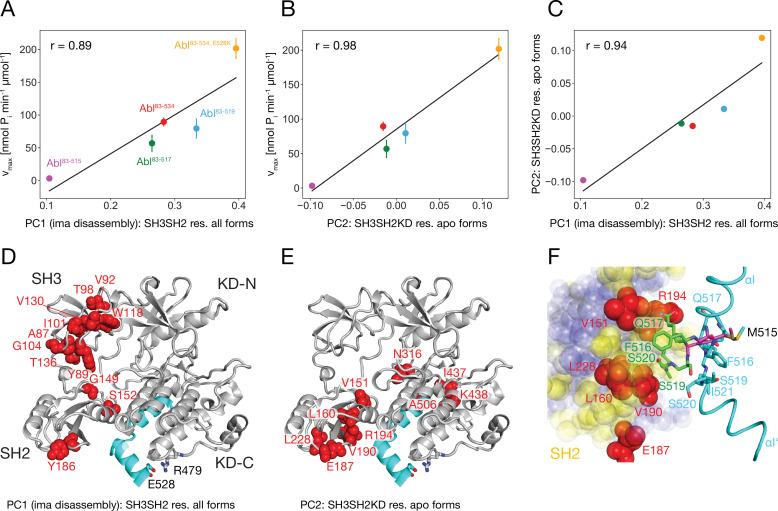
Abelson tyrosine kinase (Abl) is regulated by the arrangement of its regulatory core, consisting sequentially of the SH3, SH2, and kinase (KD) domains, where an assembled or disassembled core corresponds to low or high kinase activity, respectively. It was recently established that binding of type II ATP site inhibitors, such as imatinib, generates a force from the KD N-lobe onto the SH3 domain and in consequence disassembles the core. Here, we demonstrate that the C-terminal αI-helix exerts an additional force toward the SH2 domain, which correlates both with kinase activity and type II inhibitor-induced disassembly. The αI-helix mutation E528K, which is responsible for the ABL1 malformation syndrome, strongly activates Abl by breaking a salt bridge with the KD C-lobe and thereby increasing the force onto the SH2 domain. In contrast, the allosteric inhibitor asciminib strongly reduces Abl's activity by fixating the αI-helix and reducing the force onto the SH2 domain. These observations are explained by a simple mechanical model of Abl activation involving forces from the KD N-lobe and the αI-helix onto the KD/SH2SH3 interface.
艾布赖森酪氨酸激酶 (Abl) 通过其调节核心的排列来调节,该核心依次由 SH3、SH2 和激酶 (KD) 结构域组成,其中组装或拆卸的核心分别对应于低或高激酶活性。最近的研究表明,II 型 ATP 结合位点抑制剂(如伊马替尼)的结合会从 KD N lobe 产生一个力到 SH3 结构域,从而导致核心解体。在这里,我们证明 C 末端αI 螺旋向 SH2 结构域施加额外的力,这与激酶活性和 II 型抑制剂诱导的解组装相关。负责 ABL1 畸形综合征的 C 末端αI 螺旋突变 E528K 通过与 KD C lobe 打破盐桥,强烈激活 Abl,从而增加了对 SH2 结构域的力。相比之下,变构抑制剂 asciminib 通过固定αI 螺旋并减少对 SH2 结构域的力,强烈降低 Abl 的活性。这些观察结果可以通过涉及来自 KD N lobe 和αI 螺旋到 KD/SH2SH3 界面的力的 Abl 激活的简单力学模型来解释。

 Zotero 插件