
恩杂鲁胺在原发性和复发性非转移性激素敏感前列腺癌中的作用:前瞻性临床试验的系统评价。
Role of enzalutamide in primary and recurrent non-metastatic hormone sensitive prostate cancer: a systematic review of prospective clinical trials.
机构信息
Department of Radiation Oncology, Inselspital Bern, University of Bern, Bern, Switzerland.
Faculty of Medicine, University of Geneva, Geneva, Switzerland.
出版信息
Prostate Cancer Prostatic Dis. 2024 Sep;27(3):422-431. doi: 10.1038/s41391-024-00829-9. Epub 2024 Apr 8.
INTRODUCTION
Enzalutamide, a second-generation androgen receptor inhibitor, is indicated for the treatment of metastatic disease, as well as in the treatment of non-metastatic castration resistant prostate cancer (PCa). This systematic review aims to determine outcomes and toxicity in patients with non-metastatic castration sensitive prostate cancer (nmCSPC) treated with enzalutamide in the primary or salvage settings.
METHOD
We performed a systematic review focusing on the role of Enzalutamide in the treatment of nmCSPC, using the PubMed/Medline database. Articles focusing on androgen receptor inhibitors in nmCSPC were included, while articles discussing exclusively metastatic or castration-resistant PCa were excluded.
RESULTS
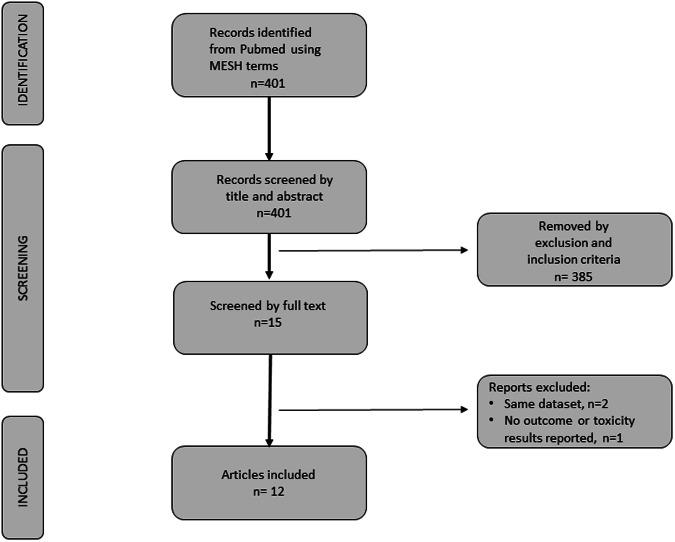
The initial search retrieved 401 articles, of which 15 underwent a thorough assessment for relevance. Ultimately, 12 studies with pertinent outcomes were meticulously examined. Among these, seven studies were dedicated to the investigation of enzalutamide in the primary setting, while the remaining five publications specifically addressed its use in salvage settings. Regardless of the treatment setting, our data revealed two distinct therapeutic strategies. The first advocates for the substitution of enzalutamide for androgen deprivation therapy (ADT), based on the premise of achieving equivalent, if not superior, oncological outcomes while minimizing treatment-related toxicity. The second, adopting a more conventional approach, entails augmenting the effectiveness of ADT by incorporating enzalutamide.
CONCLUSION
Enzalutamide has considerable potential as a therapeutic strategy for nmCSPC, either used alone or in combination with ADT in the primary or in the salvage settings. The use of enzalutamide instead of ADT is an appealing strategy. However, more trials will be required to further understand the efficacy and side-effect profile of enzalutamide monotherapy.
简介
恩扎卢胺是第二代雄激素受体抑制剂,适用于治疗转移性疾病,以及非转移性去势抵抗性前列腺癌(PCa)的治疗。本系统评价旨在确定在原发性或挽救性治疗中使用恩扎卢胺治疗非转移性去势敏感性前列腺癌(nmCSPC)患者的结局和毒性。
方法
我们使用 PubMed/Medline 数据库进行了一项系统评价,重点关注恩扎卢胺在 nmCSPC 治疗中的作用。纳入了专注于雄激素受体抑制剂在 nmCSPC 中的作用的文章,而排除了专门讨论转移性或去势抵抗性 PCa 的文章。
结果
最初的搜索检索到 401 篇文章,其中有 15 篇经过了相关性的全面评估。最终,有 12 项具有相关结局的研究进行了细致检查。其中,7 项研究专注于恩扎卢胺在原发性治疗中的作用,而其余 5 项出版物专门研究了其在挽救性治疗中的应用。无论治疗环境如何,我们的数据都揭示了两种不同的治疗策略。第一种策略主张用恩扎卢胺替代雄激素剥夺疗法(ADT),基于实现等效或更优的肿瘤学结局,同时最大限度地减少治疗相关毒性的前提。第二种策略采用更传统的方法,通过加入恩扎卢胺来增强 ADT 的效果。
结论
恩扎卢胺作为 nmCSPC 的治疗策略具有很大的潜力,无论是单独使用还是与 ADT 联合用于原发性或挽救性治疗。使用恩扎卢胺替代 ADT 是一种有吸引力的策略。然而,需要更多的试验来进一步了解恩扎卢胺单药治疗的疗效和副作用特征。
 Zotero 插件