
基于农林业、建筑和拆除废物的粉煤灰砖大幅减少一氧化碳排放并提高热性能,以实现可持续建筑。
Large CO reduction and enhanced thermal performance of agro-forestry, construction and demolition waste based fly ash bricks for sustainable construction.
作者信息
Singh Siddharth, Maiti Soumitra, Bisht Ravindra Singh, Panigrahi Soraj Kumar, Yadav Sameer
机构信息
Construction, Automation and Robotics Group, CSIR- Central Building Research Institute, Roorkee, 247667, India.
Building Materials and Environmental Sustainability Group, CSIR- Central Building Research Institute, Roorkee, 247667, India.
出版信息
Sci Rep. 2024 Apr 10;14(1):8368. doi: 10.1038/s41598-024-59012-8.
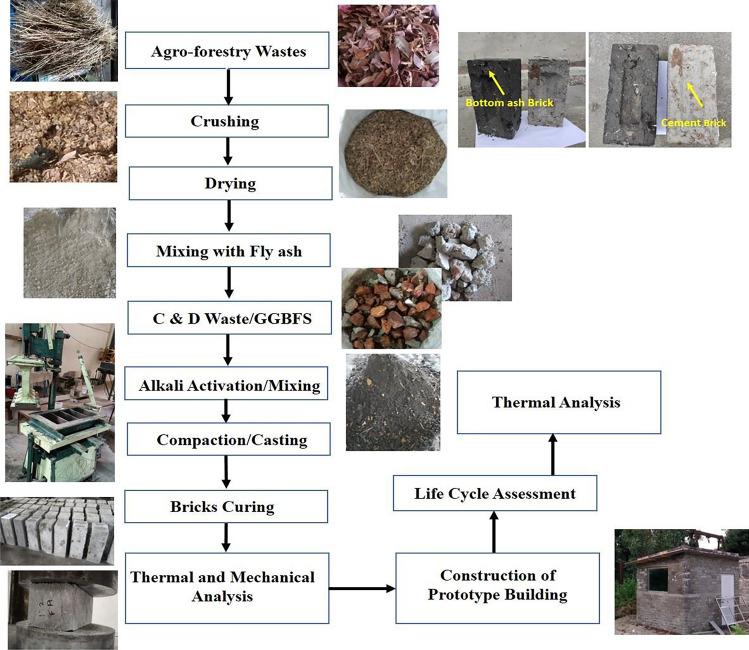
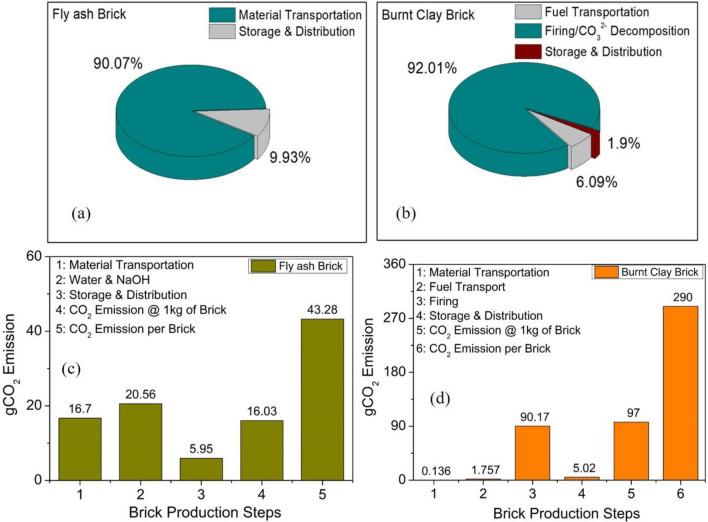
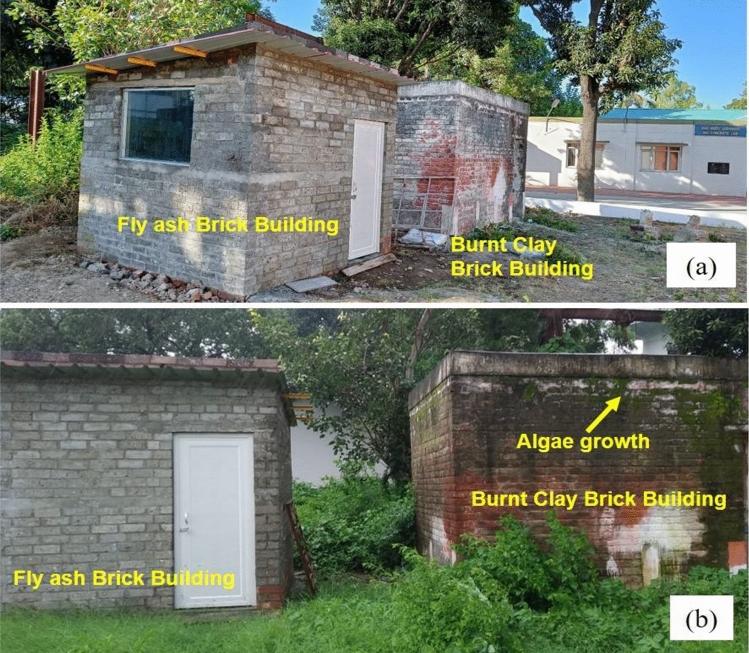
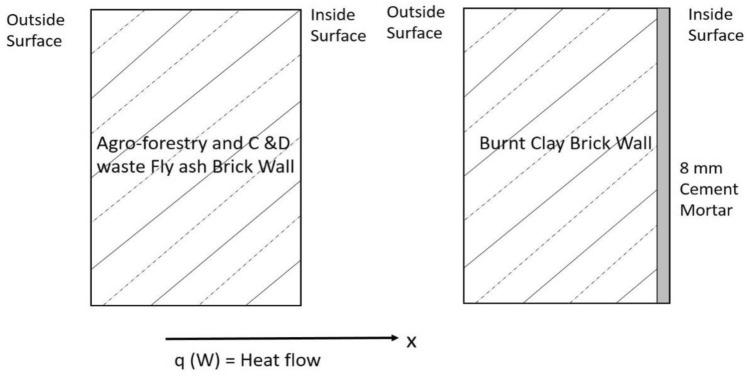
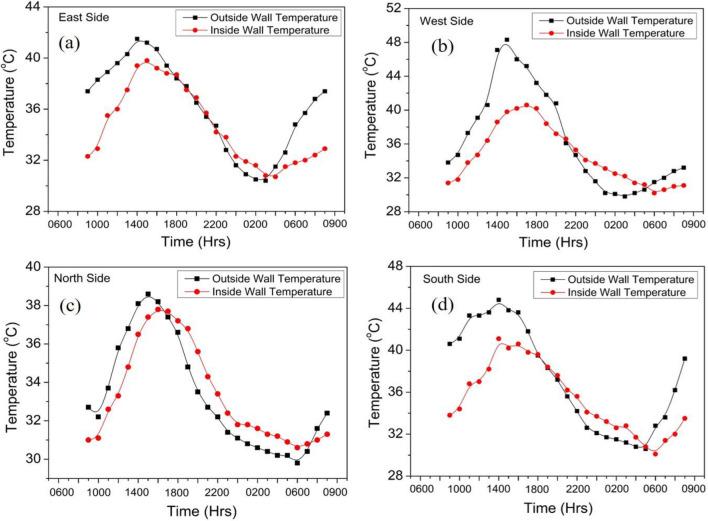
The exhaust gases in production of burnt clay bricks is responsible for greenhouse gases (GHGs) emission which increase the carbon footprint in the ecosystem. Here, we report carbon emission and thermal performance based evaluation of 8 ft. × 9 ft. × 8 ft. building. The bricks used in building construction are manufactured from fly ash, agro-forestry wastes, construction & demolition wastes (C&D), ground granulated blast furnace slag (GGBFS) using NaOH as activator in order to provide compressive strength in the range of 3-6 MPa with ambient curing at 30 °C for 28 days. Life cycle analysis (LCA) reveals the total CO emission for fly ash and burnt clay bricks estimated to be 43.28 gCO and 290 gCO per brick, respectively. Considering the current scenario, by replacing 1-2% of brunt clay bricks with agro-forestry waste, C&D waste based fly ash bricks can potentially reduce 0.5-1.5 million tons of CO emission annually. The embodied energy calculation shows fly ash based bricks consumes 10-15 times less energy as compared to burnt clay bricks. Thermal paremeters viz., U-value (0.5-1.2 W/mK), thermal conductivity (0.4-0.5 W/mK) show adequate insulation of agro-forestry waste based fly ash bricks highlighting its importance of thermal comfort, CO reduction along with sustainable and eco-friendly construction practices.
烧制粘土砖生产过程中的废气是温室气体排放的原因,这增加了生态系统中的碳足迹。在此,我们报告了基于碳排放和热性能对8英尺×9英尺×8英尺建筑物的评估。建筑施工中使用的砖块由粉煤灰、农林废弃物、建筑与拆除废弃物(C&D)、粒化高炉矿渣(GGBFS)制成,使用NaOH作为活化剂,以便在30°C环境养护28天的条件下提供3-6MPa范围内的抗压强度。生命周期分析(LCA)显示,粉煤灰砖和烧制粘土砖的总CO排放量估计分别为每块砖43.28gCO和290gCO。考虑到当前情况,用农林废弃物、基于建筑与拆除废弃物的粉煤灰砖替代1-2%的烧制粘土砖,每年可潜在减少0.5-150万吨的CO排放。内含能量计算表明,与烧制粘土砖相比,粉煤灰砖消耗的能量少10-15倍。热参数,即U值(0.5-1.2W/mK)、热导率(0.4-0.5W/mK)表明,基于农林废弃物的粉煤灰砖具有足够的隔热性能,突出了其在热舒适性、减少CO排放以及可持续和环保建筑实践方面的重要性。



 Zotero 插件