
FusionVAC22_01:一项I期临床试验,评估基于DNAJB1-PRKACA融合转录本的肽疫苗联合免疫检查点抑制疗法用于治疗纤维板层型肝细胞癌及其他携带致癌驱动融合的肿瘤实体。
FusionVAC22_01: a phase I clinical trial evaluating a DNAJB1-PRKACA fusion transcript-based peptide vaccine combined with immune checkpoint inhibition for fibrolamellar hepatocellular carcinoma and other tumor entities carrying the oncogenic driver fusion.
作者信息
Hackenbruch Christopher, Bauer Jens, Heitmann Jonas S, Maringer Yacine, Nelde Annika, Denk Monika, Zieschang Lisa, Kammer Christine, Federmann Birgit, Jung Susanne, Martus Peter, Malek Nisar P, Nikolaou Konstantin, Salih Helmut R, Bitzer Michael, Walz Juliane S
机构信息
Clinical Collaboration Unit Translational Immunology, German Cancer Consortium (DKTK), Department of Internal Medicine, University Hospital Tübingen, Tübingen, Germany.
Department of Peptide-based Immunotherapy, Institute of Immunology, University and University Hospital Tübingen, Tübingen, Germany.
出版信息
Front Oncol. 2024 Mar 28;14:1367450. doi: 10.3389/fonc.2024.1367450. eCollection 2024.
UNLABELLED
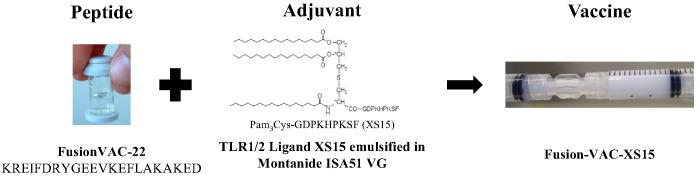
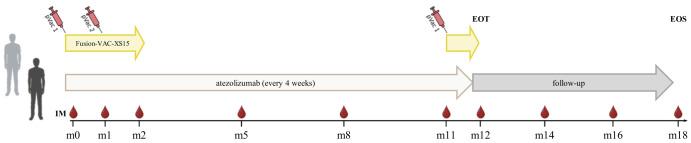
The DNAJB1-PRKACA fusion transcript was identified as the oncogenic driver of tumor pathogenesis in fibrolamellar hepatocellular carcinoma (FL-HCC), also known as fibrolamellar carcinoma (FLC), as well as in other tumor entities, thus representing a broad target for novel treatment in multiple cancer entities. FL-HCC is a rare primary liver tumor with a 5-year survival rate of only 45%, which typically affects young patients with no underlying primary liver disease. Surgical resection is the only curative treatment option if no metastases are present at diagnosis. There is no standard of care for systemic therapy. Peptide-based vaccines represent a low side-effect approach relying on specific immune recognition of tumor-associated human leucocyte antigen (HLA) presented peptides. The induction (priming) of tumor-specific T-cell responses against neoepitopes derived from gene fusion transcripts by peptide-vaccination combined with expansion of the immune response and optimization of immune function within the tumor microenvironment achieved by immune-checkpoint-inhibition (ICI) has the potential to improve response rates and durability of responses in malignant diseases. The phase I clinical trial FusionVAC22_01 will enroll patients with FL-HCC or other cancer entities carrying the DNAJB1-PRKACA fusion transcript that are locally advanced or metastatic. Two doses of the DNAJB1-PRKACA fusion-based neoepitope vaccine Fusion-VAC-XS15 will be applied subcutaneously (s.c.) with a 4-week interval in combination with the anti-programmed cell death-ligand 1 (PD-L1) antibody atezolizumab starting at day 15 after the first vaccination. Anti-PD-L1 will be applied every 4 weeks until end of the 54-week treatment phase or until disease progression or other reason for study termination. Thereafter, patients will enter a 6 months follow-up period. The clinical trial reported here was approved by the Ethics Committee II of the University of Heidelberg (Medical faculty of Mannheim) and the Paul-Ehrlich-Institute (P-00540). Clinical trial results will be published in peer-reviewed journals.
TRIAL REGISTRATION NUMBERS
EU CT Number: 2022-502869-17-01 and ClinicalTrials.gov Registry (NCT05937295).
未标记
DNAJB1-PRKACA融合转录本被确定为纤维板层状肝细胞癌(FL-HCC,也称为纤维板层癌,FLC)以及其他肿瘤实体中肿瘤发病机制的致癌驱动因素,因此是多种癌症实体新型治疗的广泛靶点。FL-HCC是一种罕见的原发性肝癌,5年生存率仅为45%,通常影响无潜在原发性肝病的年轻患者。如果诊断时无转移,手术切除是唯一的治愈性治疗选择。目前尚无全身治疗的标准方案。基于肽的疫苗是一种副作用低的方法,依赖于对肿瘤相关人类白细胞抗原(HLA)呈递肽的特异性免疫识别。通过肽疫苗接种诱导针对源自基因融合转录本的新抗原表位的肿瘤特异性T细胞反应,结合免疫反应的扩展以及通过免疫检查点抑制(ICI)实现肿瘤微环境中免疫功能的优化,有可能提高恶性疾病的反应率和反应持久性。I期临床试验FusionVAC22_01将招募局部晚期或转移性的FL-HCC或携带DNAJB1-PRKACA融合转录本的其他癌症实体患者。两剂基于DNAJB1-PRKACA融合的新抗原表位疫苗Fusion-VAC-XS15将在皮下(s.c.)给药,间隔4周,从首次接种后第15天开始与抗程序性细胞死亡配体1(PD-L1)抗体阿替利珠单抗联合使用。抗PD-L1将每4周给药一次,直至54周治疗阶段结束或直至疾病进展或出现其他研究终止原因。此后,患者将进入6个月的随访期。此处报告的临床试验已获得海德堡大学(曼海姆医学院)伦理委员会II和保罗-埃利希研究所(P-00540)的批准。临床试验结果将发表在同行评审期刊上。
试验注册号
欧盟临床试验编号:2022-502869-17-01以及ClinicalTrials.gov注册编号(NCT05937295)。
 Zotero 插件