
龙葵和刺茄叶绿体基因组序列:与其他茄属叶绿体基因组的比较分析。
Solanum aculeatissimum and Solanum torvum chloroplast genome sequences: a comparative analysis with other Solanum chloroplast genomes.
机构信息
College of Horticulture and Landscape Architecture, Yangzhou University, 225009, Yangzhou, China.
出版信息
BMC Genomics. 2024 Apr 26;25(1):412. doi: 10.1186/s12864-024-10190-9.
BACKGROUND
Solanum aculeatissimum and Solanum torvum belong to the Solanum species, and they are essential plants known for their high resistance to diseases and adverse conditions. They are frequently used as rootstocks for grafting and are often crossbred with other Solanum species to leverage their resistance traits. However, the phylogenetic relationship between S. aculeatissimum and S. torvum within the Solanum genus remains unclear. Therefore, this paper aims to sequence the complete chloroplast genomes of S. aculeatissimum and S. torvum and analyze them in comparison with 29 other previously published chloroplast genomes of Solanum species.
RESULTS
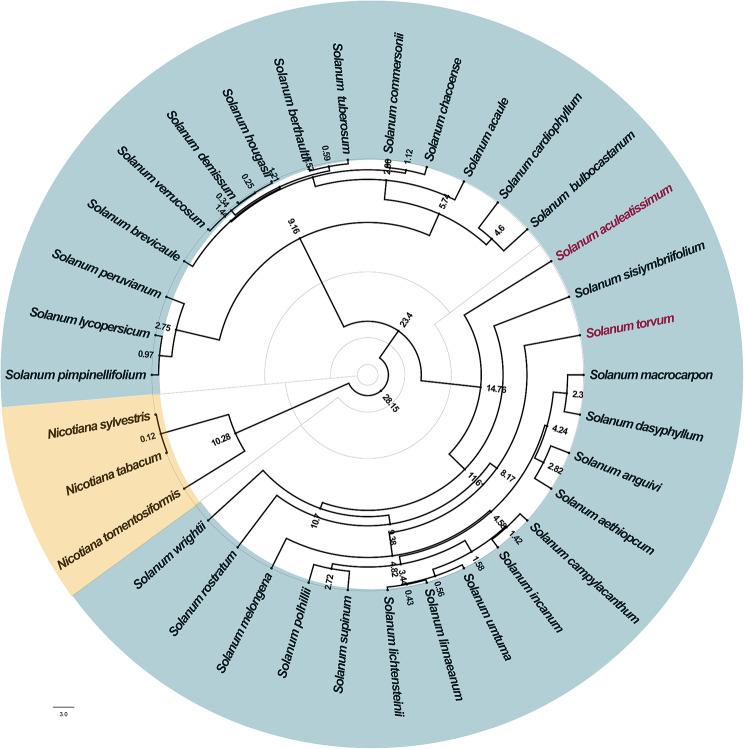
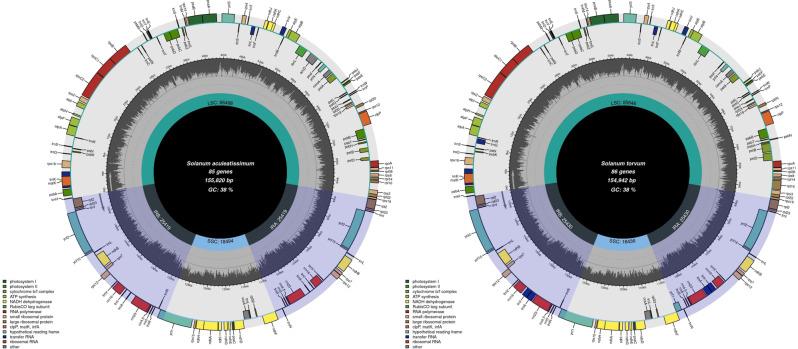
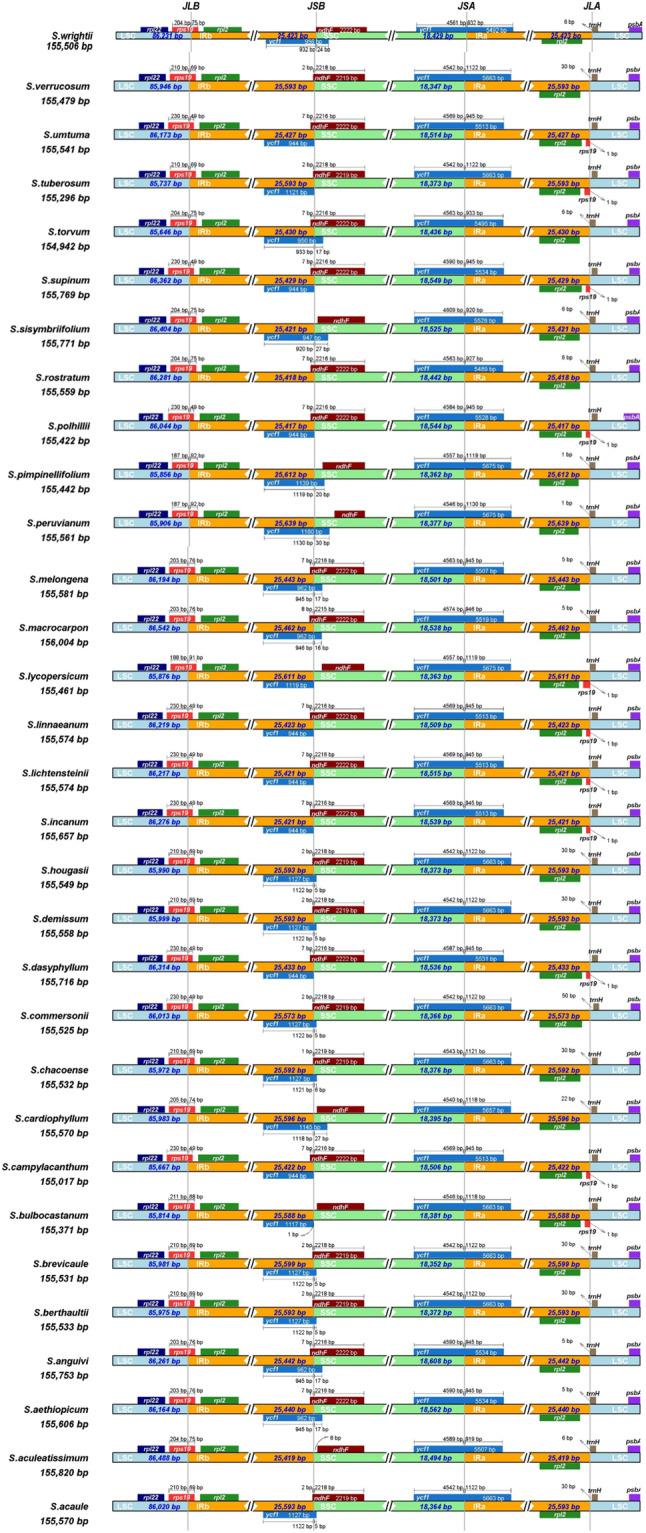
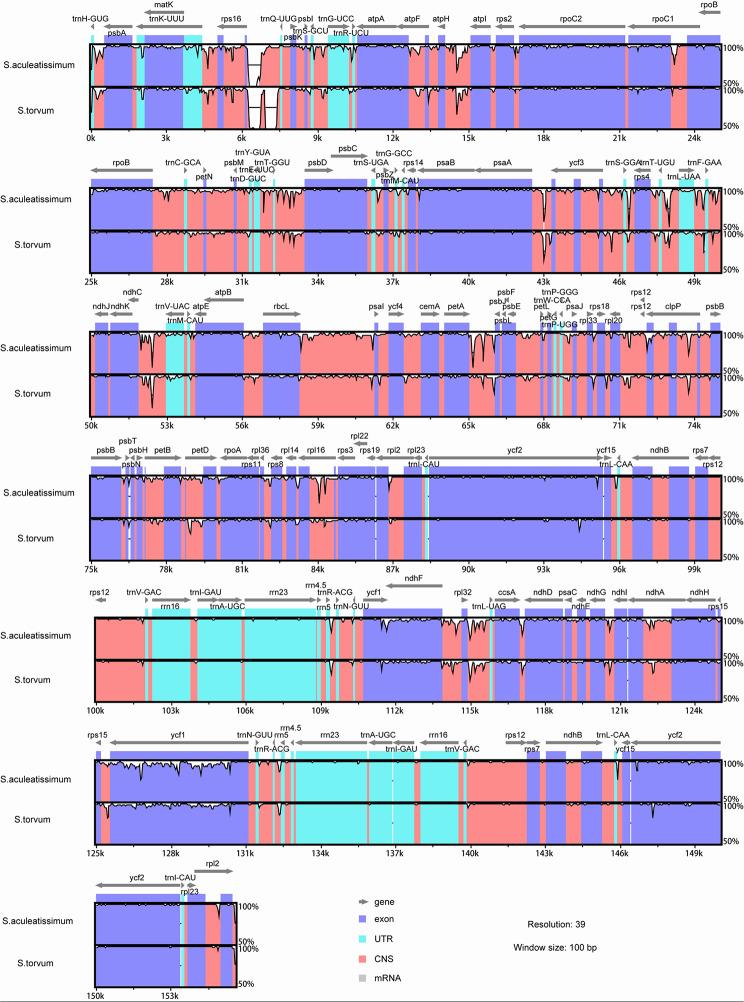
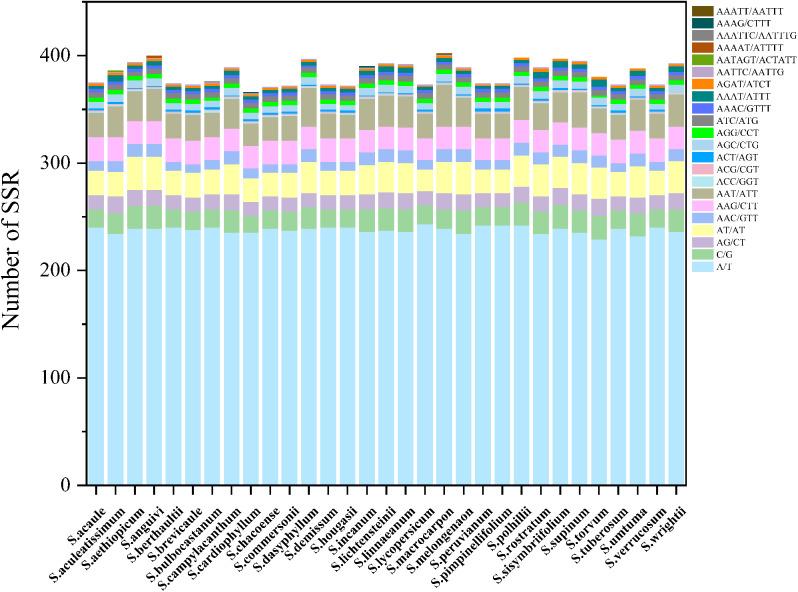
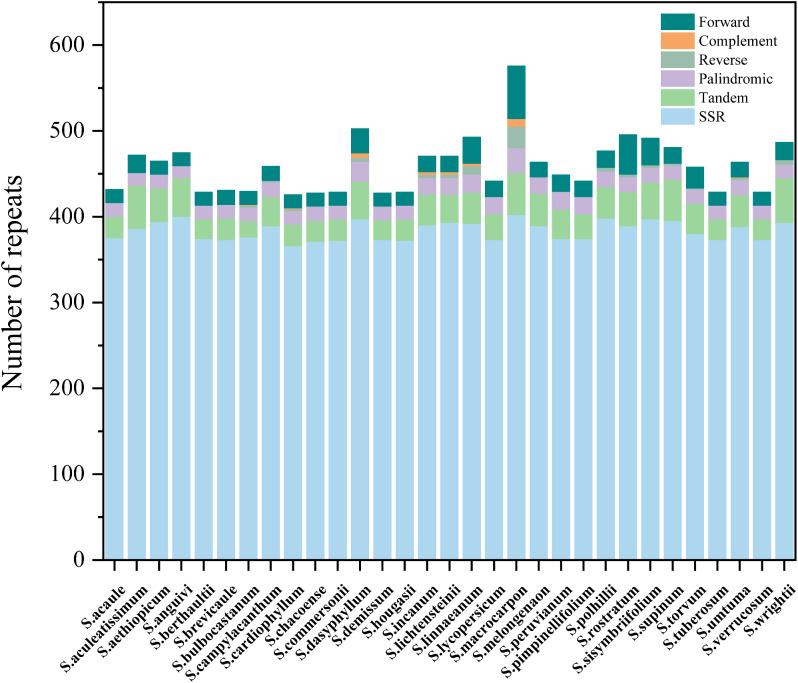
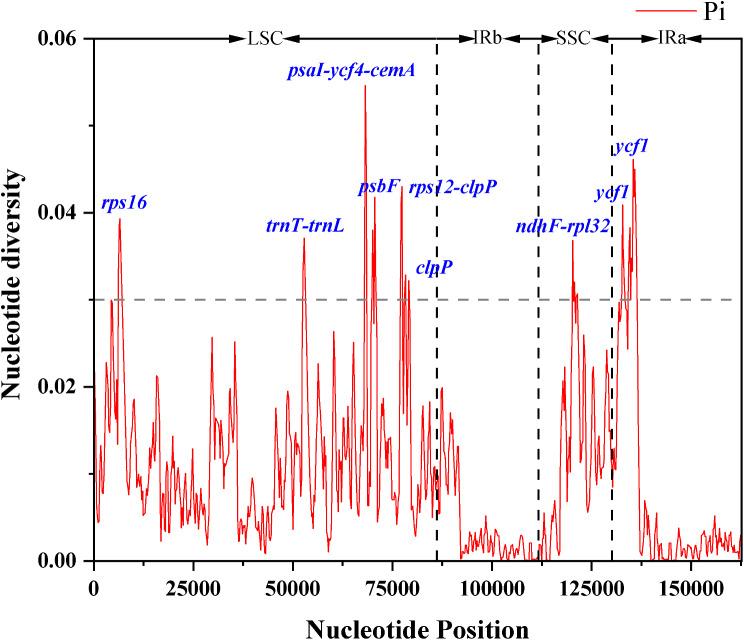
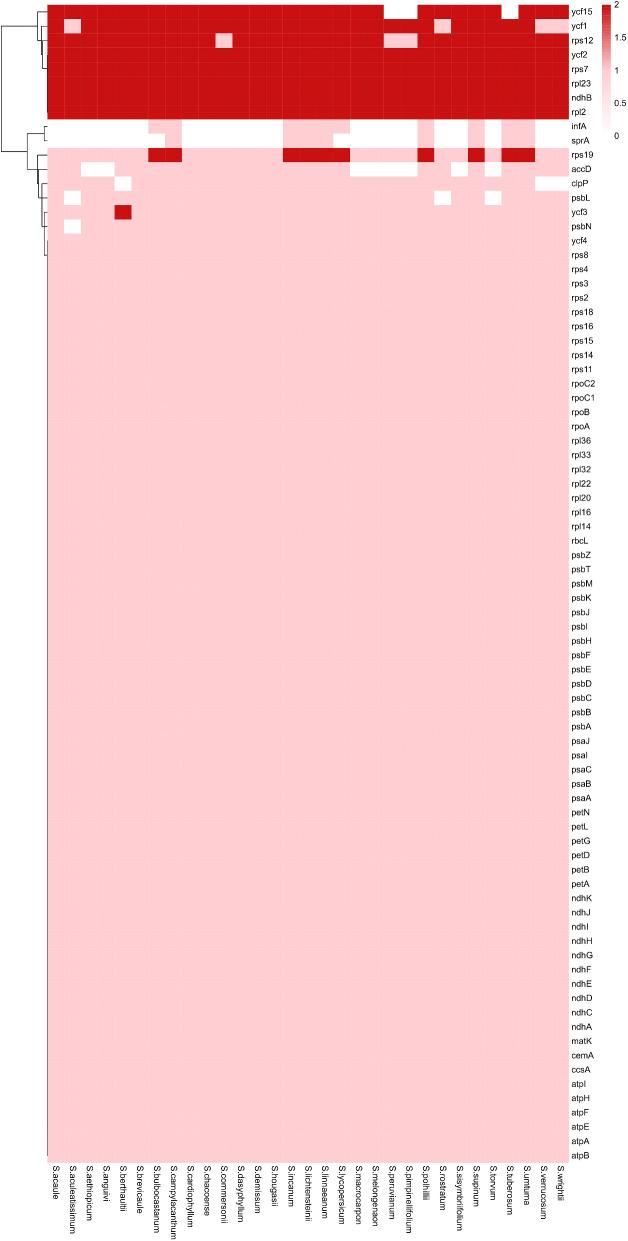
We observed that the chloroplast genomes of S. aculeatissimum and S. torvum possess typical tetrameric structures, consisting of one Large Single Copy (LSC) region, two reverse-symmetric Inverted Repeats (IRs), and one Small Single Copy (SSC) region. The total length of these chloroplast genomes ranged from 154,942 to 156,004 bp, with minimal variation. The highest GC content was found in the IR region, while the lowest was in the SSC region. Regarding gene content, the total number of chloroplast genes and CDS genes remained relatively consistent, ranging from 128 to 134 and 83 to 91, respectively. Nevertheless, there was notable variability in the number of tRNA genes and rRNAs. Relative synonymous codon usage (RSCU) analysis revealed that both S. aculeatissimum and S. torvum preferred codons that utilized A and U bases. Analysis of the IR boundary regions indicated that contraction and expansion primarily occurred at the junction between SSC and IR regions. Nucleotide polymorphism analysis and structural variation analysis demonstrated that chloroplast variation in Solanum species mainly occurred in the LSC and SSC regions. Repeat sequence analysis revealed that A/T was the most frequent base pair in simple repeat sequences (SSR), while Palindromic and Forward repeats were more common in long sequence repeats (LSR), with Reverse and Complement repeats being less frequent. Phylogenetic analysis indicated that S. aculeatissimum and S. torvum belonged to the same meristem and were more closely related to Cultivated Eggplant.
CONCLUSION
These findings enhance our comprehension of chloroplast genomes within the Solanum genus, offering valuable insights for plant classification, evolutionary studies, and potential molecular markers for species identification.
背景
龙葵和颠茄属于茄属植物,是众所周知的高抗病和抗逆性的重要植物。它们常被用作嫁接的砧木,并且经常与其他茄属植物杂交,以利用其抗性特征。然而,龙葵和颠茄在茄属内的系统发育关系尚不清楚。因此,本研究旨在对龙葵和颠茄的完整叶绿体基因组进行测序,并与 29 个已发表的茄属叶绿体基因组进行分析比较。
结果
我们观察到,龙葵和颠茄的叶绿体基因组具有典型的四联体结构,由一个大单拷贝(LSC)区、两个反向对称的反向重复(IRs)区和一个小单拷贝(SSC)区组成。这些叶绿体基因组的总长度在 154942 到 156004bp 之间,变化很小。GC 含量最高的区域是 IR 区,最低的区域是 SSC 区。就基因含量而言,叶绿体基因和 CDS 基因的总数相对一致,分别在 128 到 134 个和 83 到 91 个之间。然而,tRNA 基因和 rRNA 基因的数量有显著的变化。相对同义密码子使用(RSCU)分析表明,龙葵和颠茄都偏爱利用 A 和 U 碱基的密码子。IR 边界区分析表明,收缩和扩张主要发生在 SSC 和 IR 区的交界处。核苷酸多态性分析和结构变异分析表明,茄属植物的叶绿体变异主要发生在 LSC 和 SSC 区。重复序列分析表明,简单重复序列(SSR)中最常见的碱基对是 A/T,而长序列重复(LSR)中更常见的是 Palindromic 和 Forward 重复,Reverse 和 Complement 重复则较少。系统发育分析表明,龙葵和颠茄属于同一分生组织,与栽培茄子的亲缘关系更为密切。
结论
这些发现增进了我们对茄属叶绿体基因组的理解,为植物分类、进化研究以及潜在的物种鉴定分子标记提供了有价值的信息。
 Zotero 插件