
2008年至2023年中国大陆猫传染性腹膜炎(FIP)的患病率及相关危险因素:系统评价与Meta分析
Prevalence and Risk Factors Associated with Feline Infectious Peritonitis (FIP) in Mainland China between 2008 and 2023: A Systematic Review and Meta-Analysis.
作者信息
Hu Tingyu, Zhang Huiling, Zhang Xueping, Hong Xingping, Zhang Tangjie
机构信息
Institute of Comparative Medicine, College of Veterinary Medicine, Yangzhou University, Yangzhou 225009, China.
Jiangsu Co-Innovation Center for Prevention and Control of Important Animal Infectious Diseases and Zoonoses, Yangzhou 225009, China.
出版信息
Animals (Basel). 2024 Apr 18;14(8):1220. doi: 10.3390/ani14081220.
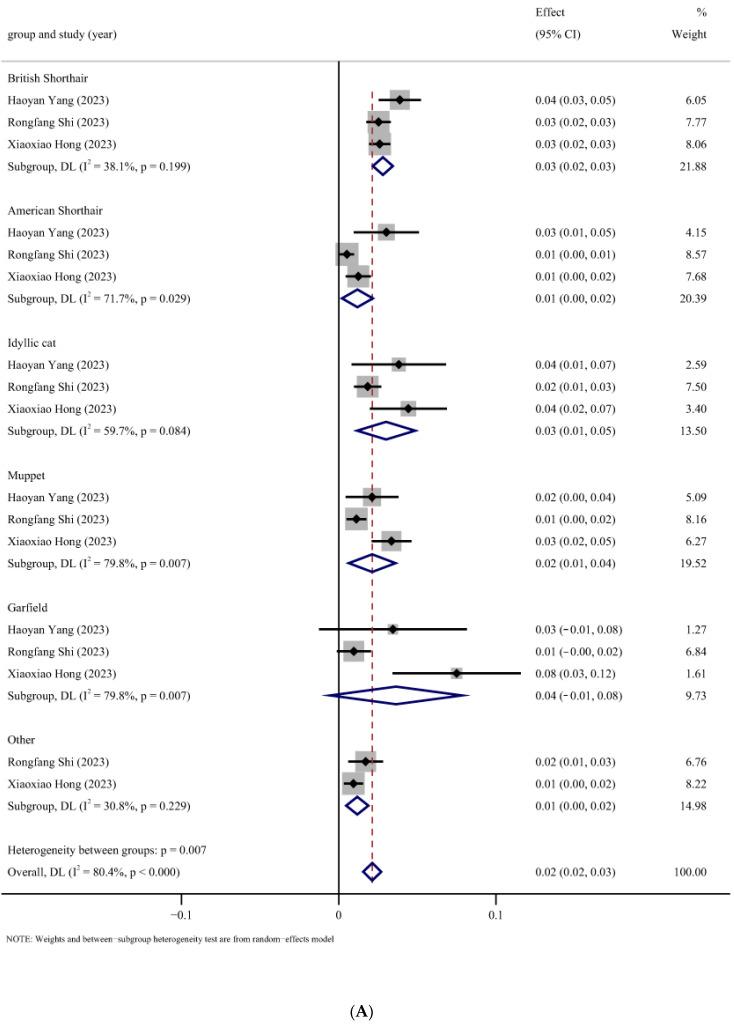
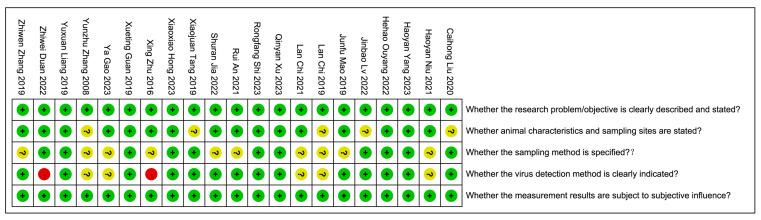
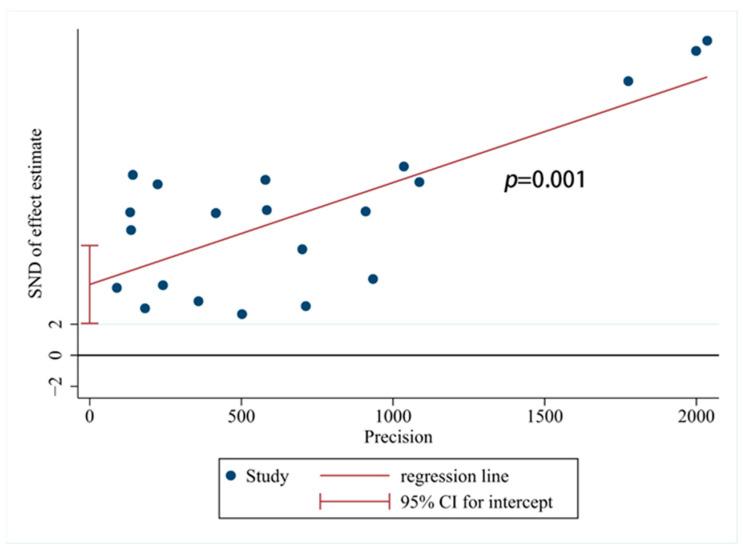
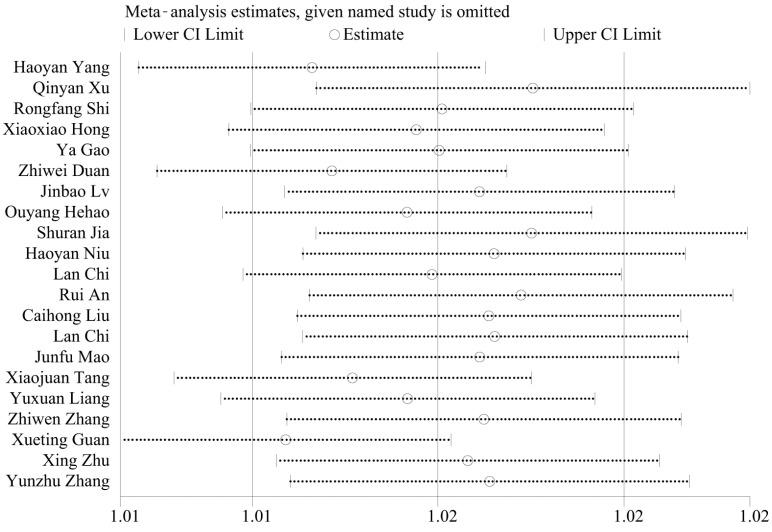
To evaluate the overall prevalence of FIP infection in cats in mainland China and associated risk factors, studies on the prevalence of FIP conducted from 1 January 2008 to 20 December 2023 were retrieved from five databases-CNKI, Wanfang, PubMed, Web of Science, and ScienceDirect-and comprehensively reviewed. The 21 studies selected, with a total of 181,014 samples, underwent a rigorous meta-analysis after quality assessment. The results revealed a 2% prevalence of FIP (95% CI: 1-2%) through the random-effects model, showing considerable heterogeneity (I = 95.2%). The subsequent subgroup analysis revealed that the age and gender of cats are significant risk factors for FIP infection in mainland China. In order to effectively reduce and control the prevalence of FIP on the Chinese mainland, we suggest improving the immunity of cats, with special attention given to health management in kittens and intact cats, and continuously monitoring FIPV.
为评估中国大陆猫感染猫传染性腹膜炎(FIP)的总体患病率及相关风险因素,我们从中国知网(CNKI)、万方、PubMed、科学网(Web of Science)和ScienceDirect这五个数据库中检索了2008年1月1日至2023年12月20日期间开展的关于FIP患病率的研究,并进行了全面综述。选取的21项研究共涉及181,014个样本,在质量评估后进行了严格的荟萃分析。随机效应模型结果显示,FIP患病率为2%(95%置信区间:1%-2%),异质性相当大(I² = 95.2%)。随后的亚组分析表明,猫的年龄和性别是中国大陆FIP感染的重要风险因素。为有效降低和控制中国大陆FIP的患病率,我们建议提高猫的免疫力,尤其要关注幼猫和未绝育猫的健康管理,并持续监测猫传染性腹膜炎病毒(FIPV)。


 Zotero 插件