
线粒体抗氧化剂依达拉奉肽可改善慢性睡眠剥夺诱导的小鼠学习记忆障碍。
Mitochondrial antioxidant elamipretide improves learning and memory impairment induced by chronic sleep deprivation in mice.
机构信息
Department of Neurology (Sleep Disorders), The Affiliated Chaohu Hospital of Anhui Medical University, Hefei, Anhui, P. R. China.
Department of Neurology, The Second People's Hospital of Hefei and Affiliated Hefei Hospital of Anhui Medical University, Hefei, Anhui, P. R. China.
出版信息
Brain Behav. 2024 May;14(5):e3508. doi: 10.1002/brb3.3508.
BACKGROUND
The inflammation and synaptic dysfunction induced by mitochondrial dysfunction play essential roles in the learning and memory impairment associated with sleep dysfunction. Elamipretide (SS-31), a novel mitochondrion-targeted antioxidant, was proven to improve mitochondrial dysfunction, the inflammatory response, synaptic dysfunction, and cognitive impairment in models of cerebral ischemia, sepsis, and type 2 diabetes. However, the potential for SS-31 to improve the cognitive impairment induced by chronic sleep deprivation (CSD) and its underlying mechanisms is unknown.
METHODS
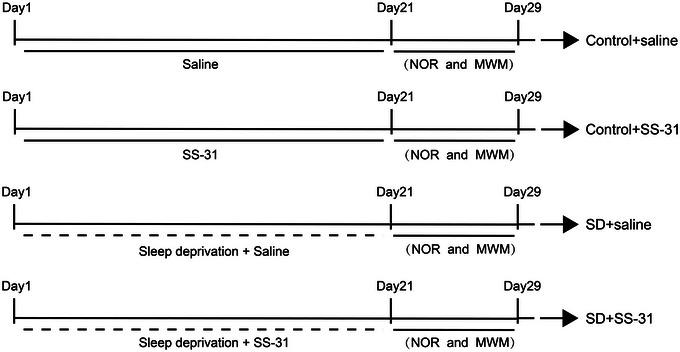
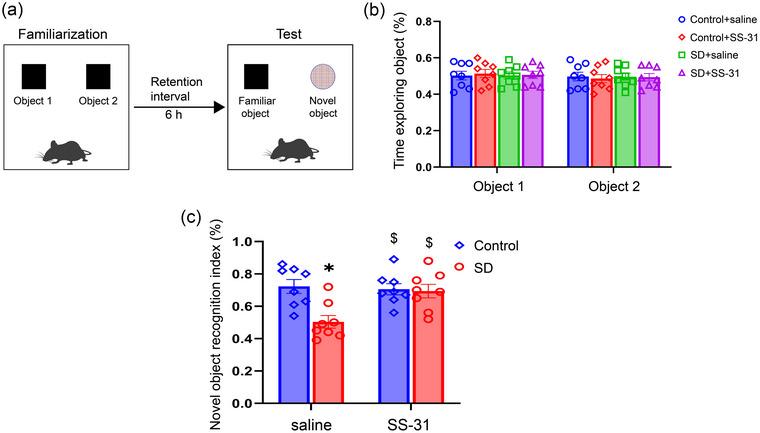
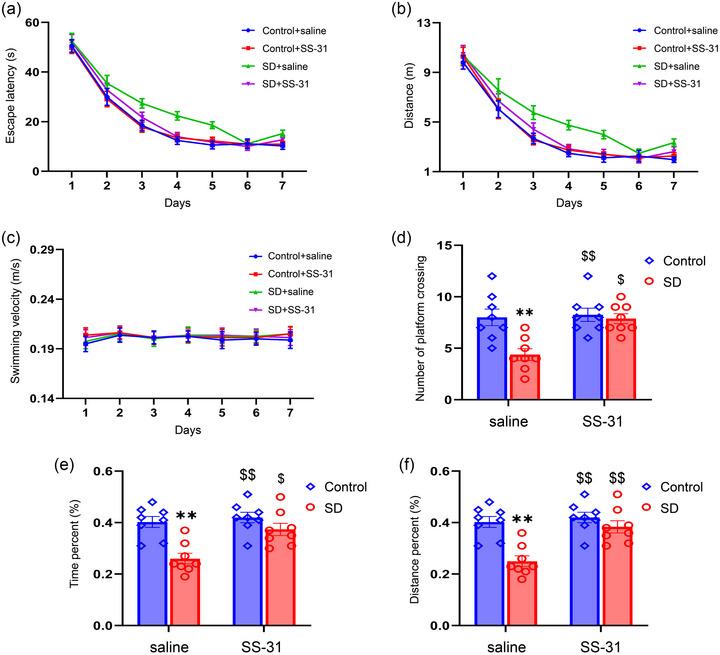
Adult c57BL/6J mice were subjected to CSD for 21 days using an activity wheel accompanied by daily intraperitoneal injection of SS-31 (5 mg/kg). The novel object recognition and Morris water maze test were used to evaluate hippocampus-dependent cognitive function. Western blotting and reverse transcription-quantitative polymerase chain reaction assays were used to determine the effects of CSD and SS-31 on markers of mitochondria, inflammation response, and synaptic function. Enzyme-linked immunosorbent assays were used to examine the levels of proinflammatory cytokines.
RESULTS
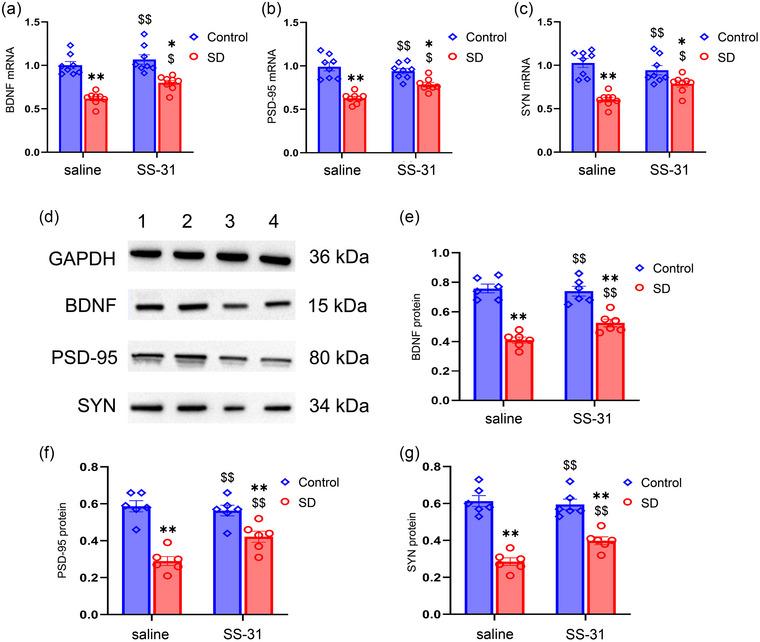
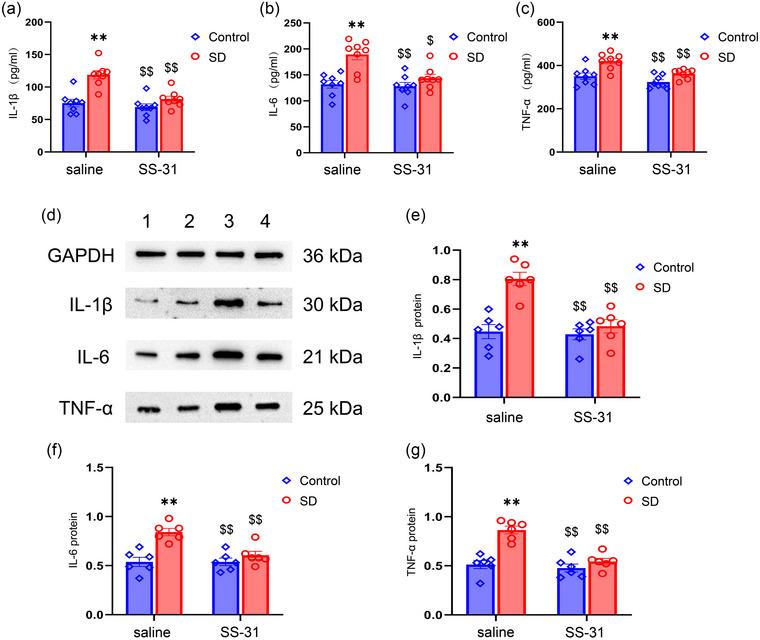
SS-31 could improve the cognitive impairment induced by CSD. In particular, SS-31 treatment restored the CSD-induced decrease in sirtuin 1 (SIRT1) and peroxisome proliferator-activated receptor γ coactivator alpha levels and the increase in levels nuclear factor kappa-B and inflammatory cytokines, including interleukin (IL)-1β, IL-6, and tumor necrosis factor-alpha. Furthermore, SS-31 significantly increased the levels of brain-derived neurotrophic factor, postsynaptic density protein-95, and synaptophysin in CSD mice.
CONCLUSION
Taken together, these results suggest that SS-31 could improve CSD-induced mitochondrial biogenesis dysfunction, inflammatory response, synaptic dysfunction, and cognitive impairment by increasing SIRT1 expression levels.
背景
线粒体功能障碍引起的炎症和突触功能障碍在与睡眠功能障碍相关的学习和记忆损伤中起重要作用。Elamipretide(SS-31)是一种新型的线粒体靶向抗氧化剂,已被证明可改善脑缺血、脓毒症和 2 型糖尿病模型中的线粒体功能障碍、炎症反应、突触功能障碍和认知障碍。然而,SS-31 改善慢性睡眠剥夺(CSD)引起的认知障碍及其潜在机制尚不清楚。
方法
成年 c57BL/6J 小鼠通过活动轮进行 21 天 CSD,同时每天腹腔注射 SS-31(5mg/kg)。使用新物体识别和 Morris 水迷宫测试评估海马依赖性认知功能。Western blot 和逆转录定量聚合酶链反应检测用于确定 CSD 和 SS-31 对线粒体标志物、炎症反应和突触功能的影响。酶联免疫吸附测定用于检测促炎细胞因子的水平。
结果
SS-31 可改善 CSD 引起的认知障碍。特别是,SS-31 治疗恢复了 CSD 诱导的 SIRT1 和过氧化物酶体增殖物激活受体γ共激活因子α水平降低以及核因子 kappa-B 和炎症细胞因子(包括白细胞介素 1β、白细胞介素 6 和肿瘤坏死因子-α)水平升高。此外,SS-31 显著增加了 CSD 小鼠大脑源性神经营养因子、突触后密度蛋白-95 和突触小体蛋白的水平。
结论
综上所述,这些结果表明,SS-31 通过增加 SIRT1 表达水平,可改善 CSD 引起的线粒体生物发生功能障碍、炎症反应、突触功能障碍和认知障碍。

 Zotero 插件