
运用综合生物信息学分析探究睡眠剥夺与轻度认知障碍的共同生物学机制及共同生物标志物APTAF1
Investigation of the shared biological mechanisms and common biomarker APTAF1 of sleep deprivation and mild cognitive impairment using integrated bioinformatics analysis.
作者信息
Liu Xiaolan, Lu Baili, Huang Hui
机构信息
Wuhan Mental Health Center, Wuhan, Hubei, China.
Wuhan Hospital for Psychotherapy, Wuhan, Hubei, China.
出版信息
Front Pharmacol. 2024 Apr 17;15:1387569. doi: 10.3389/fphar.2024.1387569. eCollection 2024.
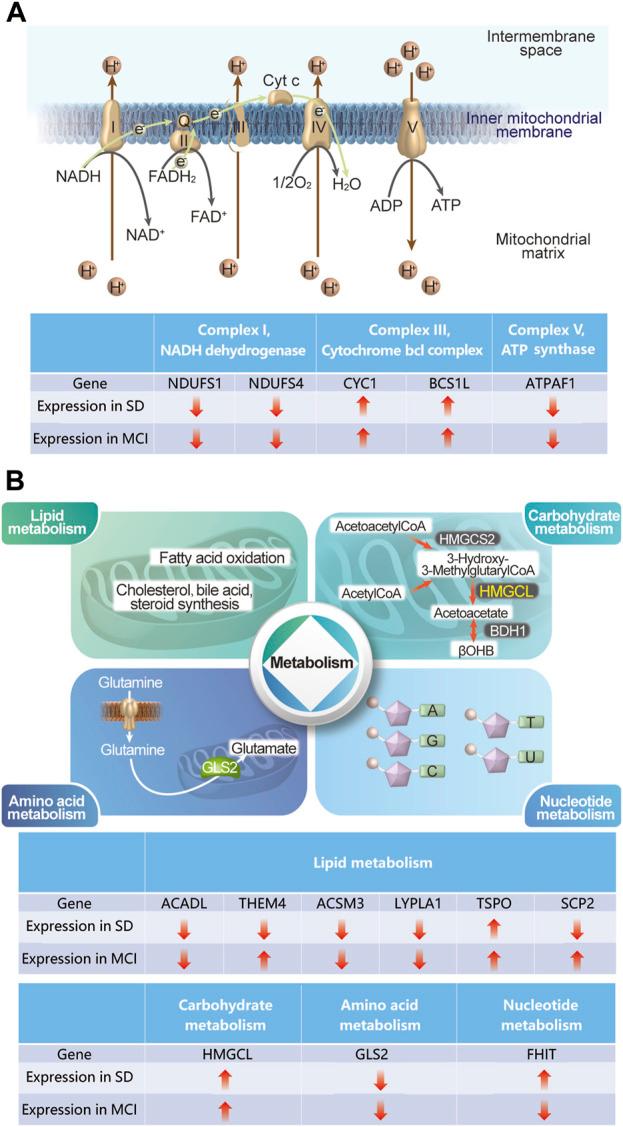
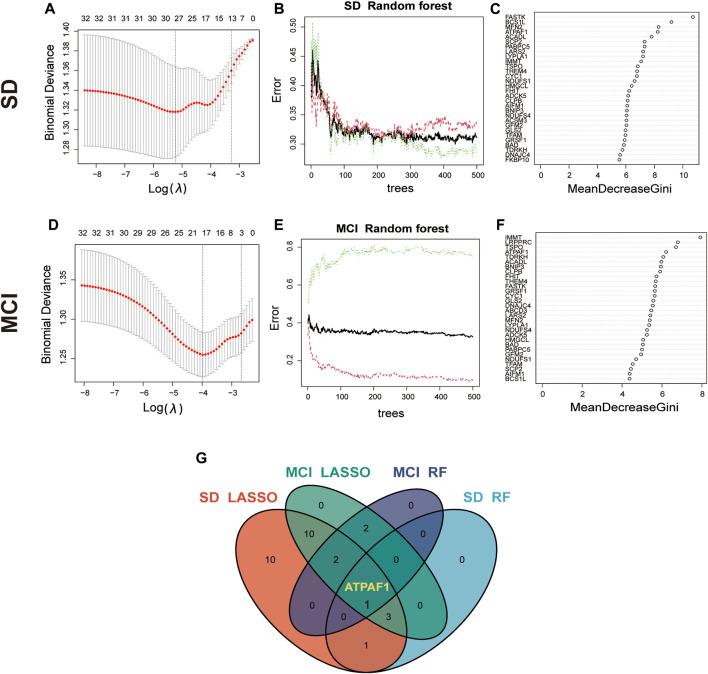
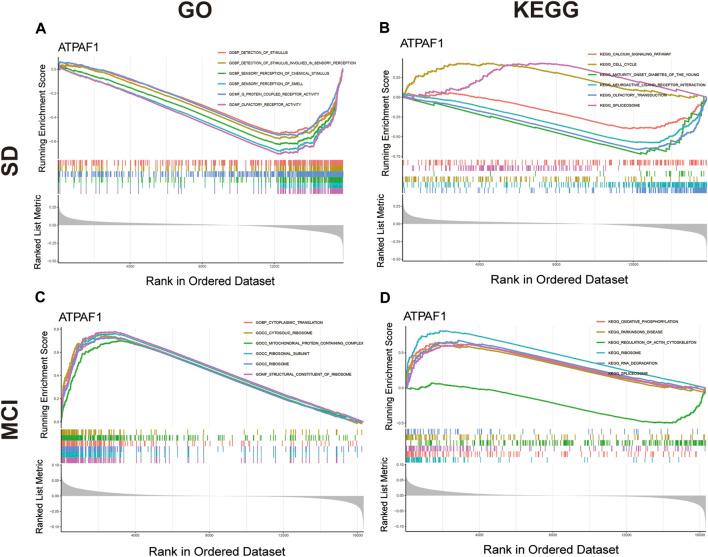
The relationship between sleep loss and cognitive impairment has long been widely recognized, but there is still a lack of complete understanding of the underlying mechanisms and potential biomarkers. The purpose of this study is to further explore the shared biological mechanisms and common biomarkers between sleep loss and cognitive impairment. The mitochondria-related genes and gene expression data were downloaded from the MitoCarta3.0 and Gene Expression Omnibus (GEO) databases. We identified the differentially expressed mitochondrial-related genes by combing the differentially expressed genes (DEGs) in sleep deprivation (SD) and mild cognitive impairment (MCI) datasets with mitochondria-related gene lists. Shared DEGs were then further analyzed for enrichment analysis. Next, the common biomarker was identified using two machine learning techniques and further validated using two independent GEO datasets. Then GSEA and GSVA were conducted to analyze the functional categories and pathways enriched for the common biomarker. Finally, immune infiltration analysis was used to investigate the correlation of immune cell infiltration with the common biomarker in SD and MCI. A total of 32 mitochondrial-related differentially expressed genes were identified in SD and MCI. GO analysis indicated that these genes were significantly enriched for mitochondrial transport, and KEGG analysis showed they were mainly involved in pathways of neurodegenerative diseases. In addition, ATPAF1, which was significantly down-regulated in both SD and MCI, was identified through machine learning algorithms as the common biomarker with favorable diagnostic performance. GSEA and GSVA revealed that ATPAF1 was mainly involved in metabolic pathways, such as oxidative phosphorylation, acetylcholine metabolic process, valine, leucine and isoleucine degradation. Immune infiltration analysis showed that the expression of ATPAF1 was correlated with changes in immune cells, especially those key immune cell types associated with SD and MCI. This study firstly revealed that mitochondrial dysfunction may be the common pathogenesis of sleep loss and mild cognitive impairment and identified ATPAF1 as a possible biomarker and therapeutic target involved in SD and MCI.
睡眠不足与认知障碍之间的关系早已得到广泛认可,但对其潜在机制和潜在生物标志物仍缺乏全面了解。本研究的目的是进一步探索睡眠不足与认知障碍之间共同的生物学机制和常见生物标志物。线粒体相关基因和基因表达数据从MitoCarta3.0和基因表达综合数据库(GEO)下载。我们通过将睡眠剥夺(SD)和轻度认知障碍(MCI)数据集中的差异表达基因(DEG)与线粒体相关基因列表相结合,确定了差异表达的线粒体相关基因。然后对共享的DEG进行进一步的富集分析。接下来,使用两种机器学习技术确定常见生物标志物,并使用两个独立的GEO数据集进行进一步验证。然后进行基因集富集分析(GSEA)和基因集变异分析(GSVA),以分析常见生物标志物富集的功能类别和途径。最后,采用免疫浸润分析研究免疫细胞浸润与SD和MCI中常见生物标志物的相关性。在SD和MCI中总共鉴定出32个线粒体相关差异表达基因。基因本体(GO)分析表明,这些基因在线粒体运输方面显著富集,京都基因与基因组百科全书(KEGG)分析表明它们主要参与神经退行性疾病途径。此外,通过机器学习算法确定在SD和MCI中均显著下调的ATP合酶组装因子1(ATPAF1)为具有良好诊断性能的常见生物标志物。GSEA和GSVA显示,ATPAF1主要参与代谢途径,如氧化磷酸化、乙酰胆碱代谢过程、缬氨酸、亮氨酸和异亮氨酸降解。免疫浸润分析表明,ATPAF1的表达与免疫细胞的变化相关,尤其是与SD和MCI相关的关键免疫细胞类型。本研究首次揭示线粒体功能障碍可能是睡眠不足和轻度认知障碍的共同发病机制,并确定ATPAF1为参与SD和MCI的可能生物标志物和治疗靶点。





 Zotero 插件